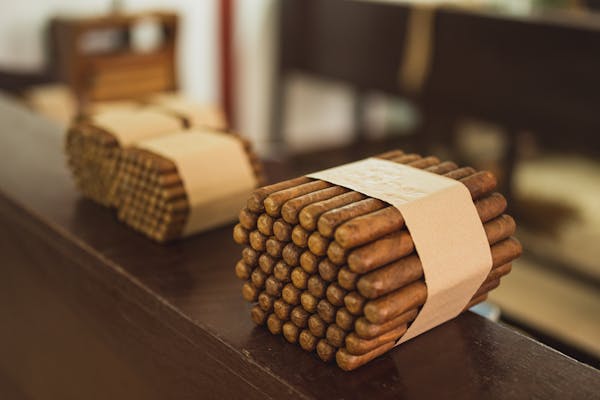
Arturo Fuente's website lists eleven sizes of the Don Carlos. It doesn't list a single date.
That absence is the first reportable thing about a cigar that has outlasted nearly every limited edition the company has shipped in the years since. The Don Carlos page at arturofuente.com names the blend's creator, Don Carlos Fuente Sr., the family patriarch. It describes the wrapper as "flawless" African Cameroon. It says the tobaccos inside are "hand selected and aged as much as 10 years." It doesn't say when the line began.
I called Arturo Fuente's office to ask for the year. No one returned the message by deadline. So here is what can be said without the company's help: the Don Carlos is widely dated to 1976, when Carlos Fuente Sr. first blended a cigar under his own name, and the Cameroon-wrapped Dominican version most smokers buy now traces to the mid-1980s, after the family rebuilt in the Dominican Republic. Call it four decades on the market, and treat the exact birthday as unconfirmed until Fuente says otherwise. If a company won't respond, the article says so, by name.
Now the part that runs against the grain. The premium-cigar category lives on novelty: annual limited editions, anniversary blends, allocated boxes that sell out before they reach a shelf. The trade press covers those releases. It rarely covers the staple. Permanence isn't a headline, so permanence goes unreported, and the buyer is left to assume the new thing must be the better thing. The Don Carlos line is the standing argument against that assumption. This isn't the Arturo Fuente Don Carlos review the trade press tends to write, the kind that ends in a number. It's an attempt to explain why a four-decade-old blend keeps moving while the new releases get the headlines.
The blend the company won't date
What Fuente will confirm is the construction, and the construction is the point. Per the company's own description, the Don Carlos pairs a Cameroon wrapper grown from Sumatra-seed tobacco with Dominican binder and filler, then ages the leaf far longer than a new release can afford to. Ten years of aging isn't a marketing flourish you can fake on a launch timeline. It's a decision somebody made a decade before the box ships, which is the opposite of how a limited edition gets to market.
Cameroon is part of why. The wrapper takes its name from the Central African country where French growers planted Sumatra-seed tobacco in the colonial period, and the leaf has been scarce and temperamental ever since. It doesn't yield the way a Connecticut or an Ecuadorian sheet does, which is one reason most houses don't build a flagship around it. Fuente did. The company's own materials note that because of the select tobacco the blend requires, the Don Carlos is among the most demanding cigars rolled at its Dominican factory. That's a supply constraint stated plainly, and it explains why the line has never been cheap and never been everywhere.
The line spans eleven vitolas, from the stubby Eye of the Bull at 3.5 by 55 up to the Presidente at 6.5 by 50. In between sit the sizes most people actually reach for: the No. 4, a corona-gorda format at 5 by 43; the slimmer No. 3 at 5.5 by 44; and the Belicoso at 5.375 by 52. Fuente describes the resulting profile as "rich and flavorful." I'll let the company keep its own adjectives. What matters for this story is that the recipe behind all eleven has held steady while the catalog around it churned.
And the churn is real. Fuente puts out new and limited work every year, including the heavily-watched father-and-son collaborations I wrote about in the 2026 Father & Son collection coverage. Those releases draw the photographers and the pre-orders. The Don Carlos draws the reorders. Those aren't the same buyer behavior, and the second one is the one a retailer plans a year around.
I have watched that split play out on a show floor. Walking the PCA Trade Show in Las Vegas the past two Aprils, the pattern at the Fuente press desk was consistent: the cameras crowded the limited and the allocated, and the buyers with order pads spent their time on the lines they could actually get in volume and resell all year. A booth can draw a crowd and still write its real business on the staples nobody is photographing. That gap between attention and revenue is most of what the trade press misses, because attention is what photographs and revenue is what hides in a private spreadsheet.
What "outsells" can and can't mean
I want to be careful with the word in the headline. Nobody publishes audited sell-through for a single blend, and any number that opens with "industry sources estimate" is an estimate, not a fact. I learned that lesson the expensive way, and not in the weekly Cigar Industry Brief I write now, where every claim gets a date and a source. In late 2024 I ran a story about a quiet reformulation at another Dominican-adjacent house, sourced to one person who claimed insider access. It lived on a small site for about six hours before I pulled it. The source turned out to be a competitor planting a smear, and I should have triangulated before publishing. The story I should have written was about how easily that kind of rumor moves.
So I'm not going to hand you a unit count I can't stand behind. What can be observed is structural, and it's enough. The Don Carlos has stayed in continuous production for roughly forty years, in eleven sizes, while the limited editions around it appear once and disappear. Shops carry it as a fixed line rather than a seasonal one. That permanence is the evidence. The exact spreadsheet is somebody's closely-held property, and I'd rather report the gap than invent a figure to fill it.
There's a tell in how the line gets bundled, too. Fuente ships the Don Carlos inside curated sets like the Fuente Fever Kit, the way a label leans on its dependable catalog when it wants to introduce a buyer to the house. You don't anchor an introductory set with a cigar that might not be around next quarter. A sampler is a bet on what a buyer will want to buy again, and the brands stake those bets on their permanent lines, not their fireworks. The Don Carlos keeps turning up in that role because it has earned the house's own confidence, which is a quieter endorsement than a rating but a more revealing one.
Why the new releases have no special edge
It would be easy to assume the older blend wins on some regulatory grandfather clause, the way a long-grandfathered product can dodge rules a newcomer has to clear. That assumption is wrong now, and the reason is worth getting on the record, because it reframes the whole question.
For a decade the open question hanging over the category was whether the FDA would fold premium cigars into the same approval-and-user-fee regime it built for cigarettes and vapes. The fight started with a 2016 lawsuit from the industry's trade groups, ran through an appeals-court decision in January 2025 that agreed the agency had overreached, and then bounced back down to settle exactly which cigars counted as premium. That last question closed in mid-April 2026. According to Cigar Rights of America, Judge Amit P. Mehta of the U.S. District Court for the District of Columbia issued a final ruling that kept the existing eight-part definition of a premium cigar and held the category outside the FDA's deeming regime. The FDA, for its part, has said it doesn't intend to assess user fees on premium cigars for fiscal year 2026.
"This ruling provides long-overdue clarity for the industry, regulators, and lawmakers." - Mike Copperman, executive director, Cigar Rights of America
The definition the court kept is narrow and specific. To qualify as a premium cigar exempt from the deeming rule, a cigar has to clear eight criteria at once, among them that it's handmade, wrapped in whole-leaf natural tobacco, contains no characterizing flavor, and weighs more than six pounds per thousand units. The trade groups had pushed for a looser, broader definition that would have swept flavored cigars under the same exemption; the court declined and held the line at the 2020 language. The Don Carlos clears every one of those criteria without trying. So does almost any serious handmade blend, which is the whole point of what follows.
I keep a tracker I call What the FDA Actually Said: every premium-cigar ruling since 2021, the operative paragraph quoted directly, with each trade group's response logged next to it. The line that matters here is the one most coverage skipped past: the exemption is a category-wide win, not a vintage one. A blend launched this spring clears the same eight criteria a 1980s blend does. So the Don Carlos isn't protected by a rule the new releases have to fight. Both are equally free of the FDA's approval queue. Whatever advantage the old blend has, it earned at the bench and the buyer's wallet, not in a courtroom.
That's the part the press-release cycle tends to bury. Most trade publications recycle press releases verbatim and call it journalism, and a regulatory win gets framed as good news for whatever the brand is selling that week. The honest read is duller and more useful: the legal ground is now level, so durability on a shelf is a verdict the market reached on its own.
What four decades of staying power actually buys
Consistency is an undersold virtue in a category that fetishizes the new. The case for a blend that hasn't changed in forty years is that you know what you're getting in March and you'll know what you're getting next March. A limited edition is a coin flip you only get to call once. So why does the coin flip get the column inches while the dependable box gets a shrug?
There's also a wallet argument, and it cuts against the reflex to chase the release. A limited edition prices itself on scarcity, and scarcity is a tax the buyer pays whether or not the cigar earns it. A standing line prices itself on what it costs to make, year over year, with no auction premium stapled on top. The Don Carlos has never been an inexpensive cigar, given the Cameroon leaf and the aging, but its price tracks its production rather than its hype, and that's a different transaction from bidding on an allocated box you'll never see restocked. One you can plan a humidor around. The other you can only react to.
The failures are instructive on this point. At the PCA Trade Show in Las Vegas in April 2025, I watched a buyer set down a heavily-hyped 2024 limited edition after barely two inches. The wrapper had split along the shoulder and the burn had canoed badly, and he quietly crossed the line off his reorder sheet at the booth. Construction misses like that are the risk you take on a rushed release. They're far rarer on a blend whose whole identity is a decade of aging and a recipe nobody is allowed to rush.
The dependable blend also asks less of the buyer's luck. A limited run gets one production window, one harvest, one rushed roll, and if a batch leaves the factory with a soft spot or an uneven wrapper, there's no second run to fix it. A continuous line gets corrected. Fuente has been making the same recipe long enough that a bad stick is an outlier the company can trace and a buyer can shrug off, not a one-time gamble that either pays or doesn't. Still, no maker bats a thousand, and not every stick in a box smokes the same. The last Don Carlos that let me down was a No. 4 from a 2023 box that plugged on me from the first third - even after a week at 65% RH it still wouldn't draw clean. A plugged draw like that is the ordinary risk of any handmade cigar, traceable to one roll and forgettable, not the same gamble as a one-time release you can't replace.
None of which makes the Don Carlos the right cigar for everyone, and I'm not in the business of telling you it is. The Cameroon wrapper carries a particular nutty, faintly sweet character that some smokers find too restrained against the Nicaraguan pepper bombs dominating shelves right now. Is it the best Arturo Fuente blend? That's a taste argument, and taste arguments don't have a winner. Most don carlos cigar review pieces settle it with a number; a fairer fuente don carlos tasting just describes the leaf and lets you decide. What the line has is the thing the new releases can't manufacture on a launch schedule: a track record you can buy into without a gamble.
Disclosure: When we link to a specific product, we link to a retailer our writers think charges a fair price for it. For readers who want to put the blend to the test, the easiest entry points are the sizes that move most: the full Don Carlos line, where the Presidente and the No. 4 turn up most often, with the Belicoso, the No. 3 and the 5-by-50 Robusto not far behind. New buyers often start with the bundled Fuente Fever Kit. And if you'd rather see the wider house first, the full Arturo Fuente catalog runs from the everyday Hemingway line up to the allocated OpusX, with the Don Carlos sitting squarely in the middle of that ladder, which is exactly why it sells the way it does.
So forget, for a second, whether the Don Carlos beats the release Fuente will announce next month. Here's what I keep coming back to: is the industry's habit of pointing every reader at the newest box selling them the thing they actually want, or just the thing that's easiest to write a headline about? Forty years of reorders is its own kind of answer. The trade press just doesn't think it's news.
Sources & Notes
1. Arturo Fuente, "Don Carlos," official brand page - wrapper origin, "aged as much as 10 years," vitola lineup, blend description. https://arturofuente.com/our-cigars/don-carlos/
2. Cigar Rights of America, "Industry Landmark: Federal Court Issues Final Ruling Exempting Premium Cigars from FDA Oversight," April 2026 - Judge Amit P. Mehta ruling, eight-part definition, Mike Copperman quote. https://cigarrights.org/industry-landmark-federal-court-issues-final-ruling-exempting-premium-cigars-from-fda-oversight/
3. U.S. Food and Drug Administration, "Tobacco User Fees" - FDA statement that it doesn't intend to assess user fees on premium cigars for FY2026. https://www.fda.gov/tobacco-products/manufacturing/tobacco-user-fees
4. Premium Cigar Association - regulatory updates on the premium-cigar definition and FDA litigation. https://premiumcigars.org
5. Reporting note: Arturo Fuente didn't respond to a request for the Don Carlos introduction date before deadline; market dating (1976 origin, mid-1980s Dominican Cameroon version) is reported as widely cited and unconfirmed by the company.