Here's what you get with the My Father La Lealtad torpedo: a box-pressed figurado wrapped in Ecuador Rosado Oscuro, rolled in Honduras, that pulls the brand's usual Nicaraguan punch back toward something quieter. For a company built on full-bore Esteli power, that restraint is the headline.
I bought four and smoked them through May, the line's first full month at retail. The torpedo was the one I kept reaching for.
My Father markets the cigar as a tribute to loyalty (lealtad is the Spanish word for it), and frames the blend around "loyalty to the land, loyalty to tradition." Set the copy aside. The line that actually matters sits lower on the spec sheet, under country of manufacture: Honduras. Not Esteli, Nicaragua, where the Garcia family has rolled nearly everything since 2009.
So this My Father La Lealtad review comes down to two questions. Does the torpedo smoke as well as the brand's Nicaraguan work? And why is a maker famous for one factory quietly building cigars in another country?
What you're holding
La Lealtad shipped in four sizes, every one of them box-pressed. The wrapper is a single Ecuador Rosado Oscuro leaf. The binder and filler both lean on Honduran and Nicaraguan tobacco, according to My Father's own listing, and the company rates the strength from three-quarters of the way up to full.
Here's the full line, as the maker lists it:
| Vitola | Size (inches) | Listed price |
|---|---|---|
| Robusto | 5 1/4 x 52 | 86.00 |
| Toro | 6 x 54 | 94.00 |
| Toro Gordo | 6 x 60 | 91.75 |
| Torpedo (box-pressed) | 6 1/8 x 52 | 91.75 |
One caveat on those numbers. My Father's site shows the price and nothing around it: no per-cigar or per-box label, no count of how many sticks come in a box. So I'll show you the company's figures, but read them as list numbers, not as what lands on your receipt (the page itself leaves the unit unstated). I don't trust a price I can't pin to a unit, and neither should you.
La Lealtad is a 2026 release, and the timing followed the industry calendar. The Premium Cigar Association held its annual trade show, where brands roll out the year's new lines, April 17 to 20 in New Orleans, and the La Lealtad reached shops in the weeks around it. That matters when you're reading early impressions, mine included: the cigars on shelves right now are young, and a young pressed cigar can smoke tighter than the same blend will in six months.
The box press is the first tell that this isn't a standard My Father. Most of the brand's headline blends, the Le Bijou 1922 and the My Father No. 1 among them, ship round. A pressed torpedo is a different animal: flatter sides, a tapered head you clip to taste, and a denser pack that slows the burn. Hold it next to the rest of My Father's catalog and the La Lealtad reads like a deliberate step sideways. Same family, same hands, a different target.
How the polish gets built
Polish in a cigar isn't luck. It's a stack of choices, and you can read most of them straight off this blend.
Start with the wrapper. A Rosado Oscuro is grown darker and rosier than a standard Habano, and the Ecuadorian version comes up under near-constant cloud cover, which tends to yield an even, oily sheet without the rough edges a sun-grown Nicaraguan leaf can carry. My Father describes it, in its own words, as chosen for "naturally aromatic oils." That's marketing language, and I'd treat it as such. But the leaf does what the category says it does. It burns even and keeps the pepper on a leash.
Rosado Oscuro is worth a beat of its own. The "rosado" points to a reddish cast in the leaf and the "oscuro" to a darker, later-picked priming; together they describe a wrapper grown for color and oil more than for raw strength. Ecuador's overcast climate, the same conditions that make its Connecticut-seed wrappers so even, lets the leaf develop without the sun stress that thickens flavor and roughens the burn. It's a wrapper picked to look the part and behave, and on all four torpedos it did both.
Next, the double binder. Two leaves instead of one, here a Honduran and a Nicaraguan, which hands the roller more control over the burn and adds body without reaching for a heavier wrapper. It's a construction move more than a flavor one, and it's part of why the smoke holds its shape from light to nub.
Then the filler, the Honduran-and-Nicaraguan core you'd expect from this part of the spec sheet. The Nicaraguan leaf carries the pepper and the dark earth My Father made its name on. The Honduran leaf sits warmer and a touch sweeter, and it rounds the edges the Nicaraguan tobacco would otherwise leave sharp. Together they land where the company says they land: north of medium, short of a face-melter.
And then the box press, which does more work here than any single leaf. Pressing the cigar packs the filler tighter and flattens the draw into something slower and more even. On a torpedo, with that tapered head, it concentrates the smoke at the start and buys you a longer runway before the back half heats up. A lot of what people will credit to the blend is really the press, quietly doing its job.
One thing the spec sheet won't tell you is how long the tobacco aged before rolling, and My Father doesn't publish that either. With these Garcia blends the leaf usually carries real fermentation time, and you can taste it in the absence of the green, ammoniac bite that dogs a rushed cigar. The La Lealtad showed none of that. Whatever the aging was, it wasn't cut short.
So there's the sequence: a calm wrapper, a binder built for control, a filler that rounds instead of punches, and a press that slows the whole thing down. Four decisions, all pointed the same way. None of them is exotic. The result is a cigar that behaves.
Made in Honduras, not Esteli
My Father Cigars started in a small Miami shop called El Rey de los Habanos in 2003, run by Jose "Pepin" Garcia, born in Cuba in 1950, and his son Jaime. In 2009 the family moved the operation to a factory and farm in Esteli, Nicaragua, the address that has defined nearly everything they've shipped since. That's the company's own account, told on its site.
Pepin's reputation is the part worth holding onto here. He built it on Cuban-style strength, on ligero-forward blends that hit, on cigars that taste like a man who learned to roll at eleven and never softened. A measured, medium-plus My Father runs against that grain. That's exactly why the polish is interesting, and exactly why some longtime fans will bounce off it.
It helps to picture My Father as a strength ladder. At the top sit the Le Bijou 1922 and the My Father No. 1, full-bodied and Nicaraguan to the core. Below them run the everyday workhorses, and near the bottom sit the Cuban-inspired and Connecticut-wrapped lines built for a lighter sit. La Lealtad lands in the upper-middle: more body than the mild end, well short of the heavy hitters. Knowing where it sits is most of not being let down by it.
So a My Father blend with "Honduras" stamped under country of manufacture is a genuine departure. The brand's own About page, the one I just quoted, doesn't mention a Honduran factory at all. It lists Esteli and Miami. Nothing else.
I'm not going to dress that gap up as a scandal. Makers contract out production, open second factories, and shift blends between rooms all the time, and a cigar can be excellent wherever it's rolled. But the company hasn't explained the Honduras move in anything it publishes, and the quiet is worth flagging on its own. Most trade publications recycle press releases verbatim and call it journalism. The cleaner move is to report what the spec sheet says and name what the company hasn't.
What could Honduras mean? A few things, and the honest answer is that I can't tell you which. It might be contract production at an established Honduran factory. It could be a My Father room of their own that the company simply hasn't publicized. It might come down to tobacco, given that the binder and filler both carry Honduran leaf. Plenty of respected makers run blends across more than one country, so none of those would be a mark against the cigar. But a brand whose whole identity is welded to a single Nicaraguan factory owes its buyers a line on why this one is built somewhere else, and that line doesn't exist yet.
I've been on the wrong side of that line. In late 2024 I chased a Padron quiet-reformulation rumor off a single anonymous source and got it wrong; I pulled the story within hours when the "source" turned out to be a competitor planting a smear. The lesson stuck. With La Lealtad, the documented fact is Honduras on the label. Everything past that, until the Garcias say more, is a question, not a finding.
Where buyers get it wrong
The mistake I'd expect most often: a smoker grabs the La Lealtad expecting the Le Bijou 1922 and gets something milder. This isn't that cigar. If you came for the full Nicaraguan freight train, the La Lealtad is going to read as polite, maybe even thin, on a palate calibrated to the brand's heavy hitters.
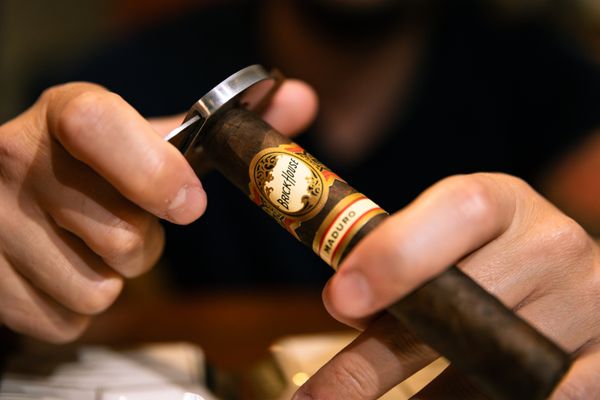
The second mistake is mechanical: people butcher the torpedo head. A figurado's tapered tip isn't decoration. It's a tool. Clip too little and the draw strangles; clip too much and you throw away the point of the shape, which is to funnel and concentrate the smoke early. I cut a torpedo in stages, a small clip first and a wider one later if the draw asks for it. On the La Lealtad, a conservative cut gave me the tightest, most focused first third of any size in the line.
In the hand, the torpedo feels the part. It's firm and square-shouldered from the press, with a tidy cap and a wrapper that carries an even sheen rather than a heavy oil slick. Pre-light, the foot gave off cedar and cocoa, with a faint barnyard note underneath that I read as a sign of decent fermentation. None of that guarantees a good smoke. But a cigar that's built right and smells right going in earns a little benefit of the doubt, and this one used it.
Here's my read across the four torpedos, cold draw to nub. The cold draw gave cedar and a little raisin. The first third opened with black pepper that settled inside an inch, sitting on a bready base. The middle ran toward warm bread and cocoa, the pepper backing off to the retrohale. The final third leaned cocoa with a thread of leather, the warmth building but never tipping past the company's own ceiling. It held in that medium-plus band the whole way. That's a read on four cigars from one box, not a verdict on the whole production.
I picked those up in May 2026, and one of them had a tight draw through the first third until a recut at the taper opened it up; the other three pulled clean from the clip. One firm stick in four isn't a pattern. Still, a denser box press will hand you the occasional plug, so don't be surprised if you meet one.
The burn line stayed close to straight on all four, the ash held in firm gray stacks before I knocked it, and the smoke came generous without going hot. None of that is a given on a box press, where an over-firm bunch can choke the draw or send the burn tunneling down one side. The La Lealtad mostly dodged both.
One more limit, and it's a real one. How this cigar drinks depends on how long you rest it. Mine sat about three weeks off the truck before I lit the first, and the pressed sticks tightened up noticeably when the room slipped under 65 percent humidity. If you store dry, expect the draw to firm. Give it box time before you judge it.
If you want a different My Father
If the La Lealtad reads too polite for your taste, the brand sells plenty that doesn't. And if it reads about right, a couple of neighbors are worth knowing.
For a gentler entry, the My Father Fonseca works a Cuban-inspired profile that sits below the La Lealtad on push. Want the same pressed-figurado shape with more of the brand's backbone? My Father's belicoso collection scratches that itch. And if you're shopping the torpedo format across makers rather than staying in-house, Oliva's Serie O torpedo is the obvious Nicaraguan cross-shop, usually at a friendlier number.
The pressed figurado keeps a loyal, quiet following. It's the same shape demand that keeps a four-inch Fuente Hemingway perfecto selling out season after season, long after the hype cycle moved on. La Lealtad is My Father's measured entry into that lane, and on construction alone it earns the spot.
What you're paying for
Premium-cigar pricing above a certain point stops tracking quality and starts tracking the name on the band, and I say that as someone who distrusts any number a maker won't explain. La Lealtad sits in the upper-middle of the market, not on the bargain rack. You're paying for My Father's construction, the box press, and that Ecuadorian wrapper, and on those terms it reads as honest money.
What you're not paying for is rarity or age. This is a regular-production line, not a limited drop, so there's no scarcity tax built into the box and no reason to hoard it the way collectors hoard a one-time release. Buy it to smoke it. And if a shop is charging more for it than for the brand's other regular lines, ask why before you reach for your wallet.
The verdict, and the open question
So, buy it or skip it?
Buy the box-pressed La Lealtad torpedo if you want an even, well-built My Father with a calmer profile, the kind of cigar you hand the friend who finds the Le Bijou too much. It does exactly what its blend promises, and the torpedo is the size that shows it off best. For a certain palate, this is the best My Father on the shelf right now, precisely because it doesn't try to win the room.
Skip it if you came for the punch. This is no ligero gut-check, and at the price the company is signaling, you can find Nicaraguan sticks that hit harder for less money. The polish is the whole point. If you don't want polish, you won't value what you're paying for, and you'll wonder what the fuss was.
Age it if you're patient. The sticks I rested longest smoked the most settled, and I'd bet a box six months deep drinks better than one fresh off the truck. That's a hunch off four cigars, not a controlled test, so weigh it accordingly.
The open question is the one the spec sheet raised and the company hasn't touched: why Honduras, and whether the La Lealtad stays there or it's the first move in a bigger shift away from Esteli. Until My Father says, that's the part of this cigar I'll be watching.
When we link to a specific product, we link to a retailer our writers think charges a fair price for it.
Sources & Notes
- My Father Cigars, La Lealtad product page - blend (Ecuador Rosado Oscuro wrapper, Honduran and Nicaraguan binder and filler), the four box-pressed sizes, the listed prices, the strength rating, and the country of manufacture (Honduras).
- My Father Cigars, company history - the 2003 founding in Miami, the 2009 move to the Esteli, Nicaragua factory, and the Garcia family background.
- Premium Cigar Association, PCA26 recap - the 2026 industry trade show ran April 17 to 20 in New Orleans, the calendar around which 2026 lines like this one reached the market.
- Tasting notes are my own, from four La Lealtad torpedos bought at retail and smoked over the course of May 2026.