What is the Davidoff Late Hour, and why the whisky barrels?
I smoked the first of these on a Thursday night in late February, in the back room of a friend's place outside Burlington, with a glass of Glenfarclas 105 within reach because the marketing all but dares you to pour Speyside. So this Davidoff Late Hour review starts the way I start all of them: release year, the house that blended it, where I sat, what was in the glass. The cigar arrived in 2017 as the darker companion to the 2015 Winston Churchill blend, and the idea sits right there in the name. The late hours were when Churchill did his best work, so Davidoff built a night-cap to match.
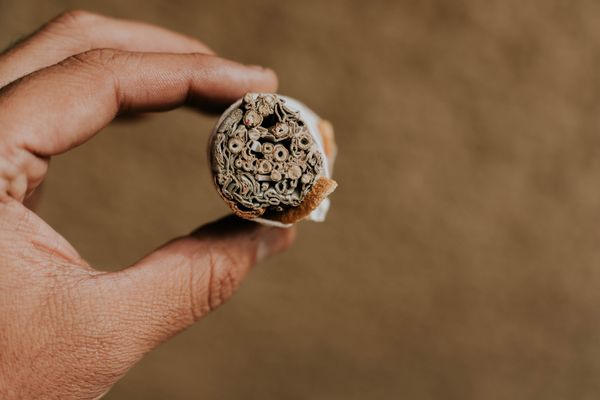
The blend is where it gets interesting. An Ecuadorian Habano wrapper in a deep oscuro shade, a Mexican Negro San Andres binder, and a filler that crosses two countries: San Vicente and Piloto leaf from the Dominican Republic, Esteli and Condega from Nicaragua, all built at Davidoff's Dominican house [Davidoff's published notes]. The trick is the Condega leaf. It sits six months in American white oak casks that once held single malt Scotch from Speyside before it ever goes into the bunch. That's the whole pitch. A cigar with whisky in its lungs.
And before you ask: no, it doesn't taste like someone poured Lagavulin over a Macanudo. We'll get to what the cask actually does. But the house is honest about the framing, and to its credit it never claims the leaf was soaked in scotch. It was aged in the wood that held the scotch. There's a real difference, and it shows on the palate.
How does the 5 x 52 smoke, third by third?
I'll walk it the way I walk every cigar: cold draw, first third, second third, final third. I smoked four from the same box across three weeks before I'd put a number on it, and I'll explain why further down.
Cold draw, off an unlit foot, gave me dried fig and a faint sweetness like the inside of an empty bourbon glass, with a cedar note riding underneath from the box. I clipped a straight cut and the draw sat right where I want it, a touch firm, the kind that makes you work a little. No whisky yet. That arrives with fire.
The first third opens on cracked black pepper and a coffee closer to espresso than drip, the crema bitterness still in it. Around the half-inch mark a sweetness creeps in underneath, dried dark fruit, fig more than raisin. The burn ran dead even on three of the four sticks. The fourth wandered early and took one touch-up to straighten, no drama.
The second third is where the cask earns its keep. Not as whisky exactly. More as a malted, toasted-oak sweetness laid over old saddle leather, the kind that's been wiped down so many times it's gone soft. Cocoa nib shows up late in this stretch. Strength climbs from medium to medium-full, and the smoke turns oilier on the lips.
The final third tightens and darkens. The black coffee edges toward burnt sugar, the pepper comes back on the retrohale, and the leather dries out to something closer to walnut skin. I took mine down to about an inch. It never got hot or sharp as long as I kept the pace slow, which a 45-minute cigar rewards [Davidoff lists a 45-minute enjoyment time]. Push it and the oak goes ashy and flat. So don't.
On construction, three of the four were what you'd expect at this price: a firm pack, a clean cap, and a pale gray ash that held in inch-long stacks before I knocked it. The draw measured a touch tight across the board, more than I'd call ideal, though never to the point of fighting me. The only real stumble was that fourth stick, and I'll come back to it, because it's the whole reason I won't review a cigar off a single smoke anymore. Davidoff's Dominican rollers are among the most consistent in the business, and for the most part the box backed that reputation up.
Does the Scotch-cask aging actually show up?
Here's my honest read after four cigars: the cask does real work, but it lives in the nose and the texture far more than in the flavor. You get a malt-sweet aromatic lift on the retrohale and an oily weight to the smoke that a non-cask Dominican puro of this build wouldn't carry. What you don't get is a dram in cigar form. Anyone selling you that is selling you a story.
Most "complex" cigars are not complex; they're inconsistent, and reviewers confuse the two. The Late Hour is the rarer animal. It genuinely moves from third to third, and it moved the same way across all four sticks I burned. That box-to-box steadiness is harder to engineer than a list of flavor notes, and it's the thing I'd point a skeptic toward (the cask sweetness reads as malt, not peat, so leave the Islay bottles on the shelf for this one).
How does it compare to the original Winston Churchill?
People ask me this constantly, usually right before they buy the wrong one. The 2015 Winston Churchill blend is the daytime cigar of the pair: a lighter Ecuadorian Habano wrapper, medium body, a cedar-and-cream register you can run at eleven in the morning without it flattening your palate before lunch. It's the one I'd hand a newer smoker who wants the Davidoff polish without the weight.
The Late Hour is the same family with the lights turned down. Darker wrapper, oilier smoke, more pepper and dark fruit, and that malted cask lift the original doesn't carry. So the choice isn't about which is better. It's about the time of day and what's in your glass. Coffee and a clear head, reach for the 2015. Scotch and a closed kitchen, this is the one. I keep both in the cooler and they almost never fight over the same hour.
What belongs in the glass next to it?
I spent eleven years building a spirits pairing menu on a lounge floor in Montreal, so I hold opinions here and I'll spare you the hedging. A Speyside single malt is the obvious move, and it's obvious because it works. The Glenfarclas 105 I started with matched the oak and the dark fruit without fighting the pepper. An aged rum does the job too if you want the sweetness pushed harder. What doesn't work is anything heavily peated, which steamrolls the malt note the cigar is trying to lend you.
If you want to go deeper than one pour, I've written up the six whisky pairings I logged over a decade in southern lounges and a Montreal back room, and most of that logic carries straight over. This is a fin-de-soiree cigar, un cigare for after the kitchen's closed. Pair it like a digestif, not an aperitif. Would you open a meal with cask-strength scotch? Then don't open your evening with this one either.
Is it worth twenty-plus dollars?
Now I get prickly. Premium-cigar price-to-quality above $20 is broken, and there are $11 boutique sticks outperforming $35 brand-name ones with nobody saying it loudly enough. The Late Hour sits right on that line. Davidoff's own London shop lists the single at £54, and US singles run a fair bit under that [market range]. At that money you're paying for the cask program, the Davidoff name, and a genuinely steady blend, in roughly that order.
Does it clear the bar? For this one, yes, barely, and mostly on the consistency. But I'd be lying if I said it beats what the value tier is doing right now. Here's how I'd frame the choice against two sticks I reach for more often than I'll admit:
| Cigar | Singles (market range, mid-2026) | Where it lands |
|---|---|---|
| Davidoff Winston Churchill Late Hour Robusto | $20-22 | Night-cap. Oak, coffee, cask-malt lift. Genuinely layered and steady. |
| Oliva Serie V Melanio Maduro Robusto | $10-12 | Sweeter, San Andres cocoa and dark cherry. Hits well above its price. |
| Oliva Serie O Maduro Robusto | $7-8 | Everyday maduro. Less nuance, no regret at the till. |
If your night absolutely needs the cask story, the Davidoff is the cigar. If it doesn't, the Oliva Serie V Melanio Maduro gives you most of the depth for half the spend, which is exactly the point I made in my review of the Melanio that outpaces its own toro. For an everyday burn the Serie O Maduro is the unglamorous, correct answer, and a Melanio sampler is the cheap way to find out whether the Oliva house suits you before you commit to a box.
One caveat on aging, because it changes the verdict. This cigar is at its best between roughly 18 and 30 months off the box date. Younger than that and the cask note reads sweet and faintly sour, like it hasn't married into the tobacco yet. Past three years the whisky character thins out into plain oak and you've lost the reason you bought it. So buy it to smoke inside that window, not to forget in the back of the cooler.
Is the Late Hour the best Davidoff cigar?
Best is a slippery word, and the best Davidoff cigar depends entirely on what you want out of the house. If you mean the most distinctive thing they make, the one nobody else is really copying, this has a strong claim. The whisky-cask program gives it a signature that the Grand Cru or the Aniversario, both fine cigars in their own register, simply don't carry. If you mean the most refined or the most even, that's a different argument and probably a different box.
What I'll say flatly is that it's the most interesting Davidoff I've smoked under twenty-five dollars, and it's the one I hand to a smoker who already knows the house and wants to be surprised by it. For anyone still mapping the range, the wider Davidoff lineup is worth walking before you decide the Late Hour is your number. Plenty of the house's reputation was built on the lighter Connecticut-era blends, and it's a fair distance from those to a cask-aged night-cap.
Buy it, age it, or skip it?
Buy it. With the window caveat above, and with eyes open about the price. I'm landing on a 91, and when a rating ends in a 0 or 5 it tells me the reviewer wasn't paying attention, so mine end in 1, 3, 7 or 9. I'll also say the quiet part: The 90+ ratings inflation in the trade press has made the entire scoring system useless, half the time a 92 is what an 86 used to be, so take my 91 as "very good and steady," not "drop everything."
The blend isn't flawless out of every box. One cigar from my 2022 box tunneled through the second third after I'd rested it four months at 70% RH, and the burn line showed a dry, cratered core when I cut it open to check. That's a storage-and-humidity miss as much as a construction one, but it's the reason I no longer trust a single stick to tell me anything. I learned that the expensive way back in 2021, when I handed a Liga Privada Unico Serie the Dirty Rat a 93 after one smoke at a Drew Estate event, then watched five more from the same box average an 87 with one outright dud. One cigar is not a review. Four is the floor.
So: buy it, and pour the Speyside. Just don't buy the box expecting whisky in your mouth. You're buying a very good Dominican puro that spent six months learning a Scottish accent, and after four sticks from the same box, that turns out to be a thing worth doing once in a while.
Sources & Notes
- Davidoff (official UK retail site), Winston Churchill The Late Hour Robusto - blend, wrapper/binder/filler origins, 5 x 52 dimensions, £54 single price, 45-minute enjoyment time.
- Davidoff (official US site), Winston Churchill Collection: The Late Hour Series - line concept and US availability.
- My own cellar log: four sticks from one 2022 box, smoked late February through mid-March 2026, kept at 68-70% RH and roughly 67°F, notes taken stick by stick.