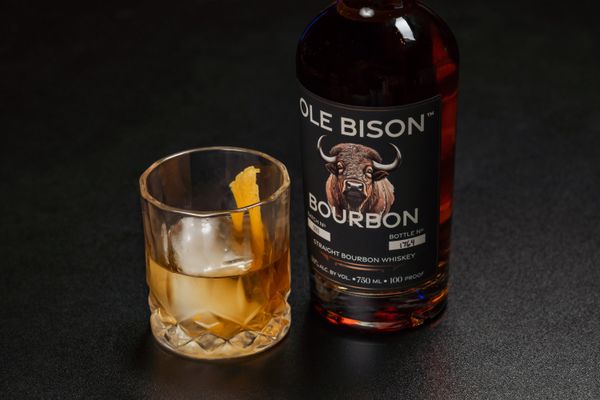
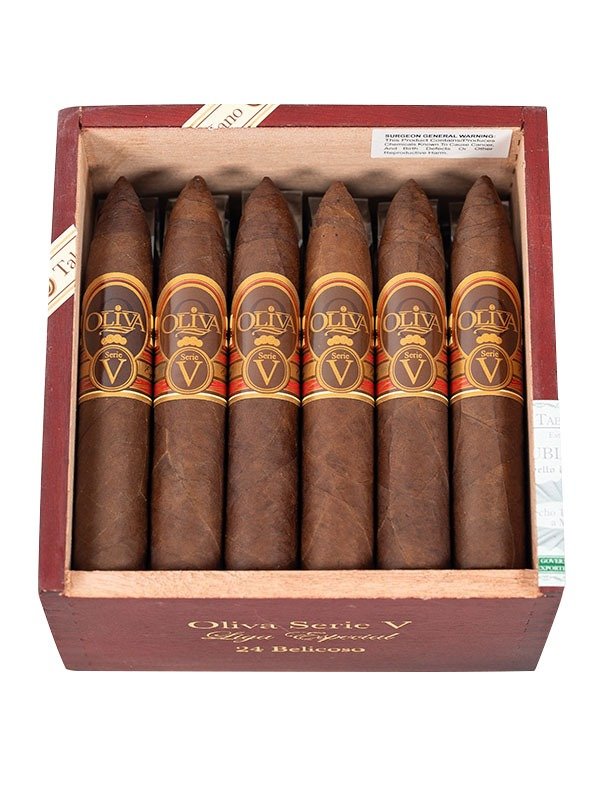
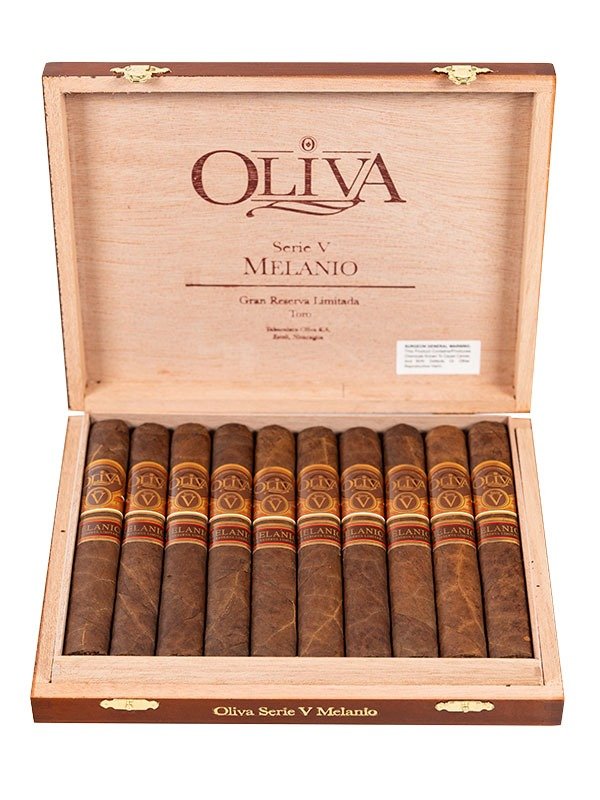
Two cigars on the table, a Sunday afternoon in February, both box-pressed and both wearing the Oliva name. On the left, a Serie V Belicoso. On the right, a Serie V Melanio Toro. A glass of Armagnac sat between them, because that's the pour I reach for when I want tobacco to show its darker corners. Neither box was new to me. Each had already given up three sticks to my log before that afternoon, which is the only reason I'm willing to write a word about either.
I get the Oliva Serie V vs Melanio question more than almost any other, usually phrased as "is the Melanio worth the extra money." My short answer annoys people. For most smokers, on most nights, the plain Serie V is the better cigar to actually buy, and the Melanio is the one you save for when you're paying attention. The pricier stick is not the more layered one. It's the more polite one. Those are separate things, and the trade press keeps mixing them up.
Same family, two different wrappers
Start with what they share, because it's most of the cigar. Oliva builds both blends on a Nicaraguan core, binder and filler, a lot of it aged ligero out of the Jalapa Valley up near the Honduran border, per the maker's own blend specs. That ligero is the engine. It's the reason a well-rested Serie V can put you in a chair and keep you there.
That shared Nicaraguan core is worth sitting with, because it's why these two cigars are cousins and not strangers. Cuban-seed tobacco grown in Nicaraguan soil, most of the Serie V's power coming from Jalapa ligero, the thick, oily, slow-burning top-leaf grade that carries the most nicotine and the most flavor. Oliva has farmed that ground for decades, and it shows in how few duds come through a box. When two blends start from the same filler and binder, the wrapper stops being a garnish and becomes the whole argument. Change the coat, and you change which parts of that core get amplified and which get muffled.
The wrappers are where the two lines split. Oliva lists both as Ecuadorian on its spec sheets, but they aren't the same leaf. The Serie V wears a high-priming Sun Grown, the top leaves that catch the most sun and carry the most oil and punch. The Melanio wears a Sumatra-seed wrapper, thinner in the hand, oilier, sweeter before you ever strike a match. Same guts, two coats. And the coat changes more than you'd guess. If you want to line up the current Serie V vitolas against the Melanio range, they read close on paper, both running a Robusto, a Toro, a Churchill and a torpedo, with a figurado in the Melanio's case. The Serie V just sits a hair thicker and boxier across the line.
The name on the more expensive box belongs to a person. Melanio Oliva put his first tobacco crop in the ground in Pinar del Rio, Cuba, in 1886, per Oliva's own heritage page, and four generations later the family runs one of the larger Cuban-seed operations in Nicaragua. When they wanted a flagship, they hung his name on it. That's marketing, sure. But there's a genuine tobacco argument underneath: the Melanio is the blend Oliva points to when it wants to be judged on finesse instead of force. Oliva's site still leads the Melanio page with the Figurado being named a 2014 Cigar of the Year, and the brand is not shy about it.
Four passes, side by side
My method for a head-to-head is dull on purpose. Same night, same palate, alternate between them, cold draw to nub on both. Anything looser and you're comparing a cigar to your memory of another cigar, which is worthless. Construction on both was what I've come to expect from Oliva rolled in Esteli after a couple hundred through the log: dead-straight burns, tight pale ash that held past an inch, caps that cut clean. No soft spots, no tunneling on any of the six.
Cold, the split is already obvious. The Serie V Belicoso gives up raisin and a dry cocoa, a little barnyard, the cap firm and slightly grippy on the lips. The Melanio Toro is a different creature unlit: cedar, dried apricot, a sweetness closer to hay than to fruit. If you handed me the two caps blind, I'd call the Melanio the costlier stick in about four seconds, and I'd be right. It shows its money before you light it.
First third, and the Serie V comes out swinging. Pepper on the retrohale sharp enough to make you slow the draw, then that Jalapa cocoa underneath, bitter the way an 80 percent bar is bitter rather than a candy one. The Melanio opens quieter. Toasted almond, a warm bread note (the kind you get off a good baguette crust), the pepper present but sanded down. Both settle into a straight line fast. The Melanio's smoke is just cooler on the tongue, and that's the Sumatra talking.
The second third is where the money argument gets decided. The Serie V builds. It turns earthier, the cocoa deepens to espresso, and somewhere past the band it picks up a black-pepper heat that rides the back of the throat. Some people love that. On a full stomach with a dark spirit, so do I. The Melanio does the opposite. It rounds off, brings in a note I can only call toasted marzipan, and it holds that note without wandering off. Neither is better here. They want different evenings, and pretending otherwise is how reviewers end up lying to you.
Final third, the Serie V can turn on you if the stick was rushed. Rested right, it stays deep and picks up a leather edge, old saddle leather, the kind that's been wiped down and left in a tack room. Pushed too fast, it goes hot and tars up on you. The Melanio almost never does that. It coasts to the nub with the marzipan still there and a little cream added, and it forgives a quicker smoker. That forgiveness is part of what you're paying for, and nobody prints it on the box.
What goes in the glass changes the verdict too, and my old floor habit kicks in right here. The Serie V wants something with teeth: a peated Scotch, a rye, the Armagnac I had going that afternoon, a spirit that can stand up to the pepper without getting bulldozed. Put it next to a light beer and the beer disappears. The Melanio is the more flexible partner. It's happy with a cortado, an aged rum, even a second cup of black coffee on a slow morning, because its sweetness meets the drink halfway instead of fighting it. If you mostly smoke with coffee, that alone might settle the question for you.
Power, not polish, and the "complex" myth
Now the part that fills my inbox. Reviewers keep calling the Melanio the more complex of the two, and I don't buy it. Most "complex" cigars are not complex; they're inconsistent, and reviewers confuse the two. The Melanio isn't doing more things than the Serie V. It's doing fewer things, but doing them the same way every time, and that steadiness reads as polish. The Serie V actually covers more ground, raisin to cocoa to espresso to pepper to leather. It just doesn't move between them as neatly.
Consistency cuts the other way too, and I've been on the wrong end of it. A 2022-box Serie V Belicoso I lit last November came out of a humidor sitting at 71% RH, too wet, and it smoked hot and bitter through the whole first third before it settled. That's not the blend's fault. It's mine. But it tells you something real about the two cigars: the Serie V punishes bad storage and a fast draw far harder than the Melanio does. The extra fermentation and the Sumatra coat on the Melanio buy a wider margin for error. So how good the Serie V is depends on how long it has rested, and not every box smokes the same on arrival.
When I put numbers on them, I do it with all of that in mind, and I keep the numbers low on purpose. Across the three Serie V Belicosos I've smoked from this box, I land at 89, from my own tasting notes, and I'm holding it under 90 deliberately. The 90+ ratings inflation in the trade press has made the whole scale useless; half the time a 92 today is what an 86 used to be. The Melanio Toro, across three from its box, gets a 92 from me. That three-point gap is about refinement, not about which one I had more fun with, and those are not the same measurement.
And the scores hide exactly this. When a magazine hands the Serie V a 94 and the Melanio a 96, it tells you the Melanio is two points better, full stop, as if they're one cigar measured on one ruler. They aren't. One is a full-throttle Nicaraguan-cored smoke that rewards attention and punishes neglect; the other is a rounded, aromatic stick built to be easy to love. A single number can't hold that, and the number-chasing is how a lot of smokers end up paying more for a cigar that suits them less. Buy the profile, not the plaque.
What the extra few dollars actually buy
Money, then. The Serie V lives in the value tier; the Melanio sits a few dollars north of it, per typical retail in early 2026. Per stick, that gap looks like nothing. Across a box of twenty or twenty-four it turns into a real number, a dinner out, and the only question that matters is whether refinement and a wider error margin are worth that dinner to you. And prices on both move around, since a lot of this is closeout stock that comes and goes, so the gap you see one month isn't the gap you'll see the next.
My honest read: for a weeknight cigar, the one you smoke on the porch while the dog works the yard, the Serie V wins on dollars-per-satisfaction and it isn't close. The Melanio earns its premium in narrower conditions, a slow Sunday, a good pour, an hour you won't rush. My usual gripe is that premium-cigar price-to-quality above $20 is broken, that there are eleven-dollar boutiques out-smoking thirty-five-dollar brand names and nobody says it loudly enough. The Oliva argument is a cheerier one, because this whole fight happens under fifteen dollars a stick, down where value still means something.
In my cellar it shakes out along frequency lines, which is the only budget test I trust. I run the Serie V as a rotation cigar, three or four boxes deep at any time, because I smoke them constantly and I don't want to run dry. The Melanio I buy a box at a time and ration, ten or twelve set aside for the nights that deserve one. That split has nothing to do with which cigar scores higher. It comes down to frequency. A cigar you smoke twice a week has to survive being ordinary; a cigar you smoke twice a month gets to be an event. The Serie V survives ordinary better than almost anything at its price.
There's a third option people forget, and it muddies the "which is better" question in the best way. Both lines run a Maduro. The Melanio Maduro swaps the Sumatra for a Mexican Maduro off the San Andres Valley, per Oliva's listing, and it turns the whole cigar toward coffee, dark bread and a peppery close, less sweet, more brooding. If the standard Melanio's finesse leaves you wanting grip, that's the one to try. It's the closest the Melanio family gets to the Serie V's attitude while keeping the Sumatra-line manners.
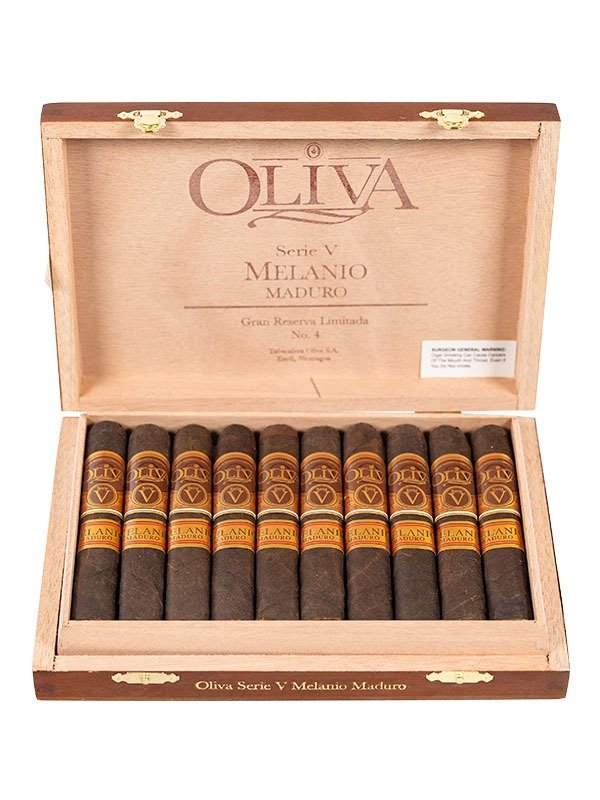
If you're cross-shopping, it's worth looking past these two blends at the rest of what Oliva makes, because the Serie O and the Connecticut Reserve solve different problems for less money. And if you'd rather know what other smokers are actually buying than what won a plaque, the best-selling closeouts tell a more honest story than any year-end list does. Half of what I keep in cellar started as a name I watched move off a shelf, not one I read about in a magazine.
Which one fits your night
So, which one deserves your money? That's the wrong question, or at least half a question. It depends on the night you're buying for. The short version lives in the table below, and the verdicts follow it.
| Criterion | Serie V | Serie V Melanio |
|---|---|---|
| Wrapper | Ecuadorian high-priming Sun Grown | Ecuadorian Sumatra |
| Core | Nicaraguan, Jalapa ligero | Nicaraguan, aged for finesse |
| Body | Full, and it climbs | Medium-full, and it holds |
| Flavor arc | Raisin, cocoa, espresso, pepper, leather | Cedar, almond, toasted marzipan, cream |
| Forgives bad storage | Not really | Mostly |
| Made for | The weeknight porch cigar | The slow Sunday with a pour |
Serie V, then: buy it. This is the one I rebuy by the box, and the one I hand a friend who wants to feel what Nicaraguan ligero does without spending Sunday money. Give it six weeks at 65% RH before you judge it. Rushed, it's a lesser cigar. Rested, at an 89 I'll stand behind, it punches well over its price.
The standard Melanio: buy it, but buy it for the right night, and if you've got the patience, age it. A year in the cellar rounds the young pepper off the Sumatra and lets the marzipan come forward. It's already the more finished stick green; at eighteen months it's genuinely lovely. I made the case for the Melanio Robusto over its own Toro a while back, and that still holds. The Robusto is the format where this blend runs tightest.
The Melanio Maduro: try one before you commit, then buy it if the darkness suits you. And the one honest skip in the family? The Melanio makes a poor first cigar. If you're new to full Nicaraguan smoke, its finesse is wasted on a palate that hasn't learned the loud version yet. Learn the Serie V first. Come back to the Melanio when you can taste what the extra fermentation actually did to the leaf.
On aging, the two reward patience differently. The Serie V is close to its peak young; a few months of rest to marry the ligero and it's where it wants to be, and past a couple of years the pepper flattens more than it improves. The Melanio has a longer runway. The Sumatra wrapper and the extra fermentation give it room to develop for a year or two, and the young grip that feels slightly disjointed out of the box knits into something seamless. If you buy to lay down, the Melanio is the better cellar candidate. If you buy to smoke now, the Serie V asks less of you.
People want the expensive cigar to be the better cigar, because it keeps the world tidy. Oliva built two very good blends that refuse to cooperate with that wish. The Melanio is the one I'd photograph. The Serie V is the one whose box empties first, every time, and has for years. Make of that what you will.
One note on how this column works. When we link to a specific product, we link to a retailer our writers think charges a fair price for it. That's the whole relationship, and it's the reason you won't catch me naming a shop in a sentence about tobacco. If you'd sooner start from the top than from a single blend, the full catalog is one click away, and the brand directory sorts it by maker.
Sources & Notes
- Oliva Serie V blend and vitolas, olivacigar.com/cigars/serie-v. The maker lists an Ecuadorian high-priming Sun Grown wrapper over a Nicaraguan binder and Jalapa Valley ligero filler, with a stated flavor of coffee and dark chocolate and a balanced spice.
- Oliva Serie V Melanio, olivacigar.com/cigars/serie-v-melanio. An Ecuadorian wrapper over a Nicaraguan core, and the line Oliva presents as its flagship; the page still leads with the Figurado's 2014 Cigar of the Year.
- Oliva heritage, olivacigar.com/heritage. Melanio Oliva's first Cuban crop in 1886, the family's route through Central America to Nicaragua, and its standing as one of the country's larger Cuban-seed growers.
- Oliva Serie V Melanio Maduro, olivacigar.com/cigars/serie-v-melanio-maduro. Confirms the Mexican Maduro wrapper off the San Andres Valley over a Nicaraguan binder and Jalapa filler.
- Tasting notes and ratings are my own, drawn from three sticks of each blend smoked in January and February against my humidor log, kept at 65 to 68% RH and paired with Armagnac.