Three Romeo y Julieta 1875 Bullys, all pulled from the same ten-count box, smoked between July 2 and July 13, 2026. The number at the end is an 87. I'm putting that first because everything below is only the arithmetic that produced it, and you ought to be able to check my work instead of taking it on faith.
Open every review with context: release year, blender, where I smoked it, what was in the glass next to it. So, in order. The 1875 isn't a release and never was one. It's a standing line that Altadis USA has kept on the shelf for decades, which means there's no vintage to chase, no allocation, nothing to stand in line for. The name is the oldest thing in the room. Altadis says the marque was "Established in 1875" and that "Sir Winston Churchill was perhaps the brand's most illustrious enthusiast, and the flagship vitola of the brand is named in his honor." No blender is credited anywhere on the company's page for this line, which tells you what kind of cigar it's meant to be.
I smoked all three on my own balcony in Montréal (second floor, facing an alley, which is where I smoke most evenings between May and October). Redbreast 12 in the glass for the first and the third. Black coffee for the second, because I lit that one at nine in the morning and whiskey before ten is a decision, not a habit.
What ten of them actually cost
A ten-count box of the 1875 Bully runs $47.65 [current retail]. That's $4.77 a cigar, and the price is the entire reason this review exists. I don't much care what a $4.77 cigar tastes like in isolation. I care what it tastes like against the shelf it sits on, because a cigar at that number isn't competing with the boutiques. It's competing with the other four-dollar sticks, with the coffee you'd have bought instead, and with the ten minutes you'd have spent doing nothing.
Here's the part the ratings columns never print: the 90+ ratings inflation in the trade press has made the entire scoring system useless. Half the time a 92 is what an 86 used to be. That inflation is loudest at the top of the price sheet, where the review copy and the sample box arrive together, and it's near-silent down at the bottom, where nobody's flying anybody to a factory to taste a four-dollar Dominican Robusto. So the cheap end of the shelf goes unmeasured, not because it's bad, but because measuring it doesn't pay. I wrote about that gap at more length in a piece on why the best everyday cigar isn't the priciest one, and the 1875 is the specimen I keep coming back to.
What's actually in it, per the maker's own spec sheet
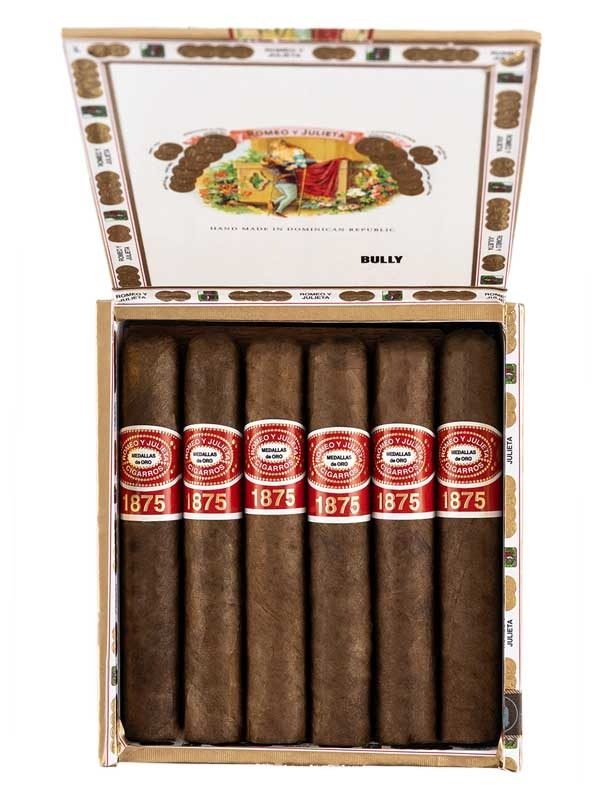
Altadis USA publishes the blend on its own product page, and it's short. Wrapper: "Indonesian TBN," shade grown. Binder: Dominican. Filler: Dominican. Country of origin: the Dominican Republic. The Bully is a 50 ring gauge at 5 inches, which is a Robusto by any other name. Strength is rated a 5 on the company's own scale, and the company describes the taste as "mellow" with "medium body," burning with "a characteristic white ash."
Read that again, because Altadis has managed to describe one cigar three ways in a single paragraph. A 5 out of whatever, "mellow," and "medium body" aren't the same claim. That isn't marketing sleight of hand so much as a company hedging on a cigar it doesn't want to characterize too narrowly, and I'd rather they just picked one. The shop listing I bought from goes further and calls the wrapper a vintage 2010 Indonesian leaf. Altadis's own spec sheet says no such thing. It lists "Indonesian TBN" and stops. When the maker and the shelf tag disagree, I take the maker, and I'd suggest you do too.
And now the thing almost nobody says out loud about this line. Altadis sells a second cigar called the Romeo y Julieta 1875 Nicaragua, and its spec sheet lists a Nicaraguan wrapper over a Nicaraguan binder and Nicaraguan filler, made at Plasencia Cigars S.A. in Nicaragua. The company calls that one "full-flavored," with "bold and zesty hints of Nicaraguan tobaccos." So the band reads 1875 on both, and the two cigars share not one leaf of tobacco, not one country, and not one factory. They are the same brand the way a Honda Civic and a Honda generator are the same brand. If somebody tells you they like the 1875, you genuinely don't know what they smoked.
The Dominican side of that split is also swimming upstream. Through March 2025 the Dominican Republic shipped 16,945,000 premium cigars into the United States, down 3.1% against the same quarter of 2024, while Nicaragua shipped 59,703,000 and rose 8.9%, per the Cigar Association of America's import report. Of roughly 93,264,000 premium cigars imported that quarter, the Dominican Republic accounted for about 18%, and it was the only major origin to shrink. Mild Dominican tobacco is losing the argument to Nicaraguan strength, and the 1875 is one of the last mass-market Dominican blends still holding a real shelf position while that happens.
The log, before the tasting
I keep a personal humidor log - 700+ cigars reviewed in writing since 2019, and the conditions go in the log with the notes, because the conditions are half the review. Here are the three, exactly as they went down:
| Cigar | Date lit | Box RH | In the glass | My number |
|---|---|---|---|---|
| 1 of 3 | July 2, 2026 | 65% | Redbreast 12 | 88 |
| 2 of 3 | July 9, 2026 | 65% | Black coffee | 84 |
| 3 of 3 | July 13, 2026 | 64% | Redbreast 12 | 88 |
Average: 86.67, which rounds to the 87 at the top of this page. Two of the three were the same cigar twice. The middle one wasn't, and I'll get to why.
Pass one: the cold draw
Double guillotine, straight across, about a sixteenth of an inch off the cap. The Bully's cap is shallow enough that a punch fights you, and I've torn two wrappers on this size learning that.
The cold draw on all three was the most consistent thing about the box. Cedar first, dry rather than oiled, closer to the inside of a cigar box than to a plank. Underneath it, hay, and a faint sweetness I can only place as the paper of a bakery box, that clean starchy smell before anything's been put in it. Draw resistance was moderate on cigars one and three, right at the point where you feel the tobacco but don't work for it. On cigar two it was already tight in the hand, and I noted it before lighting and smoked it anyway, because a review that only reports the good sticks isn't a review.
The wrapper itself is thin, pale, and unremarkable to the eye. Seams flat, a couple of small veins, no oil to speak of. It looks exactly like what Altadis says it is, which is a shade-grown Indonesian leaf doing a job rather than starring.
Pass two: the first third
Toast arrives first, and it's genuine toast, the dry crumb of bread that's been under a broiler rather than the caramel of a maillard-heavy Maduro. White pepper rides on top of it for the first ten minutes and then leaves, and it doesn't come back until the end. Behind the toast, almond skin. Not the nut, the skin: that faint bitterness on the outside of a blanched almond, papery and slightly astringent.
The ash held white and tight for a little over an inch on cigars one and three. Altadis claims "a characteristic white ash" on the spec sheet, and for once the copy matched the cigar, which is rare enough to note. Burn line stayed within a millimeter of level without touching it.
Is any of this exciting? No. It's a quiet, well-mannered first third that asks nothing of you, and if you're reading a Romeo y Julieta 1875 review hoping I'll find hidden depth in the opening inch, I won't. But quiet isn't the same as empty. There's real tobacco flavor here, and there's no ammonia, no green vegetal note, no sting at the back of the throat. At $4.77 that's already most of what I want.
Pass three: the second third
The middle is where the box earned its number, and where cigar two lost four points.
The second cigar, lit on July 9, 2026 after 3 weeks resting at 65% RH, came up plugged about an inch past the band and wouldn't draw until I ran a poker through it. That's a construction fault, not a blend fault, and it cost the smoke about fifteen minutes and most of its second third. Once opened, it went hot and turned harsh for a few draws before settling. I've had this exact failure in far more expensive cigars, and it's the single most common defect in the Dominican Republic's high-volume factories, where a torcedor rolling hundreds of cigars a day will occasionally bunch one too tight and it goes out the door.
On cigars one and three, the second third is the best part of the 1875. The toast rounds into cashew, sweeter and fatter than the almond skin from the opening. A mineral edge comes in underneath, the taste of cold well water, and it gives the middle a spine the first third doesn't have. Body picks up perceptibly, and if I were arguing for that "medium body" claim on the spec sheet, this is the stretch I'd point to. Not the opening.
Retrohale is worth doing here and only here. Through the nose the cashew turns to something like warm cereal, and the pepper that vanished at minute ten reappears as a suggestion rather than a bite. Two draws of that per inch is plenty. Any more and the mineral note goes chalky.
Pass four: the final third
Heat is the story of the last two inches, and it's the story of nearly every mild cigar at this price. The pepper comes back, the cashew flattens out, and by the last inch and a half there's a bitterness at the core that isn't unpleasant so much as it's a signal. Put it down.
Cigars one and three I nubbed to about an inch and a quarter and set down before they got mean. Cigar two, the plugged one, went bitter earlier, around two inches, because a cigar you've poked open burns faster and hotter than one that never needed it. All three stayed lit the whole way without a relight, and none of them tunneled or canoed, which for a Dominican box at this volume is a better construction record than I expected.
Total burn time was a little under an hour on the two clean sticks. That's honest for a 5 by 50 smoked at a conversational pace, and it's the right length for what this cigar is for, which is a weeknight, not an event.
Where most people go wrong buying this one
They buy one. Or worse, they get one inside a mixed pack, smoke it, and decide they know the cigar.
I know exactly how that fails because I did it. In 2021 I gave a Liga Privada Único Serie the Dirty Rat a 93 after one smoke at a Drew Estate event. Then I smoked five more from the same box over the next year, averaged an 87, and one of them was outright bad. One cigar is not a review. I now refuse to publish a number on fewer than three from the same box, and it's the only editorial rule I've never once bent.
That rule bites hardest on a cigar like this one. A four-dollar stick out of a high-volume Dominican factory has more unit-to-unit variance than a $30 cigar does, and that's not an insult, it's just what volume does. My own box proved it: two 88s and an 84, and the 84 wasn't a tobacco problem, it was one tight bunch. If you'd smoked only cigar two, you'd have written the line off. If you'd smoked only cigar one, you'd have called it a steal. Both of those reviews would have been wrong, and both get published every day.
Which means the limits of this review are worth stating plainly, since most reviews never state theirs. Three cigars, one box, one format, one city, one month. Construction varies significantly from box to box at this production volume, and a plugged draw like the one I hit is a lottery ticket off the factory floor rather than a verdict on the blend. Buy a different ten and you might get three clean ones. You might get two. If you keep your humidor wetter than 65% RH, expect the burn to go before the flavor does, and don't blame the tobacco for water.
So the mixed-pack trap is a real one. The sampler route gets you a taste of the family, and it's a fine way to find out whether you like Dominican mild tobacco at all. It isn't a way to evaluate the 1875, because you'd be judging a factory's consistency from a sample size of one, and consistency is the only thing this cigar is actually selling.
The verdict: 87, and what that number is doing
An 87 from me on a $4.77 cigar is a higher compliment than a 92 from a magazine on a $22 one, and I'd like that sentence read literally rather than as a flourish.
Most "complex" cigars are not complex; they're inconsistent, and reviewers confuse the two. A cigar that tastes different every time gets called layered. A cigar that tastes the same every time gets called boring. The 1875 is the second kind, and after eleven years on the floor at Cigare Royal Montréal I can tell you which one regulars actually reorder. It's never the layered one. It's the one they can hand a guest without checking it first.
Is this the best mild cigar on the shelf? No, and I won't pretend otherwise. There are milder cigars with more going on, and most of them cost three times as much. What the 1875 is, is the most predictable thing I've smoked under five dollars, and predictability at that price is worth more to me than a peak I can't repeat. If mild is the register you're shopping in, it belongs on any short list of mild cigars worth keeping in the box, and I'd put it near the top on cost alone.
Buy it, age it, skip it - every review ends with one of those three. This one is buy it, with a condition attached: buy the ten, not the one. The Romeo y Julieta 1875 Bully in the ten-count box is the format that makes the math work, because one bad bunch out of ten costs you $4.77 and a shrug, while one bad bunch out of one costs you the whole opinion. Don't age it. There's nothing in this blend that time is going to improve, and a shade-grown Indonesian wrapper over Dominican filler at a rated 5 is already showing you everything it has. Smoke it inside the year.
If you don't want ten of them
Disclosure: When we link to a specific product, we link to a retailer our writers think charges a fair price for it. If ten is more commitment than you're willing to make on my say-so, there are two smaller ways in, and I'd rather point you at them honestly than pretend the box is the only door.
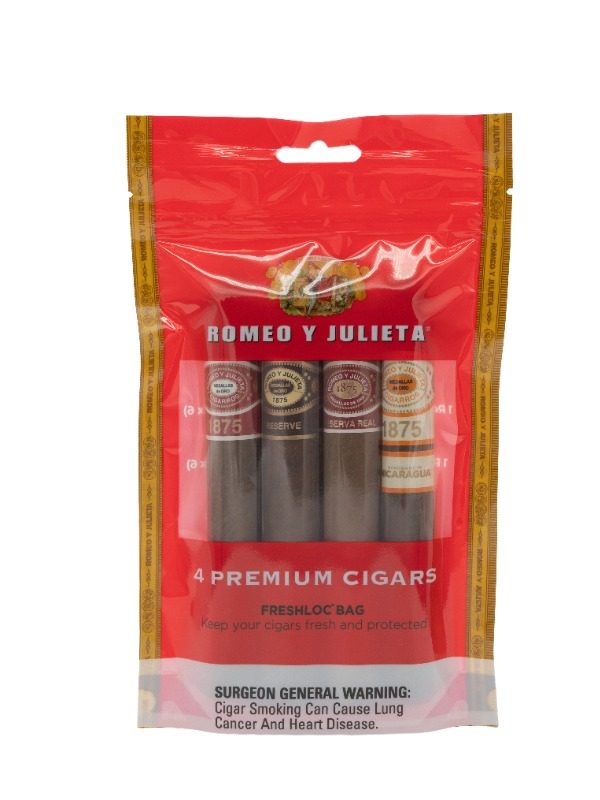
The four-cigar Romeo y Julieta fresh pack is $22.50 and holds one 1875 Exhibición #3 alongside an 1875 Nicaragua Toro, a Reserve Toro and a Reserva Real Toro. That's $5.63 a cigar, so you're paying a premium over the box for the privilege of not committing, which is a fair trade. It's also the cleanest way to taste the Dominican 1875 and the Nicaraguan one side by side and finally settle which cigar you've been recommending to people all these years.
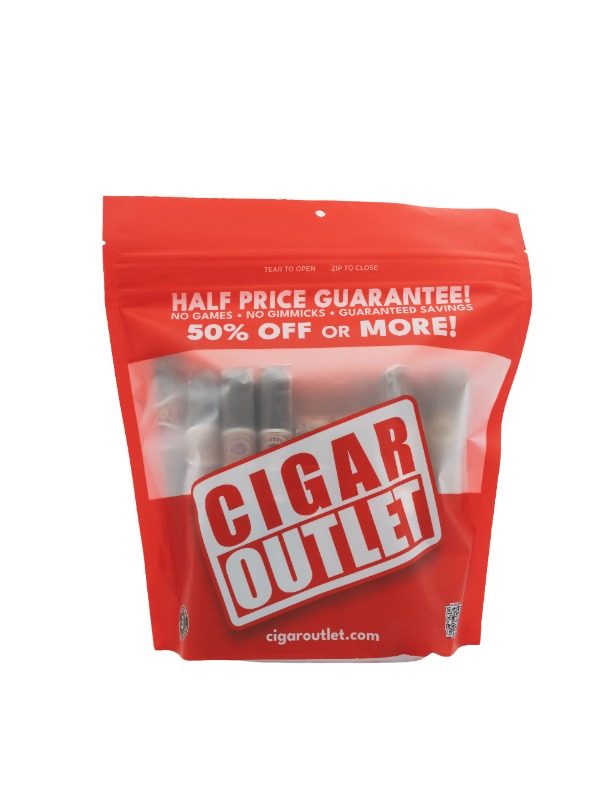
The twenty-cigar Everyday Romance assortment is $99.99 and spreads across eight Romeo blends, five dollars a stick. It's the better buy of the two if you want the whole family at once, and it's the one I'd hand somebody who says they don't know what they like yet. The rest of the line sits on the Romeo y Julieta brand page, and if you'd rather shop the Dominican side of the shelf generally, the Dominican category and the full catalog are where I'd start. Other makers worth your time are indexed on the brand directory.
Which brings me to the one number in that Everyday Romance assortment that I can't stop looking at. It contains exactly two 1875 Bullys. Two. Smoke both and you'd have half of one data point and all of an opinion, and you'd be one stick short of the rule that cost me a year of being wrong about a Dirty Rat. Two is not three. It never has been.
Sources & Notes
The tasting above is my own, across three cigars from a single ten-count box, smoked July 2 to July 13, 2026, and logged at the time. Blend and size specifications come from the manufacturer, not from a shelf tag or a review aggregator. Import figures come from the industry's own trade association.
- Altadis U.S.A., Romeo y Julieta 1875 product page - wrapper ("Indonesian TBN," shade grown), Dominican binder and filler, Dominican Republic origin, strength rated 5, "mellow" / "medium body" / "characteristic white ash," and the Bully at 50 x 5: altadisusa.com/cigars/romeo-y-julieta/romeo-y-julieta-1875
- Altadis U.S.A., Romeo y Julieta brand page - "Established in 1875" and the Churchill vitola: altadisusa.com/cigars/romeo-y-julieta
- Altadis U.S.A., Romeo y Julieta 1875 Nicaragua product page - Nicaraguan wrapper, binder and filler, made at Plasencia Cigars S.A., "full-flavored": altadisusa.com/cigars/romeo-y-julieta/romeo-y-julieta-1875-nicaragua
- Cigar Association of America, US cigar import report - Dominican Republic 16,945,000 units (down 3.1%), Nicaragua 59,703,000 (up 8.9%), 93,264,000 premium cigars total through March 2025: cigarsusa.org/2025-ytd-cigar-import-report
Prices were checked against the live listing on July 16, 2026 and will move. No sample was provided by the manufacturer; I bought the box.