A federal judge put the definition of a "premium cigar" on the record on August 19, 2024, and it runs eight parts long. A wrapper of whole tobacco leaf. A binder of 100 percent leaf tobacco. At least half long-filler tobacco. Hand-rolled. No filter, no flavor added beyond the tobacco itself, nothing inside it but leaf, water, and a little vegetable gum. It has to weigh more than six pounds per thousand. Not one of those eight parts says a word about price, which is exactly where the hunt for a good everyday cigar should start.
So read the omission for what it is. By the federal government's own working test, a hand-rolled cigar that leaves the shop at a buck and a half and one that leaves at eighty-eight dollars are the same class of product. The price gap between them is enormous. The legal gap doesn't exist. If you're shopping for the best everyday cigars, that footnote matters more than any rating score.
I cover the regulatory beat for this magazine, and I've kept a running file on every premium-cigar ruling since 2021. What that file keeps showing me is how little of a cigar's price gets decided in Washington and how much of it gets decided in a marketing meeting. Here is where the money actually goes, tier by tier, and where the best value cigars quietly stop costing you anything that matters.
What "premium" legally means, and what it leaves out
The eight-part test came out of a long fight. In 2016 the FDA "deemed" every cigar a tobacco product under its authority, premium sticks included, which would have forced years of costly product-approval filings on small blends. The industry's three trade groups sued. They won, and they kept winning.
Judge Amit Mehta of the U.S. District Court in Washington blocked the FDA's premarket-approval rules for premium cigars in August 2024, finding the agency "failed to engage in 'reasoned decision-making'" and calling its position "arbitrary," according to the Premium Cigar Association's account of the order. Five months later, on January 23, 2025, the D.C. Circuit Court of Appeals upheld the vacatur of the deeming rule. (I keep the operative paragraphs from both decisions in my files; the appeals court handed the exact wording of the premium definition back to Mehta to finalize.)
So what does a courtroom brawl tell a buyer? That the people who make these cigars spent years and a fortune in legal fees to draw a line around their category, and the line they drew is about how a cigar is built, not what it costs. A stick earns the word "premium" through whole leaf, long filler, and a human roller. Price never entered the argument.
If you want the regulatory backstory in full, I walked through what the 2026 picture actually changed in a separate piece on the FDA ruling. The short version for a value shopper: the rules that would have wiped out the cheapest hand-rolled blends never took effect, which is why the budget end of the shelf still holds real cigars and not just machine-bunched filler.
The federal tax is nearly flat, so it isn't why cheap cigars are cheap
Here is the number that reframes the whole question. The federal excise tax on a large cigar is 52.75 percent of the price the maker or importer sells it for, capped at 40.26 cents a cigar, per the TTB's tax-and-fee schedule. The cap is the part nobody talks about.
Do the arithmetic and the cap starts biting at roughly 76 cents of wholesale price. Above that line, every large cigar owes the same 40.26 cents to the federal government, whether it retails for four dollars or forty. The tax simply stops scaling. A limited-edition perfecto and a bundle toro hand Washington the identical coin.
Put two real cigars side by side and the point lands. A daily stick that wholesales near a dollar pays its forty-odd cents and moves on. A limited perfecto that wholesales at twenty dollars pays the same forty-odd cents, because the cap caught it the moment its wholesale price crossed about 76 cents. Same federal line, a twentyfold spread at the register. Washington isn't the reason your everyday cigar is cheap, and it isn't the reason the showpiece is dear.
So when one cigar costs ten times another, federal tax explains almost none of the difference. Past a certain floor, neither does the leaf. What explains it is aging, labor, scarcity, packaging, and the brand's read on what you'll pay. That isn't a knock on expensive cigars. It's just an honest map of where the dollars sit, and most of them sit a long way from the tax line.
Where your money actually goes at the top of the shelf
Walk the price up and you can watch each tier buy something specific. The step from a value cigar to a mid-shelf one mostly buys consistency: tighter sorting, more rest, fewer duds in the box. The step from mid-shelf to the expensive tier buys rarity, and rarity is the part with no ceiling.
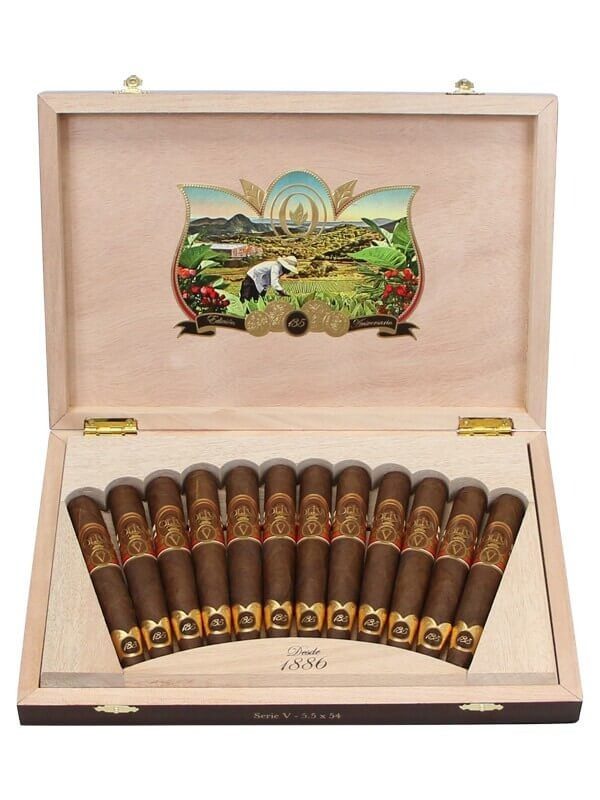
Take the Oliva Serie V 135th Anniversary. It's a perfecto under an Ecuadorian Habano wrapper over Nicaraguan leaf, and Oliva put out a fixed run of it (15,000 boxes, then done). The blend sits close to the standard Serie V that's been on shelves for years. What the premium buys is the limited box, the tapered shape, and the occasion, not a different grade of tobacco.
The far end of that logic is Fuente's OpusX, the Dominican puro Arturo Fuente grows under cheesecloth at Chateau de la Fuente. There's never enough of it, and the wait list is half the product. None of that scarcity shows up on the federal tax line, and none of it changes the category the cigar sits in. It's a hand-rolled long-filler cigar, the same legal animal as the buck-fifty toro three shelves down. Some of the premium also buys aged tobacco that's genuinely scarce right now, a squeeze I covered in a piece on the aged-leaf shortage, and that part is real value. The packaging and the cult wait list are not.
Labor is the other honest line item. A torpedo or a perfecto has to be bunched and capped by a roller who can shape it, and that roller costs more than one turning out straight parejos by the hundred. A figurado also rejects more often, which lifts the price of the ones that pass inspection. So shape alone moves the number before a single leaf changes. That's craft you can taste in an even burn, and it's worth paying for in a way a foil-stamped box never is.
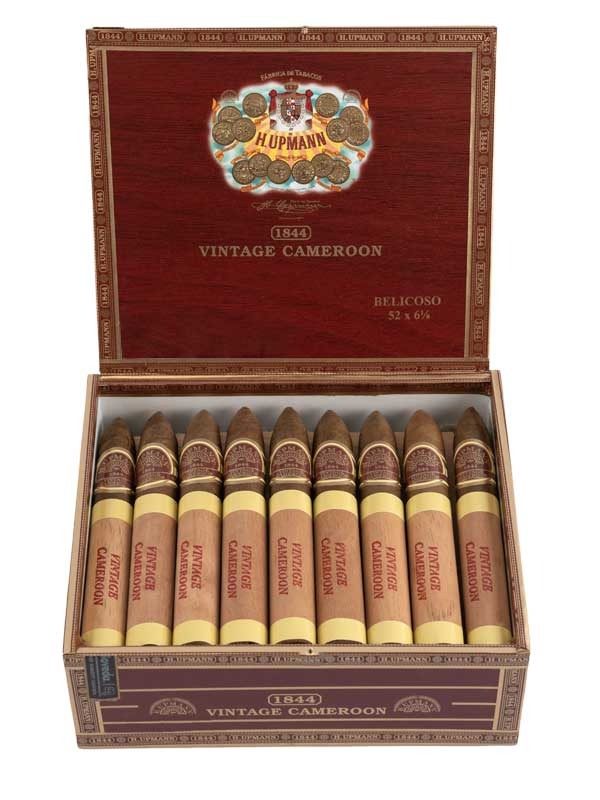
Wrapper is where leaf cost shows up first, because the wrapper is the leaf you see and the one growers fuss over most. A Cameroon wrapper, like the one on that H. Upmann, comes off a thin, finicky crop that's hard to grow and easy to tear, so it carries a premium even on an otherwise cheap cigar. An Ecuadorian Habano, grown under cloud cover, is more forgiving and turns up across every price tier. The wrapper bill is genuine money. The shelf markup stacked on top of it often isn't.
What a value cigar actually buys, and where it bites back
Now the cheap end, where this gets practical. A value cigar at a buck and a half isn't a lesser category of product. It's a cigar that skipped the expensive options: the long aging, the rare wrapper, the limited run, the box that photographs well. Sometimes it skipped a little quality control too. That's the whole trade.
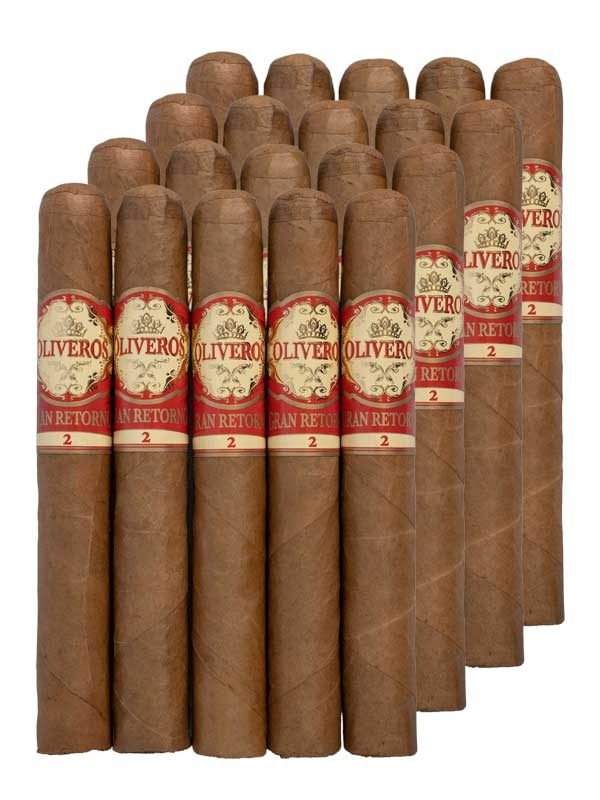
The Oliveros Gran Retorno Swing is the clearest example I can point to. It's a Nicaraguan toro, sold in a Connecticut or a Habano wrapper depending on the line, and it runs about a buck and a half a stick. At that price you don't expect much. What you get is a mild, even daily smoker that does the one job an everyday cigar has: be there, burn straight, and not pick a fight with your morning coffee.
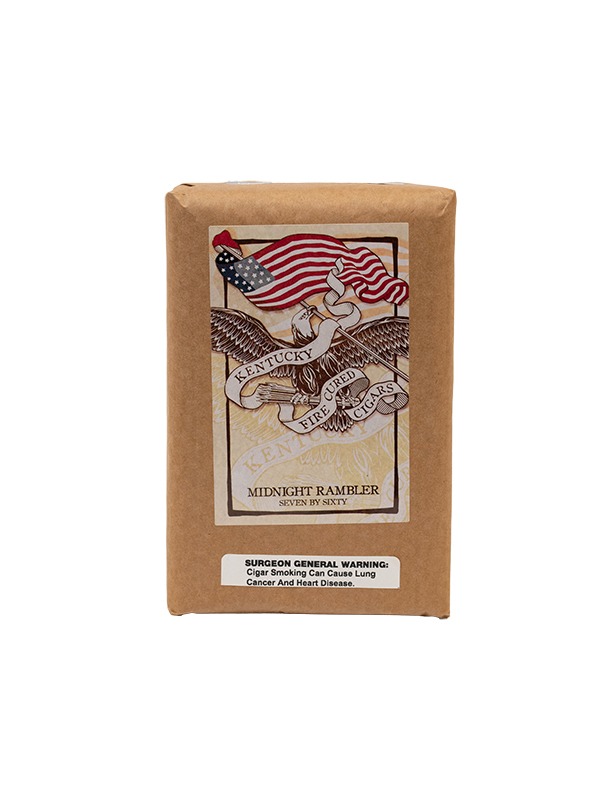
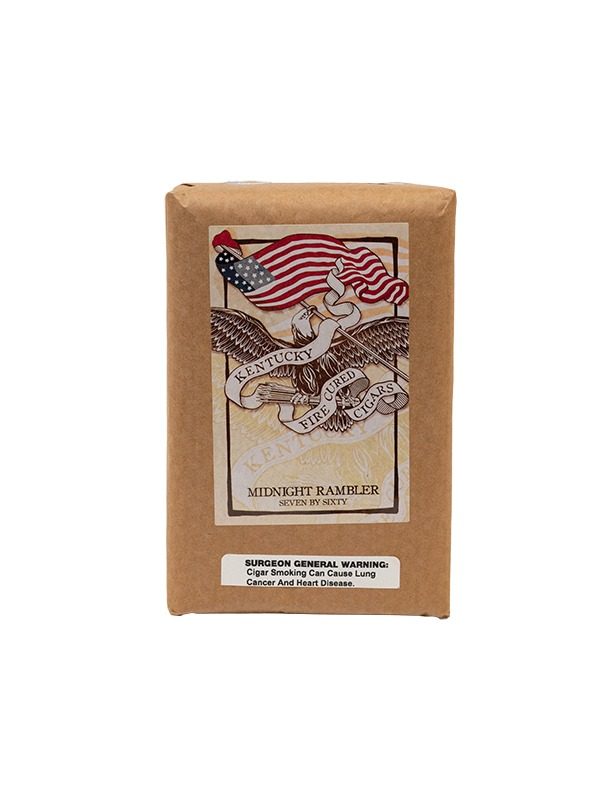
Two more budget sticks I keep in rotation take opposite paths to the same place. The Kentucky Fire Cured Midnight Rambler is a gordo under a Mexican San Andres wrapper, and its tobacco is fire-cured over hardwood the way brisket is, so it smokes like a campfire in the best sense. It's loud, and it isn't for every morning. The H. Upmann Vintage Cameroon belicoso runs the other way, a Dominican cigar under a Cameroon wrapper with a dry cocoa-and-chestnut character that stays civil from light to nub.
One tier up, the workhorses earn their keep. Drew Estate's Undercrown started as the cigar the rollers blended for themselves, a Mexican San Andres maduro that drinks like a stick twice its money. I hand the Undercrown Maduro in a robusto to anyone who insists maduro has to be either candy-sweet or harsh with nothing in between. For a fuller Nicaraguan with more black pepper up front, Oliva's Serie O in a torpedo sits in that same everyday slot. And the Trinidad Espiritu in a double corona is the long, slow option, a Brazilian Arapiraca maduro for an afternoon with nowhere to be.
Run the value math over a year and the case gets blunt. Smoke a buck-and-a-half cigar every day and you're under six hundred dollars for the year. Smoke a fifteen-dollar stick at the same pace and you're past five thousand. Most smokers split it, a cheap daily and a good one on the weekend, and the cheap daily carries the load on both the palate and the budget. The everyday cigar is the foundation. The splurge is the trim.
Here's how the everyday tier lines up against the showpiece, by the numbers a buyer actually weighs.
| Cigar | Size, wrapper, origin | Price each |
|---|---|---|
| Oliveros Gran Retorno Swing | Toro, Connecticut wrapper, Nicaragua | $1.50 |
| Kentucky Fire Cured Midnight Rambler | Gordo, San Andres wrapper, Nicaragua | $6.25 |
| H. Upmann Vintage Cameroon | Belicoso, Cameroon wrapper, Dominican Republic | $6.26 |
| Trinidad Espiritu Series 2 | Double corona, Arapiraca wrapper, Nicaragua | $7.26 |
| Oliva Serie V 135th Anniversary | Perfecto, Ecuadorian Habano, Nicaragua | $88.24 |
The catch with the cheap end is consistency. On the 2025 PCA show floor in Vegas, I watched a buyer pull three sticks out of a budget bundle sample, every one with a cracked wrapper, and hand the box straight back to the rep. Not every bundle runs that rough, but value lines drift box to box more than the expensive tiers do, because sorting and quality control are the exact corners cut to hit the price. Expect a plugged draw or a fast burn now and then. Buy the bundle anyway. One or two duds in twenty is still the cheapest good smoking you'll do all year.
Storage is the one place a value cigar punishes neglect. A buck-fifty stick held too dry cracks as fast as a pricey one, and it won't reward you for babying it the way an aged showpiece will. Keep the box steady around 65 percent humidity and it smokes clean for a year. Let the humidity swing and the thin budget wrapper splits first. How long a cheap cigar lasts depends on your humidor far more than your wallet.
I'll put my own credibility on the line here, because it bears on how you should read any cheap-cigar hype. In late 2024 I ran a rumor that a major Nicaraguan house had quietly reformulated a flagship line, sourced to one person who claimed inside access. I was wrong. The tip came from a competitor running a smear, and I pulled the story within hours. The lesson stuck: most trade publications recycle press releases verbatim and call it journalism, and the only antidote is to triangulate before you print, especially when someone profits from the story. The same skepticism applies to any value cigar wearing a suspiciously loud origin myth.
The market already smokes everyday
The demand data backs the cheap shelf, hard. In the PCA's 2024 survey of 133 member retailers, 58 percent reported higher sales year over year, and the single best-selling shape was the toro, named the top mover by 79 percent of shops, according to the association's published results. The toro is the everyday vitola. It's the size nearly every value line leads with.
That same survey found these are small businesses: roughly half the responding shops run on one to five employees, by the PCA's count. A store that size lives on repeat buyers walking in for the same box every week, not on chasing online allocations of whatever sold out by noon. Their bread and butter is the everyday cigar, which is one more way of saying the everyday cigar is what the trade is actually built on.
That tracks with what I see writing the weekly Cigar Industry Brief, where the news that actually moves units is rarely the limited edition that sells out by lunch. It's the everyday box a shop can reorder next month and the month after. A cigar that's gone forever can't be anyone's regular. The best everyday cigars are the ones still on the shelf when you come back.
The cap nobody indexed
One number is worth watching, because almost nobody is watching it. That 40.26-cent ceiling was set in 2009 and hasn't moved since. It's frozen in plain dollars while cigar prices climbed for the better part of fifteen years. So every year the federal tax shrinks as a slice of the eighty-eight-dollar showpiece and stays close to the whole federal bite on the buck-fifty daily smoker. The code quietly tilted toward the expensive cigar, and I have yet to see a single trade outlet run that math.
The premium definition itself is still in motion. Mehta holds the final wording on remand, and what he settles will decide which budget cigars even count as cigars under federal law. Until then the smart money does what it always did. It buys the everyday box and lets the limited editions sell themselves to somebody else.
Disclosure: when we link to a specific product, we link to a retailer our writers think charges a fair price for it. If you want to climb the shelf on your own terms, you can step into a fuller Honduran with the Camacho Corojo in a toro, taste the high end without committing to a whole box through the Oliva Serie V Melanio sampler, or just go see what the scarcity ceiling looks like on the Fuente OpusX Story Red.
Sources & Notes
- U.S. Alcohol and Tobacco Tax and Trade Bureau, federal tax-and-fee rates for large cigars (52.75 percent of sale price, capped at 40.26 cents per cigar): ttb.gov tax-and-fee rates.
- Premium Cigar Association, on Judge Amit Mehta's August 2024 order blocking FDA premarket requirements and the eight-part premium-cigar definition: premiumcigars.org, court ruling summary.
- Premium Cigar Association, on the D.C. Circuit's January 23, 2025 decision upholding the vacatur of the FDA deeming rule for premium cigars: premiumcigars.org, appeals ruling.
- Premium Cigar Association, 2024 retailer member survey (133 retailers; 58 percent reporting higher sales; toro the top-selling size at 79 percent): premiumcigars.org, 2024 retailer survey.