The trade-show floor at PCA26 in New Orleans ran 262 exhibiting companies across four days in April, and by the second afternoon I'd stopped counting how many of them printed the word "boutique" on a banner. The Premium Cigar Association put total attendance at 5,945, with 2,540 retailers walking the aisles from roughly 970 retail accounts. Plenty of those retailers came hunting the same thing: the next boutique cigar brands worth stocking in 2026.
Here's the problem. "Boutique" has stopped telling anyone anything.
It used to mean something specific. A small maker. A short run. A blender whose name was on the box and whose money was on the line. Now it's a typeface choice. It sits on bands owned by companies with national sales forces, and it sits on bands owned by one person renting a corner of someone else's factory. The word covers both. So if you're trying to decide which boutique cigar brands deserve your attention in 2026, the label is the least useful thing printed on the cigar.
What follows isn't a ranking. It's a way to read the shelf.
Why the word stopped working
Start with the reason small cigar makers can exist at all right now.
For most of the last decade, every new cigar brand in the United States ran into the FDA's deeming rule, the 2016 regulation that pulled cigars under federal tobacco authority and, with them, a premarket review process a small maker simply couldn't afford. That changed. The U.S. District Court for the District of Columbia vacated the deeming rule as applied to premium, handmade cigars, and the courts spent the years since arguing over the exact definition of which cigars sit outside FDA reach. We covered that ruling, and what it left unsettled, in our reporting on the 2026 FDA cigar decision.
What that did was simple enough. The cost of being a small cigar brand dropped. Not to zero. But far enough that a blender with good leaf and a factory contact can put a band on a box without a regulatory lawyer on retainer.
That's why the PCA floor in April looked the way it did, and the association wasn't shy about the energy in the room.
"Retailers came ready to buy, exhibitors came ready to innovate, and the result was a trade show that created real momentum."
Todd Naifeh, PCA President, in the association's PCA26 wrap-up
Read that the way a business wants it read and it's good news. Read it the way I read a press release and it's also a warning. When the barrier that used to thin the herd is mostly gone, everyone walks in. The word "boutique" went soft for the same reason a neighborhood gets crowded, not because anything went wrong, but because the door got easier to open.
So which boutique cigar brands should you actually watch in 2026? The honest answer starts with throwing out the band and asking a duller question: who owns this company, and what's on the line for them.
I work the PCA floor every year for the Cigar Industry Brief, the weekly roundup I pull from PCA dispatches, FDA filings, and a back-channel built over six years on this beat. The rule I hold to there is plain: every claim gets a date and a source, even when the source is something I overheard at a booth. And if a company won't respond, the article says so, by name. Point that rule at "brands to watch" lists and it gets brutal. Most trade publications recycle press releases verbatim and call it journalism, and a watch-list is often exactly that: one press release and one enthusiastic retailer. Strip the unverified hype and a lot of 2026's names have nothing under them yet.
I learned that discipline the hard way. In late 2024 I reported a rumor that Padrón had quietly reformulated a blend, sourced to a single anonymous person who claimed insider access. It ran on a small site for about six hours before I pulled it. The source turned out to be a competitor planting a smear. The story I should've written was about the rumor itself: how fast an unverified claim moves through this industry, and how a "brand to watch" can get manufactured out of nothing but repetition. So when I tell you to distrust a boutique label, I'm passing along something I had to learn by getting it wrong in print.
The genuine article: what real independence looks like
Fratello is the cleanest example I can point to of a boutique brand that's still actually boutique.
Omar de Frias launched Fratello in 2013. Before that he was an analyst at NASA. Fratello's own site references a Washington Post account of de Frias walking away from a $200,000 job to sell cigars. He still owns the company. It sources tobacco from the Dominican Republic and Nicaragua, and several of its lines lean openly on that history: the Navetta blend is named for space shuttles, and the 10th-anniversary Lunar cigar was developed with Steve Altemus, a former NASA deputy center director, per Fratello's site.
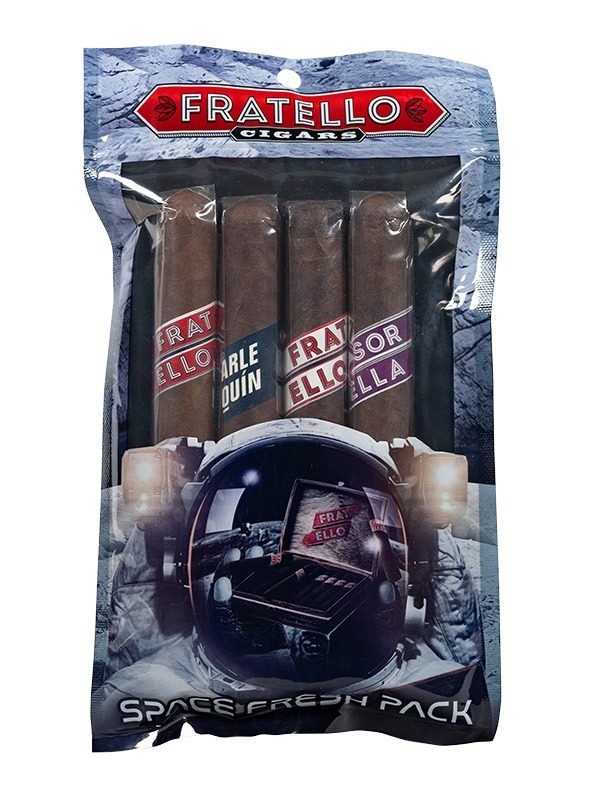
That's what independence looks like on paper. One founder. His name and his history on the product. His decisions unfiltered by a corporate brand committee. The Fratello Fresh Space Pack, a Nicaraguan-made sampler that runs about $12.49 [typical retail], is a low-stakes way to see the range without committing to a box. It pairs two newer blends, the Arlequin and the Sorella, both rolled at the Joya de Nicaragua factory in Estelí.
And that last detail matters more than it looks. Because here's the part the word "boutique" hides in the other direction: nearly every small brand rents its production. Joya de Nicaragua is one of the oldest factories in Estelí, and it rolls cigars for brands far larger and far smaller than itself. A boutique brand making its cigars inside a big factory isn't a contradiction. It's the normal arrangement. The blender owns the recipe and carries the risk; the factory owns the floor. Watching for "boutique" on the band tells you nothing about that split. Watching for whose name is on the company tells you most of it.
When the boutique name outlives the boutique
The harder case is the brand that was boutique once, isn't anymore, and kept the story anyway.
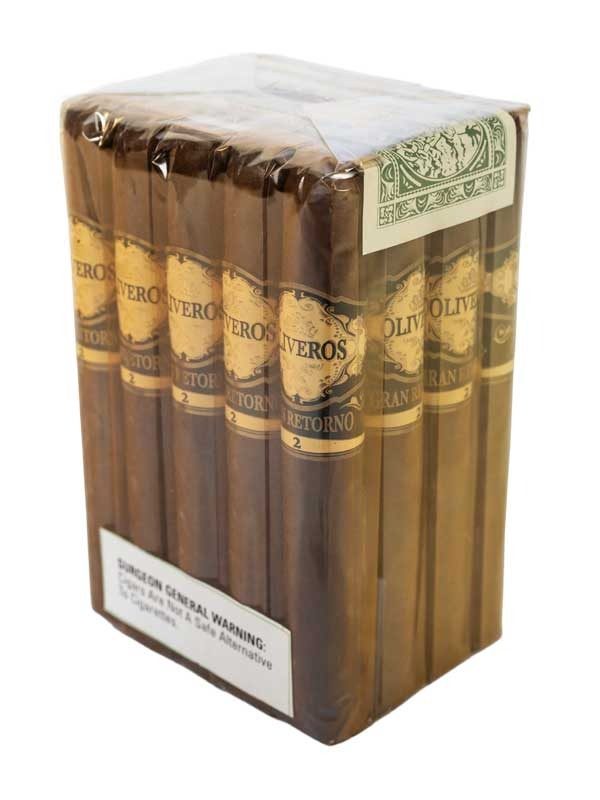
Take Oliveros. The brand was once produced by the Habana Cuba Cigar Company, and the blender Rafael Nodal acquired it in the early 2000s and brought it back, per the retailer's catalog notes. Nodal is a real maker with a real record. But Oliveros today is a value brand. The Oliveros Gran Retorno Swing, a Nicaraguan-made Toro, lists around $1.50 a cigar [typical retail] in a Habano and a Connecticut version. Nothing's wrong with a $1.50 cigar. Something's off about selling one on a boutique-blender story when the blender's attention is spread across a whole portfolio.
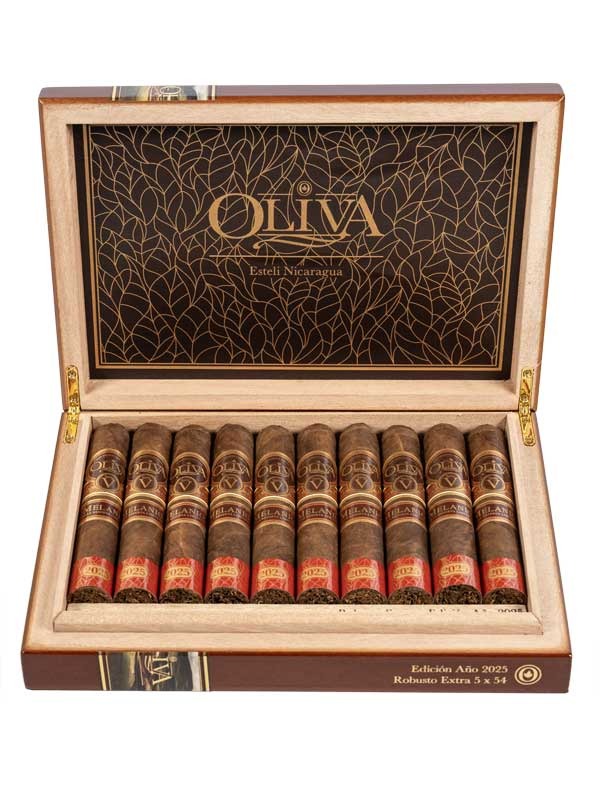
Oliva is the same shape at a different scale. The Oliva name goes back to 1886, when Melanio Oliva began growing tobacco in Pinar del Río, Cuba, per the company's own history. The Serie V Melanio, named the 2014 Cigar of the Year, sits near the top of its catalog. Oliva makes very good cigars. It's also a large producer with a 19th-century family name doing exactly what a family name is built to do in marketing: imply a workshop where there's a factory.
Drew Estate is the cautionary tale at full scale. Jonathan Drew Sann started it as an upstart in the 1990s. It's now one of the largest cigar companies in the world, with a deep catalog of Liga Privada, Undercrown, Acid and Factory Smokes, plus the Kentucky Fire Cured line, an actual fire-cured tobacco unlike much else on a humidor shelf. We wrote about the company's plans in our coverage of Drew Estate's biggest 2026 release, and "biggest" is the operative word. Drew Estate was boutique in 1996. It isn't now. Nobody serious calls it that. The lesson is the trajectory: today's boutique brand to watch is, if it actually succeeds, tomorrow's catalog brand.
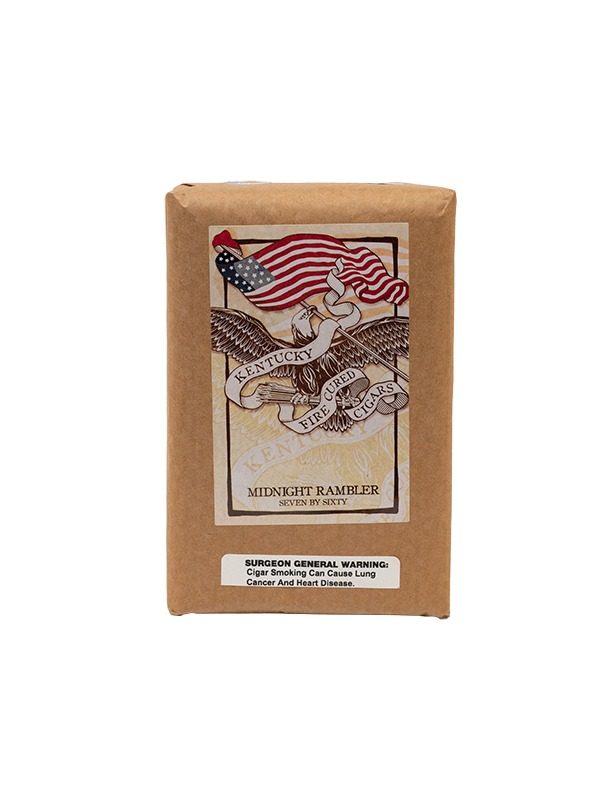
That scale buys consistency, mostly. Mostly. The 7x60 Kentucky Fire Cured Midnight Rambler I lit on a cold night in February 2026 tunneled badly through the first third - fire-cured leaf dries faster than I expect it to, and the burn line had crawled close to an inch up one side before I caught it with a touch-up. A big factory doesn't make a cigar immune to a dry stretch in a humidor. Neither does a boutique band.
None of this makes ownership destiny. It isn't. Some of the best cigars in any price tier come out of large houses. The Padrón family has made cigars under one name since 1964, and that's about as far from boutique as a brand gets. Plenty of one-person brands roll something forgettable and fold inside two years. Ownership structure is a lens, not a verdict. It tells you what kind of risk and what kind of story you're buying. It doesn't tell you the cigar is good. Only smoking three from the same box tells you that.
So when you walk a shop in 2026 and the staff steers you toward the "boutique" wall, ask the second question. Who owns it? Sometimes the answer is a single founder with everything on the line, the way it is with Fratello. Sometimes it's a heritage name (a Bolivar Cofradia, a Romeo y Julieta 1875, a Montecristo assortment) owned by a multinational and marketed as small-batch because the word still sells. Both can be worth your money. They're not the same purchase, and the band won't tell you which one you're making.
When we link to a specific product, we link to a retailer our writers think charges a fair price for it. Scan the brand directory with that in mind and you can sort the genuine independents from the heritage names yourself, once you know to look past the typeface.
I asked three exhibitors at PCA26 to define "boutique" for me. I got three different answers, and not one was about the size of the company. They were about feeling, intent, story. Which is another way of saying the word now describes the marketing, not the cigar. Watch the ownership. The band is just paper.
Sources & Notes
- Premium Cigar Association, "The Premium Cigar Association Concludes a Successful PCA26 Trade Show in New Orleans" - exhibitor count, attendance figures and the Todd Naifeh quote. premiumcigars.org
- Fratello Cigars, official company site - founding year (2013), Omar de Frias's NASA background, sourcing countries, and the Navetta and Lunar lines. fratellocigar.com
- Oliva Cigar Co., official company history - the 1886 Melanio Oliva origin in Pinar del Río and the Serie V Melanio's 2014 Cigar of the Year designation. olivacigar.com
- Drew Estate, official company site - founder Jonathan Drew Sann and the brand catalog, including the Kentucky Fire Cured line. drewestate.com
- Padrón Cigars, official company site - the family's 1964 founding. padron.com