A Sunday afternoon in late March, the road in from Managua climbing through the tobacco fields north of Sébaco, and the driver pointing out, without slowing down, the white-block warehouses on the right that he said were either drying barns or chicken farms. He couldn't always tell from the highway. The smell tells you. Drying tobacco doesn't smell like hay. It smells like compost and something sweet and something nearly medicinal, and once you've learned the difference you can tell, sixty kilometres out, when you're in the right country.
Why did I bother coming? I'd run out of patience with the trade-press version of Estelí. Factory-tour photo essays. Production-line shots with workers in clean polos. The same five quotes from blenders that get recycled across magazines. After three years of profiling Southern cigar lounges for this column (fourteen of them, Charleston to Memphis, written up between 2023 and now, every owner interviewed and every regular noted by what they drank) I'd noticed that almost nobody in those rooms had ever actually been to a Nicaraguan factory. They smoked the cigars. They had opinions on the blends. But the places of origin existed for them the way Bordeaux exists for a wine drinker who's read the Wine Spectator: vivid, mythologised, second-hand. When I'd written a long-form piece in 2024 on the 1996 Habanos Festival, built from interviews with three people who were there and a research trip to the Cigar Aficionado archive, the gap I'd felt most acutely was that I had never set foot in the country that now makes most of the cigars I smoke. So I went.
I stayed at La Gran Fabrica Drew Estate, the half-factory, half-hotel building Jonathan Drew put up after the company outgrew the eleven small rented workshops it had been operating across town. Drew Estate's first factory in Estelí opened in fall 1998, per the company's own published history, in the months after Hurricane Mitch flattened most of northern Nicaragua's infrastructure. Drew, six rollers, no electricity, a rented house. The Gran Fabrica is two decades and several expansions on from that. Murals on the walls, a courtyard, a hotel wing with maybe forty rooms, and a Cigar Safari programme (Drew Estate's term, not mine) that brings retailers and serious customers through on rotating multi-day visits.
You have to admit one thing if you're going to write honestly about a factory tour: the tour is the product. PENSA, which stands for Puros de Estelí, Nicaragua Sociedad Anonima, is JC Newman's house and the second-largest factory in the country. According to JC Newman's own site, it employs over 800 people and turns out around 100,000 cigars a day. Brands you've held in your hand at a US retailer: Brick House, Quorum, Perla del Mar, El Baton. I was given a clean polo shirt of my own to wear on the walk-through. Rolling galleries were quiet in a way I had not expected. No music, no chatter, just the sound of chavetas on boards and the occasional supervisor's voice. A visiting buyer in front of me kept saying "wow" at things that, to the workers, were Tuesday.
What the Big House Shows You and What It Doesn't
What does the tour actually show you? Tobacco. Bales of wrapper leaf in priming order. Fermentation pilones at four feet high with thermometers stuck into them. A sorting room where women, almost always women, flatten and grade by touch in seconds. It shows you the rolling pairs, the bunchero and the rolera working at speeds you can't really watch. It shows you the aging room with its humidity-controlled cedar cabinets. What it does not show you is the price of leaf this season, the cost of Connecticut shade futures, the disputes with the union that operates across most of the big houses, or which blends are being thinned to keep margins steady. Those questions are not on the tour. But I asked anyway, twice, in different rooms. I got pleasant deflections both times.
This is not a complaint. It's a fact about the format. Ybor City worked the same way at the turn of the last century: the public got the show floor, and the real economics happened in the offices behind. What I wanted, and what three days bought me, was the other Estelí. The boutique rollers. The lounge in town where the factory workers actually go after their shift ends. The back rooms where the cigars you can't get in the US sit in cedar boxes with hand-lettered labels.
Boutiques are on side streets off the Calle Transversal, and almost none of them have signs. I'd been given a list of four by a buyer in Atlanta who'd asked me not to print his name. Three of the four were operating. A fourth had closed since his last visit in November. The owner of the second one I visited, a man in his sixties who'd rolled at one of the big houses for fourteen years before going out on his own, showed me a vitola he'd been blending for nine months that wasn't for sale yet. He gave me three. They were rough at the foot, a little fat in the middle, the kind of construction the big houses would reject. Smoke was a different thing entirely: dense, with a coffee-bean and damp-earth character on the retrohale that the polished factory cigars I'd smoked the day before had been edited out of.
The big-factory cigars taste like they've been through a focus group. The small ones taste like a person had an idea and didn't take a vote.
I bought a sleeve from him. Three weeks later, on April 16th 2026, I lit the first one at home in Charleston after twenty days at 68% RH in my desk humidor, and the wrapper split a quarter inch in from the cap on the second light. The draw on a second stick from the same sleeve, two days after that, plugged at the start of the second third and stayed plugged. That's the trade. You take the cigar that hasn't been put through six quality-control stops. You also take the cigar that the focus group never softened.
The Lounge the Factory Workers Actually Use
A cigar lounge a tourist gets sent to in Estelí is fine. White tablecloths, espresso, a wall of Padrón behind the bar, and a guestbook with signatures from every cigar-magazine writer who's come through in the last decade. I went there my second night and it was fine. But the lounge I want to tell you about is the one a roller from Aganorsa took me to after I bought him a beer at a corner shop and asked where he actually drank.
It was a back room behind a hardware store, two tables, a window AC unit, a rack with maybe forty boxes from probably twelve different houses. No menu. You named what you'd been smoking and the owner (late thirties, tattooed forearms, a former tobacco-field supervisor) would tell you what he had close to it, sometimes for half what a US retailer would charge, and sometimes for a price that made me wonder what I was actually buying. Two regulars at the next table were arguing about a particular year of Joya de Nicaragua and whether the binder had changed since the factory expansion. They argued the way wine people argue. With dates, with specific vitolas, with the kind of granular memory I associate with my own collection of cigar ephemera at home (about two hundred bands, two dozen boxes, three Cuban-era humidors and a small library of period magazines, catalogued in a file room since 2019) and not at all with marketing copy.
I sat there for three hours. I smoked two cigars I will probably never identify again, because the bands had been removed and the owner only described them by who'd rolled them and at which house. When this kind of cigar is good, it is better than the version you can buy at a US shop. When it is bad, it is worse. The factory-tour cigar is the consistent middle of that distribution. The lounge cigar is the long tails, both ends.
What You Can Carry Home, and What You Can Buy When You Get There
A practical note. The cigars that survive the flight home, in real terms (meaning they make it through US customs in your declared personal allowance, and into your humidor, and then onto your couch) are not the back-room oddities. They're the brands you can already buy at a US retailer, and the question becomes which ones are actually worth the suitcase space versus simply ordering at home.
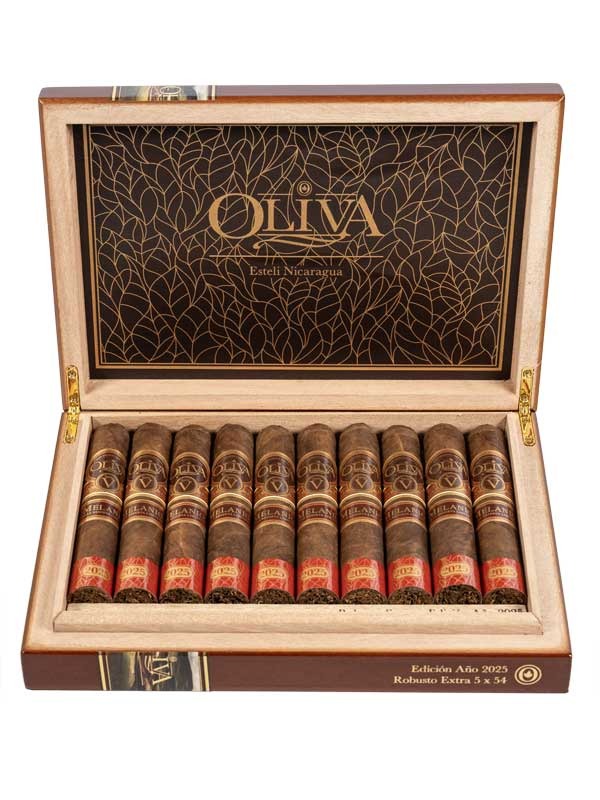
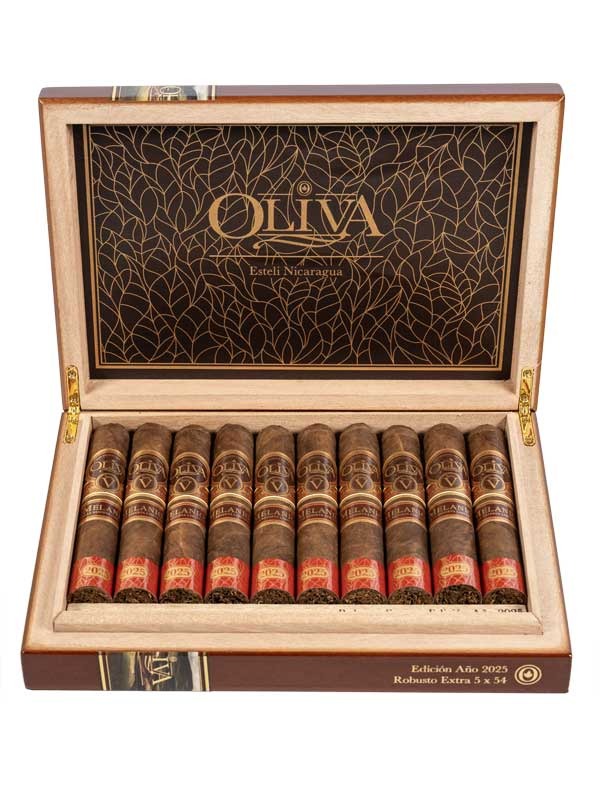
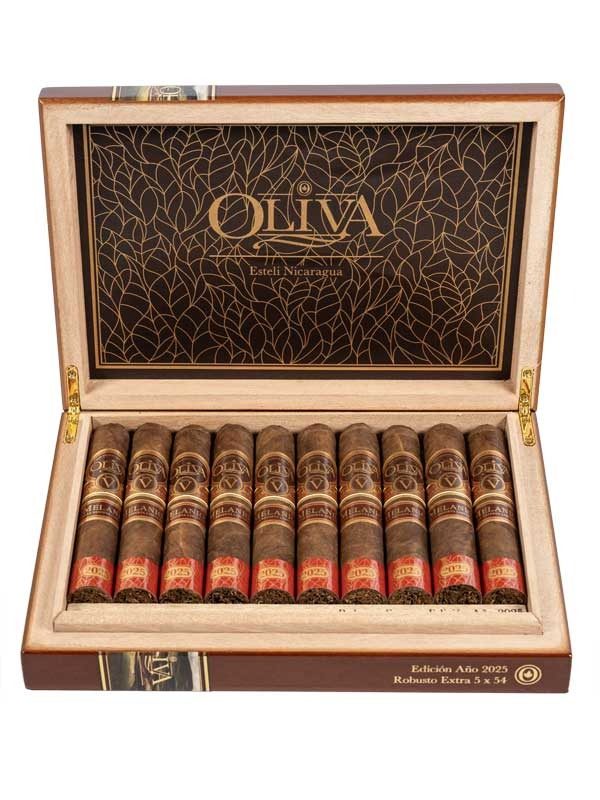
Two from this Estelí trip that I would just buy from a US shop and skip the customs lottery. Oliva's Serie V Melanio line uses an Ecuadorian Sumatra wrapper over Nicaraguan tobaccos grown in Jalapa and Estelí, per the company's blend disclosure. The same valleys I drove through on the way in. The 2025 Edición Año is in stock at the retailer I link in these pieces. It runs about nine dollars a stick on the current listing. I smoked one on the porch in Charleston four days after I got back, and the medium-full body and that Sumatra-driven sweetness on the cap held up well in the after-rain humidity that ruins most cigars I have on hand.
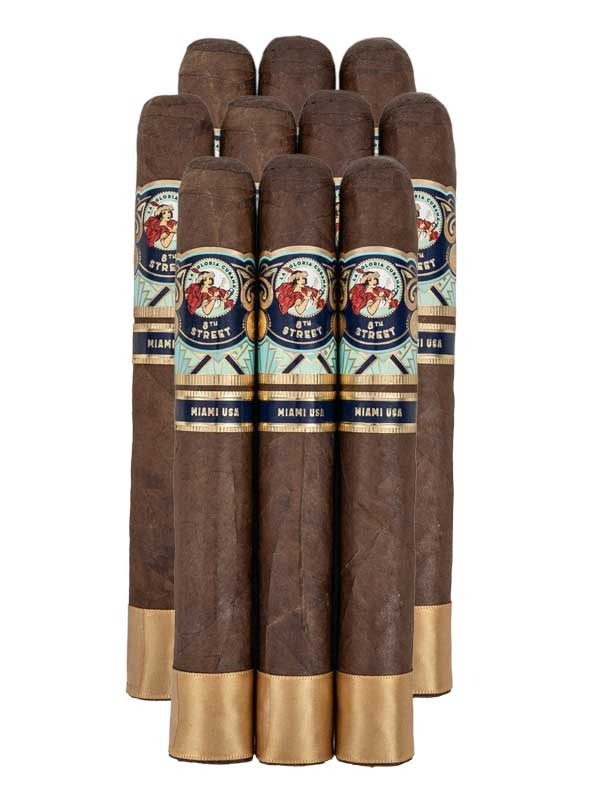
Another worth carrying is the La Gloria Cubana 8th Street Toro. Rolled at El Titan de Bronze in Miami, not Estelí, but the binder and filler trace back to Nicaragua and the cigar belongs in any honest Estelí-adjacent conversation. Ecuadorian Habano Oscuro wrapper, medium-full, a chocolate note on the cap that I had not been expecting at a sub-twelve-dollar listing. I bought four.
For the price-sensitive end of the menu (and most readers of this column will recognise that they smoke more daily cigars than they smoke event cigars) the Oliveros Gran Retorno Swing comes in a Habano and a Connecticut, both Nicaraguan-rolled, both running around a dollar fifty a stick on the same listing. The Habano was the one I preferred at the lounge in town with strong coffee at 8 a.m. The Connecticut held up better at the back-room session in the evening with a Tona rum, because the wrapper let the spirit work without arguing with it. They are not cigars I would build a tasting around. They are cigars I would buy a bundle of and not think about.
What I Got Wrong on the Way In, and What I Got Right
In 2022 I argued, in a piece I now regret, that the post-pandemic cigar-lounge resurgence was real and durable. Five of the fourteen Southern lounges I'd profiled have since closed. Two more are on a slow exit. I wasn't wrong about the demand. I was wrong about the business model. The lounges that survived were the ones with food, the ones with regulars, the ones whose operators understood they were selling time and atmosphere with the leaf as a prop. I came to Estelí half expecting to find the same thing playing out: a city of factories that had over-built on a US market that was about to soften. But I didn't find that. I found a city that has been making cigars in increasing volume since at least the 1960s, that produces the bulk of America's premium imports, that has lived through Sandinista nationalisation in the 1980s and Hurricane Mitch in 1998 and a global pandemic and a US regulatory fight, and that has more functioning factories now than at any point in its history.
A Few Caveats Before You Buy a Ticket
Some limits on what I just told you. This is three days. It is not a residency. I do not speak the working Spanish of a tobacco-field supervisor; my conversations in the back-room lounge ran through a roller's broken English and my own broken Spanish, with errors on both sides that I will not pretend I caught all of. I went on a Drew Estate-arranged trip for part of it, which means the access I got at PENSA and at Drew Estate's own facility was access the companies wanted a journalist to have. The boutique visits I arranged independently, but the list came from one buyer with his own preferences and his own gaps. Estelí has at least fifty manufacturers. I set foot in seven.
And the prices in town are not the prices you'd actually pay if you tried to set up a real import line. The back-room cigars I bought for half a US retail price were, in real economic terms, paid for partly by the goodwill of a beer at a corner shop and a willingness to listen. None of that scales.
So what is left? A factory list that runs over fifty manufacturers, per JC Newman's own published count. Some industry observers put it higher: sixty, eighty depending on which side-shops you include. Estelí is not built for tourists. Hotels are mostly for buyers. Restaurants close early. The nearest commercial airport is in Managua, two and a half hours south. What it is built for is leaf and labour and the long, slow process of turning the former into the latter into something a person in Charleston can light on a porch four days later and not feel they've been sold. When this column links a specific cigar, it links to the retailer the writers think currently carries it at the price it's worth. For many of the cigars I'd actually carry home from Estelí, that retailer is CigarOutlet.
On my last morning the roller from the back-room sleeve gave me one cigar he asked me not to take a photo of. I won't. And it was excellent. It is also, in any meaningful commercial sense, unfindable. That's Estelí. The thing you'd want to buy is the thing you can't.
Sources & Notes
The Drew Estate history (fall 1998 founding in Estelí, the original six-roller operation, La Gran Fabrica) is per the company's own story page. JC Newman's PENSA figures (over 800 employees, around 100,000 cigars per day, the brands produced) are taken from JC Newman's own factory overview. The "more than 50 manufacturers" count for the city of Estelí is per the same JC Newman company page on its Nicaraguan operations. Specific blend details for the Oliva Serie V Melanio Edición Año 2025 (Ecuadorian Sumatra wrapper, Nicaraguan filler from Jalapa and Estelí) are per Oliva's published blend disclosure and the retailer's listing. Padrón's 1964 founding date is per padron.com. All tasting notes are my own from the trip and from cigars smoked at home in Charleston between March and May 2026.
- Drew Estate, "Our Story," https://drewestate.com/our-story/
- J.C. Newman, "Nicaragua," https://www.jcnewman.com/company/nicaragua/
- J.C. Newman, "PENSA Overview," https://www.jcnewman.com/jc-newman-pensa-overview/
- Padrón Cigars, https://www.padron.com
- Premium Cigar Association, https://premiumcigars.org