On April 15, 2026, a federal judge in Washington signed an order he described, in his own parenthetical, as "(hopefully) ... the final chapter" in a decade-long fight over whether the Food and Drug Administration can regulate premium cigars.
The order came from Judge Amit P. Mehta of the U.S. District Court for the District of Columbia, and it did one thing. It re-adopted, without a single change, an eight-part definition of a "premium cigar" the same court had set in place years before. A cigar that meets all eight parts is exempt from the FDA's 2016 Deeming Rule. A cigar that misses even one isn't.
Within days, the ruling was moving through cigar retail and social feeds as the moment premium cigars walked free of the FDA. That's not what the order says. The exemption is real. It's also narrower, older, and easier to undo than the celebration suggests.
I keep a running tracker called "What the FDA Actually Said" - every premium-cigar regulatory ruling since 2021, the operative paragraph quoted directly, the industry response noted beside it. The April order is the longest entry in that file now. So here's what it changes, and the five things smokers keep getting wrong about it.
"The FDA is out of premium cigars for good."
It isn't. The order vacates the Deeming Rule as applied to premium cigars. It doesn't strip the agency of authority over the category.
Congress handed the FDA jurisdiction over cigars in the 2009 Tobacco Control Act. The 2016 Deeming Rule was how the agency claimed that ground - pulling cigars into a system of establishment registration, ingredient reporting, warning labels, and, most consequentially, premarket review. No court in this case found the underlying grant of power unconstitutional. The courts found the 2016 rulemaking arbitrary and capricious, which is a process failure, not a missing power.
That distinction decides everything that happens next. According to an analysis published on the Tobacco Law Blog in April 2026, Mehta's order doesn't affect "future federal efforts" to regulate premium cigars, and it leaves state authority untouched. If the FDA wants back in, it has to write a fresh rule and defend it properly this time. The door is shut. It isn't locked.
Drew Newman, the fourth-generation owner of Tampa's J.C. Newman Cigar Co., named the risk directly. He said the FDA could "at any time ... decide to start the process of trying to regulate premium cigars again." Newman didn't expect an appeal of Mehta's decision, telling reporters, "I do not think that is likely to happen."
The parties had 30 days from April 15 to appeal. That window closed in mid-May. Barring an appeal, the order stands as written.
Premarket review was the requirement the industry feared most. Under the 2016 rule, a new blend (or even an existing blend in a new size) could need an FDA authorization before it reached a shelf, a review that runs long and expensive. For a small Estelí factory turning out a few thousand boxes a year, those economics rarely work. Trade groups argued for years that the requirement would freeze new product and thin the shelves. The exemption lifts that gate for any cigar that clears the eight-part test.
The FDA hasn't said publicly whether it intends to start new rulemaking on premium cigars. I've spent years on this beat, and one principle has held the whole time: companies that refuse to answer a plain question usually have something they'd rather not see quoted, and an agency's silence tends to read the same way.
What the exemption frees, in practice, is the pipeline. A premium cigar no longer needs the FDA's premarket review (the substantial-equivalence and premarket-application processes the 2016 rule imposed) before it can ship. That's why a manufacturer can roll out a full release calendar without filing an application on every blend. Drew Estate's 2026 lineup is a working example of that freedom; I went through which of those releases were genuinely new tobacco and which were just new boxes earlier this spring.
"Every cigar in my humidor is now exempt."
Probably not every one. The exemption runs on a definition, and the definition is strict.
The court's test, as the Tobacco Law Blog reproduced it, has eight parts. To qualify as a premium cigar, a cigar:
- is wrapped in whole tobacco leaf;
- has a binder made of 100% leaf tobacco;
- contains at least 50% long-filler tobacco;
- is handmade or hand-rolled;
- has no filter, no nontobacco tip, and no nontobacco mouthpiece;
- has no characterizing flavor other than tobacco;
- contains only tobacco, water, and vegetable gum, with nothing else added;
- weighs more than six pounds per 1,000 units.
Miss one part and the cigar stays under the Deeming Rule. The two that trip people up are parts six and seven. A flavored or infused cigar fails both, and that category includes some of the best-selling cigars in the country. So does a cigar finished with a sweetened tip.
That line is sharper than it sounds. An infused cigar picks up flavor from botanicals, oils, or sweeteners during production, and infused blends have ranked among the strongest sellers in American humidors for years. Under the court's test they sit on the regulated side of the fence, alongside machine-made cigars and little cigars. The eight-part definition isn't a measure of quality or prestige. It's a manufacturing spec, and it's binary - a cigar is in, or it's out.
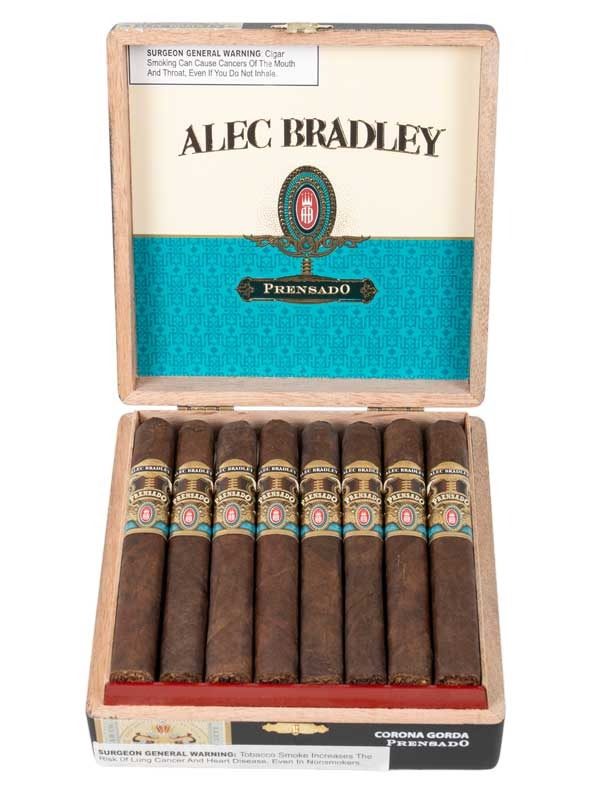
Most handmade, unflavored cigars clear the test without a problem. Take three that sit in plenty of humidors. The Alec Bradley Prensado Corona Gorda is built on a Honduran Corojo wrapper from the 2006 crop - full-bodied, hand-rolled, nothing added to the leaf. It qualifies.
So does the Montecristo 1935 Anniversary Figurado, a Nicaraguan puro blended by AJ Fernandez at his factory in Estelí, Nicaragua. And so does the Las Cabrillas Balboa, a milder double corona under a Connecticut Shade wrapper, with Mexican San Andrés tobacco inside. Three different countries of origin, three strength profiles, one shared trait: whole-leaf, handmade, no flavoring.
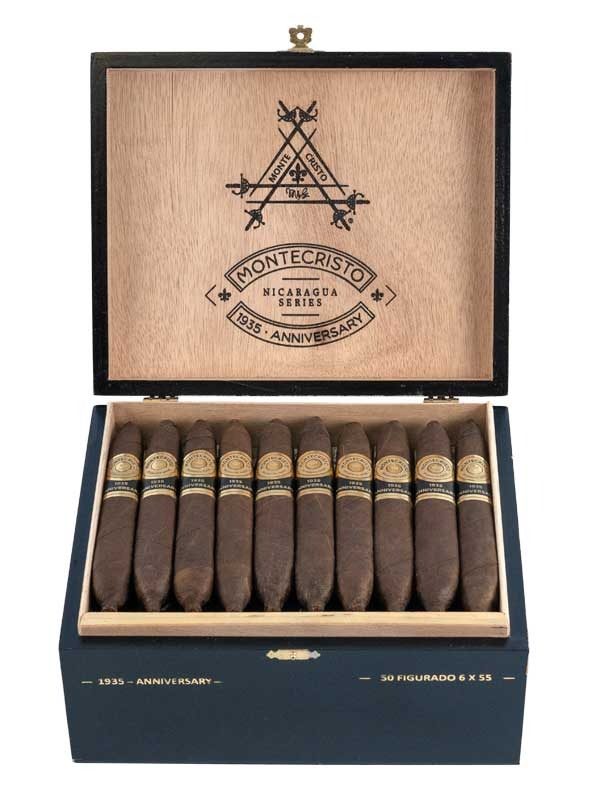
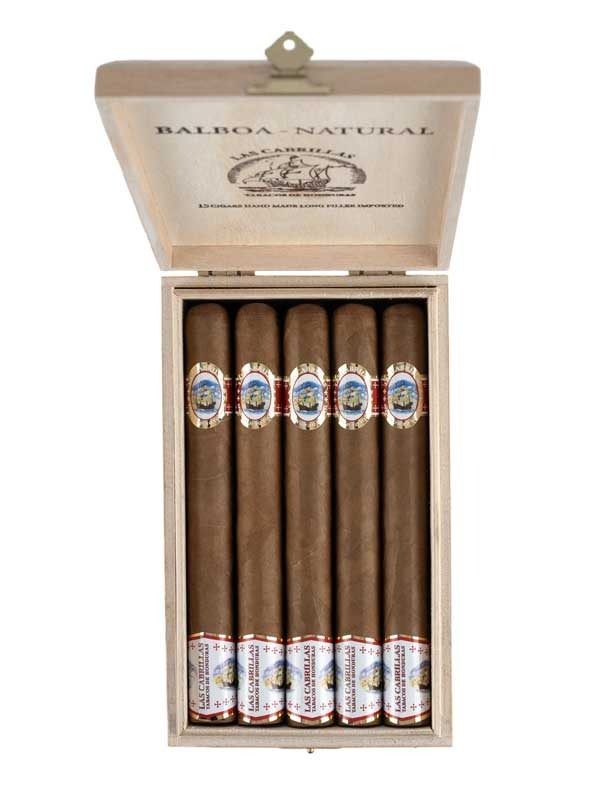
Not every cigar on the same shelf gets the same treatment. The flavored cigarillo two boxes over is still a fully FDA-regulated tobacco product. The exemption sorts a humidor by what's inside the cigar, not by the name on the box. Those three - all carried at CigarOutlet - qualify because of their construction and contents, not their brand.
"This is a brand-new ruling from April 2026."
It's the close of something old. Premium cigars have effectively been outside the Deeming Rule since 2023.
Here's the sequence, because it matters. The FDA finalized the Deeming Rule in 2016 and swept every cigar sold in the United States under its authority. In 2023, the district court vacated that rule as applied to premium cigars, finding the agency had acted arbitrarily. On January 24, 2025, the U.S. Court of Appeals for the D.C. Circuit affirmed that vacatur and remanded the case with one job left undone: settle the definition.
So April 2026 didn't free premium cigars. 2023 did that. The April order settled which cigars the 2023 ruling covers, and it did so by keeping the definition the court had used all along. As Mehta's order put it, "this court in 2023 vacated the Deeming Rule as applied to a category of products known as 'premium cigars.'"
Why does the framing matter? Because regulatory news is the easiest kind of cigar news to get wrong, and I've gotten it wrong. In late 2024 I got a Padrón story wrong - I reported a quiet-reformulation rumor sourced to one anonymous tipster, the piece ran on a small site for about six hours before I pulled it, and the tip turned out to be a competitor planting a smear. I should have triangulated before publishing. The same speed that carried that bad story is carrying the "FDA is gone" version of this one, and it's just as far off.
"The court found that premium cigars are safe."
Nothing in the order says that. The case was decided on administrative law, not on health.
The phrase that runs through every stage of this litigation is "arbitrary and capricious." It's a standard for reviewing how an agency reached a decision (whether it weighed the evidence in front of it) not a verdict on whether the product is good or bad for you.
What did the FDA do wrong? When the D.C. Circuit affirmed the vacatur in January 2025, it pointed to a specific failure: the agency had claimed that evidence on premium cigars' lower health risk and less frequent use "was not provided and did not exist." Plaintiffs had in fact submitted that evidence during the rulemaking. The FDA built its rule on a record it had misread.
So did a court just declare premium cigars healthy? No. It declared the FDA's homework inadequate. Cigar smoking carries real health risk; that was never the question in front of Mehta, and the order doesn't touch it. Anyone reading the exemption as a clean bill of health is reading a procedural ruling as a medical one.
"The industry got what it wanted."
Parts of it did. But other parts spent a year arguing the opposite, and lost.
The plaintiffs here are a coalition: the Cigar Association of America, Cigar Rights of America, and the Premium Cigar Association. They are joint litigants. They are not of one mind.
After the January 2025 appellate ruling, the CAA filed a brief (dated June 6, 2025) urging Mehta to adopt a broader definition, one that would also exempt flavored cigars and machine-made cigars finished by hand. CRA and the PCA preferred the original, narrower eight-part test. Mehta sided with the narrow version. The broader carve-out the CAA wanted didn't survive.
That split is worth sitting with. The CAA's membership leans toward the large manufacturers, and a definition that swept in flavored and partly machine-made product would have widened the exemption considerably. It didn't happen. Flavored cigars remain FDA-regulated tobacco products, full stop.
CRA, for its part, called the outcome a win. Executive Director Mike Copperman said the ruling "provides long-overdue clarity for the industry, regulators, and lawmakers." Board President Gary Pesh said it ensures "family-owned manufacturers, small business retailers, and adult consumers are no longer left in regulatory limbo."
Clarity, yes. Finality, no. The FDA's road back into premium cigars is still open, the court left it open on purpose, and the agency has spent a decade showing it wants to walk it. And here's the part almost no one is reporting: this exemption wasn't won by a legal argument alone. It was won across nine years of litigation and lobbying that no trade publication has ever totaled. The premium-cigar industry's lobbying spend on these exemptions is, by my read, the single most under-reported story of the last decade in this trade. The ruling is the visible result. The invoice that paid for it is the story still waiting to be written.
Disclosure: Latest PR covers cigar news, reviews and culture as an independent publication. When we link to a specific product, we link to the retailer that currently carries it at the price our writers think it's worth; When we link to a specific product, we link to a retailer our writers think charges a fair price for it. No retailer reviewed or approved this article.
Sources & Notes
Tobacco Law Blog (Foley Hoag LLP), "Federal Court Finalizes Definition of FDA-Exempt Premium Cigars," April 2026 - source for the eight-part definition, the April 15 order date, the "(hopefully) the final chapter" language, the 30-day appeal window, and the limits on state authority and future FDA rulemaking. tobaccolawblog.com
Cigar Aficionado, "D.C. Justice Rules For Premium Cigars (Again," April 16, 2026) Judge Amit P. Mehta named as author of the order, the quoted line on the 2023 vacatur, the CAA's bid for a broader definition, and Drew Newman's comments on the likelihood of an appeal. cigaraficionado.com
Cigar Rights of America, "Industry Landmark: Federal Court Issues Final Ruling Exempting Premium Cigars from FDA Oversight," April 2026 - on-record statements from CRA Executive Director Mike Copperman and Board President Gary Pesh. cigarrights.org
Tobacco Law Blog (Foley Hoag LLP), "Federal Appellate Court Agrees that FDA Cannot Regulate 'Premium Cigars,'" January 2025 - the D.C. Circuit's January 24, 2025 decision affirming the vacatur, the "arbitrary and capricious" finding, and the remand instruction to settle the definition. tobaccolawblog.com
Note on sourcing: court-order quotations here are reported through Cigar Aficionado's coverage of the April 15 order, and the eight-part definition is reproduced from the Tobacco Law Blog's published analysis rather than the docket. The CAA's June 6, 2025 brief is described as characterized in that coverage. This article relies on secondary legal analysis and trade reporting; it is not legal advice.