Tuesday, a little after nine, and the cafecito windows on Calle Ocho hadn't pulled their morning crowd yet. I'd landed in Miami the night before with a tasting list and no real plan, so I walked the strip cold, past the domino tables and the rooster murals, hunting the one thing that put Little Havana cigars on the map to begin with: a room where a person still rolls tobacco by hand. Most of the storefronts here sell. Very few of them make. The one that still makes sat about three blocks in, behind a plate-glass window, where a man in a canvas apron was already bunching filler at a wooden bench while the rest of the block finished its first colada.
His name I didn't get. The shop's I did. El Titan de Bronze.
If you've read anything at all about calle ocho cigar shops, you've seen that name, usually under a pile of adjectives that don't survive a second read. What survives one is short. Founded in 1995. Still on Calle Ocho. Cigars rolled by hand, on the premises, by people who learned the trade the old way, per the factory's own site. Everything else you've heard is decoration on those four facts.
A factory with a shop attached
Walk in and the retail counter is almost an afterthought. Boxes on the shelves, a humidor case, a couple of chairs. But the middle of the room is the bench, and the bench is the whole point. Three rollers that morning, heads down, each with a little guillotine and a pot of vegetable gum, turning stacked leaves into torpedoes at a speed that makes you feel slow just watching. The shop calls them its "Level 9" rollers, marketing shorthand for the top grade in the old Cuban classification. I'll let the number go. What I watched was real: cap after cap laid down clean, no hesitation, the hand speed you only get from doing one motion ten thousand times.
The surprise wasn't the rolling.
It was the list of labels the shop rolls for. Its own site says El Titan has produced cigars for boutique names you'd know off a shelf, Warped and La Palina and Padilla among them. So this narrow storefront on a tourist block, the one with the domino park down the street and the guava-pastry counter next door, is a working contract factory for brands that get written up as though they arrived from somewhere grander. They didn't. They came from here, about ninety feet from a man selling coffee in thimble cups.
Why the benches almost went dark
Now the thing nobody in the shop brings up, because they're busy: a room like this almost didn't make it to 2026. When the FDA moved to pull premium cigars under its tobacco authority last decade, the rule it drafted treated a bench in Little Havana the same as a cigarette line in North Carolina. Premarket applications. Testing regimes. Fees and paperwork scaled for companies with legal departments, pointed at a shop whose entire staff fits around one table.
That fight went to court, and the small makers won it. A federal judge, Amit Mehta, threw out the FDA's product-approval demands for premium cigars, in a suit brought by the Cigar Association of America alongside the Premium Cigar Association and Cigar Rights of America. The advocacy side puts it flatly on its own page: a final ruling exempting premium cigars from FDA oversight. I'm not sentimental about lobbying. But without that ruling, the odds are good the bench I watched on Tuesday would already be a memory, and those boutique labels would be getting rolled in Estelí instead.
Ninety miles and one boat
To understand why Miami has any rolling benches at all, you go back to the boats and the planes. Little Havana earned the name honestly. The men who built the American premium-cigar business mostly arrived the same way, out of Cuba and into Florida with a trade in their hands and not much else in their pockets.
Take Jose Orlando Padron. His family had grown tobacco in Pinar del Rio for generations, and per Padron's own account of his life, he left Havana in April 1961, crossed from Spain to the United States aboard the steamship Covadonga that December, and reached Miami in February 1962. He founded his company here in 1964. The head office is still in the city, a short drive from Calle Ocho. When somebody tells you Miami cigar culture is a museum piece, point them at that. One of the most decorated names in the business runs its operation out of the same town as the rolling table I was leaning over.
Padron wasn't alone. A whole generation of growers and rollers rebuilt in exile what they'd left behind, and the flavor most American smokers file under "premium" owes as much to that diaspora as to any one country's soil. You can still read it on a price list. Half the Cuban brand names on an American shelf, Montecristo and Romeo y Julieta and Hoyo de Monterrey, are trademarks that walked out of Havana and now get made in Nicaragua or Honduras or the Dominican Republic. Scroll a directory of those exile-era names and it reads like a roll call of what was lost and rebuilt somewhere else.
Cold draw to nub, a cigar rolled that morning
I open every review with context: release year, blender, where I smoked it, what was in the glass next to it. This one breaks the frame, because there's no release year and no blend sheet. I bought a single toro straight off the bench, rolled maybe an hour before I paid for it, and smoked it on a bench outside with a cortadito going cold beside me (I've written before about what to drink beside a morning cigar, and Cuban coffee is its own argument). Corojo-ish wrapper, Nicaraguan-leaning filler by the roller's say-so, nothing I can verify. So treat what follows as field notes, not a verdict on a boxed cigar.
Cold draw first. Snug, a touch tight, the way a just-rolled cigar always sits before it dries. Cut grass and raw hay off the foot, a little barnyard under it, the green edge you get when tobacco hasn't had its months in a still room. Not unpleasant. Just unfinished.
The first third lit unevenly, which I expected. A cigar this fresh burns hot if you push it, so I didn't. Cedar showed up early, then a bready sweetness, then a sharp ammonia note on the retrohale that told me exactly how young this leaf was. Every few draws the burn line wandered off true and I touched it up with the lighter. And I didn't mind, because I wasn't smoking it for the burn line. I was smoking it to taste what a cigar is before it finishes becoming one.
What a fresh-rolled cigar needs before it earns a real verdict, from my own cellar log, comes down to three things:
- Time to dry down. Straight off the bench a stick can sit near seventy percent internal humidity. You want it closer to sixty-five before you judge a single note.
- Two to four weeks of rest, at least, to let the ammonia blow off. Longer for a maduro, which sheds that harshness slower.
- A box that holds steady. If you keep swinging the humidity up and down, the wrapper checks and the burn never settles into anything you can trust.
Second third, and the cigar began to cooperate. The ammonia faded. The burn evened out on its own once the foot had dried under the heat of the coal. Underneath the youth there was something worth the wait: a dark-chocolate weight in the mouth, a black-pepper snap on the finish, that mineral thing I associate with good Nicaraguan ligero. This is the tease. It's the reason people buy cigars fresh and cellar them for a year, chasing the version that shows up eighteen months down the line.
The final third I smoked halfway and set down. Hot, young, and honest about both. And this is exactly why I won't hang a number on it. The trade press would. Somebody would smoke this one stick, catch that chocolate note, file a 92, and there's the whole trouble with the 90+ ratings inflation in the trade press: half the time a 92 is what an 86 used to be. In 2021 I scored a Liga Privada Unico Serie the Dirty Rat a 93 after one smoke at a Drew Estate event, then watched five more from that same box average an 87 across the next year, with one that came bitter and half-plugged. One cigar is not a review. It never was.
Verdict on the fresh toro? Buy one if you're standing there, absolutely, because watching it get made is worth the ten dollars by itself. Then do not smoke it that day. Age it. Give it a month in a steady box and it turns into a cigar you'd actually rate. Smoke it warm off the bench and you're paying for a souvenir, which is fine, as long as you know that's the deal going in.
What to actually put in the bag
So what do you actually carry home from a morning like this? Not the fresh toro. At least, not that alone. Here's the position I'll stand behind, the one I've argued to anyone who'll sit still: premium-cigar price-to-quality above $20 is broken, and there are eleven-dollar boutique sticks out-smoking thirty-five-dollar brand names, with nobody saying it loudly enough. A rolling-table souvenir is a souvenir. For everyday smoking, the value lives in rested factory cigars, and a couple of them are worth naming.
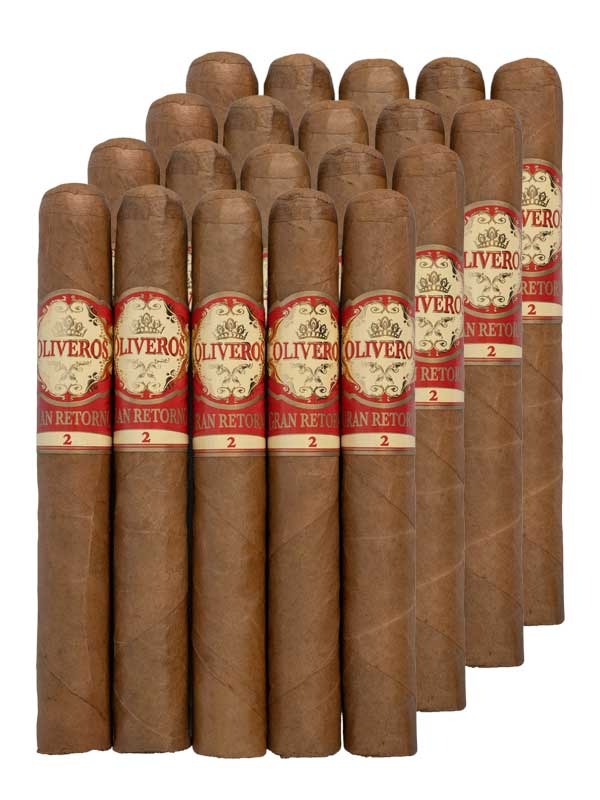
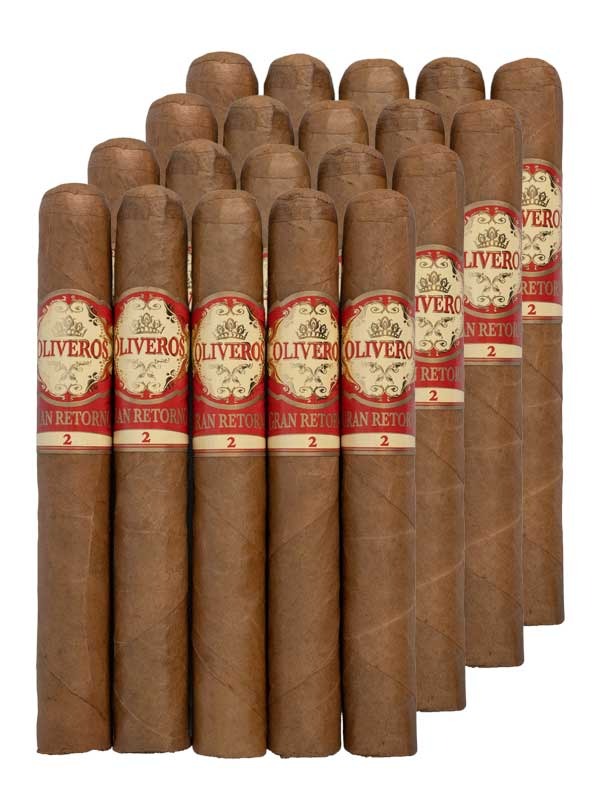
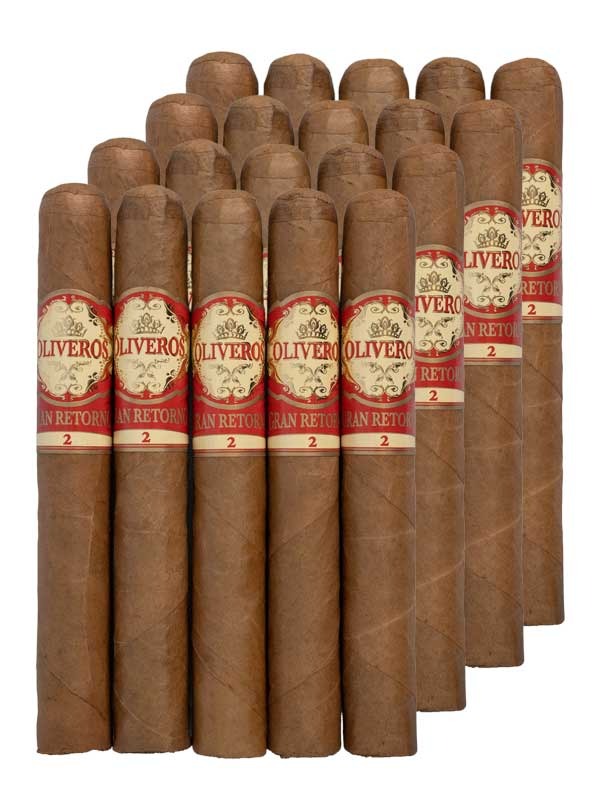
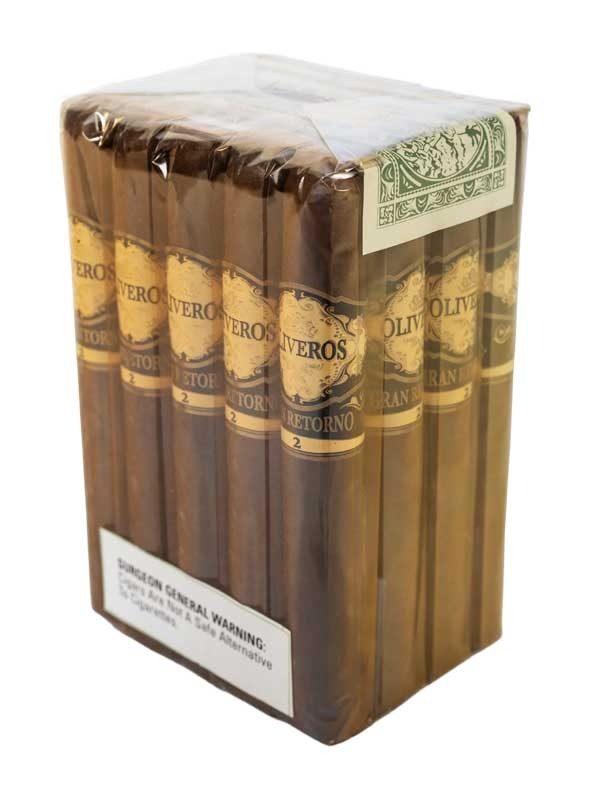
The one I keep reaching for at this price is the Oliveros Gran Retorno Swing Connecticut, a toro under an Ecuadorian Habano wrapper, made in Nicaragua. The Oliveros name carries its own exile backstory, a brand once run through the old Habana Cuba Cigar Company and later revived by the Cuban-American maker Rafael Nodal. We walked a Gran Retorno through all four passes back in a July review, so I won't re-litigate the notes here. At about $1.50 a stick it does the one thing a value cigar has to do: it never embarrasses you. Mild-to-medium, cocoa and toast, no rough patches from an underfilled bunch.
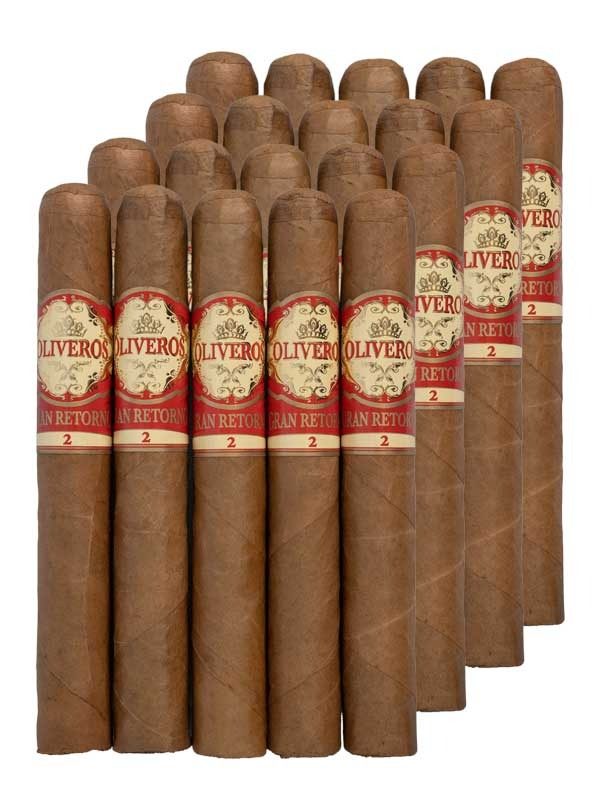
Its sibling, the Oliveros Gran Retorno Swing Habano, runs milder still, a Honduran Connecticut wrapper over Nicaraguan filler, and it's the one I'd hand somebody at nine in the morning next to a cafe con leche. Neither of these is going to make you close your eyes and go quiet. That isn't the job. The job is to be there, cheap and correct, on the mornings you don't want to think about the cigar at all.
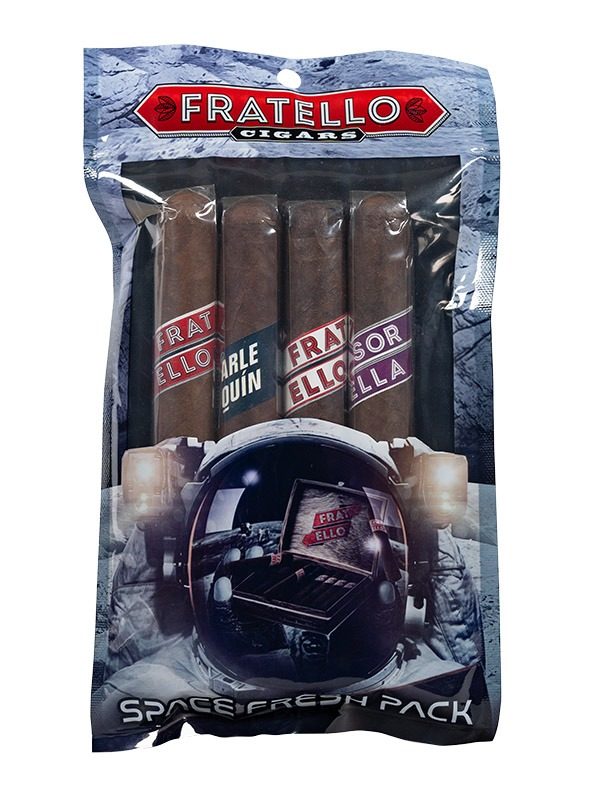
If you'd rather taste a spread than commit to a box, there's the Fratello Fresh Space Pack, a sampler of Nicaraguan sticks blended over at Joya de Nicaragua, medium-to-full, at $12.49 for the set. It's a low-stakes way to find your lane before you buy a box of anything. You can line the same range up by country and price in the catalogue these notes link into, which is a colder way to shop than a Calle Ocho counter, but an honest one.
And if you can't get to Miami at all, the hunt still works from the couch. Run down the discount racks where the rested value sticks hide, or start from the front page and dig your own way in. It's not the bench on Calle Ocho. But it's the same tobacco, rested and cheaper, and most nights that's the version you actually want in your hand.
A word on the links in this piece. When we link to a specific product, we link to a retailer our writers think charges a fair price for it. Nobody paid for a mention here. The bench on Calle Ocho paid for itself the second I watched a cap go down clean.
I keep circling back to the two things I carried out of that shop. One was a cigar too young to smoke, sleeved in cellophane, a souvenir of a room. The other was the fact that the room sits one court ruling away from not existing, and almost nobody smoking on Calle Ocho that morning knew it. The rolling tables aren't a museum. They're a small, working, breakable thing, kept alive by Cuban hands and, lately, by a federal judge. Smoke accordingly.
Sources & Notes
Reported from a Tuesday-morning visit to Calle Ocho in Little Havana, plus my own cellar log and tasting notes on the fresh toro and the value sticks named above. Primary sources consulted:
- El Titan de Bronze, the factory's own site: its 1995 founding, its Little Havana location, hand-rolling on the premises, and the boutique labels it produces cigars for.
- Padron, "Jose O. Padron": the founder's 1961 departure from Havana, his passage to the United States, his February 1962 arrival in Miami, and the company's 1964 founding.
- Premium Cigar Association: the federal court decision blocking the FDA's product-approval requirements for premium cigars.
- Cigar Rights of America: the final ruling exempting premium cigars from FDA oversight.