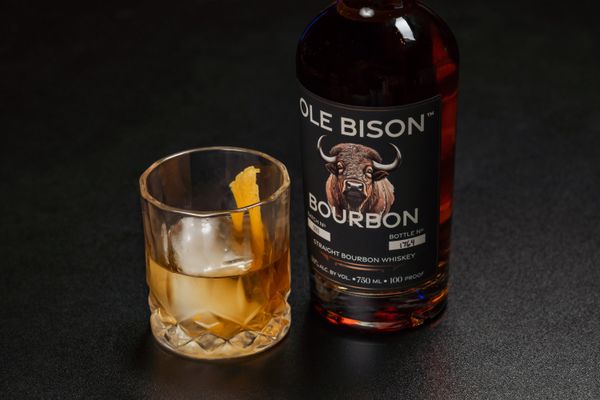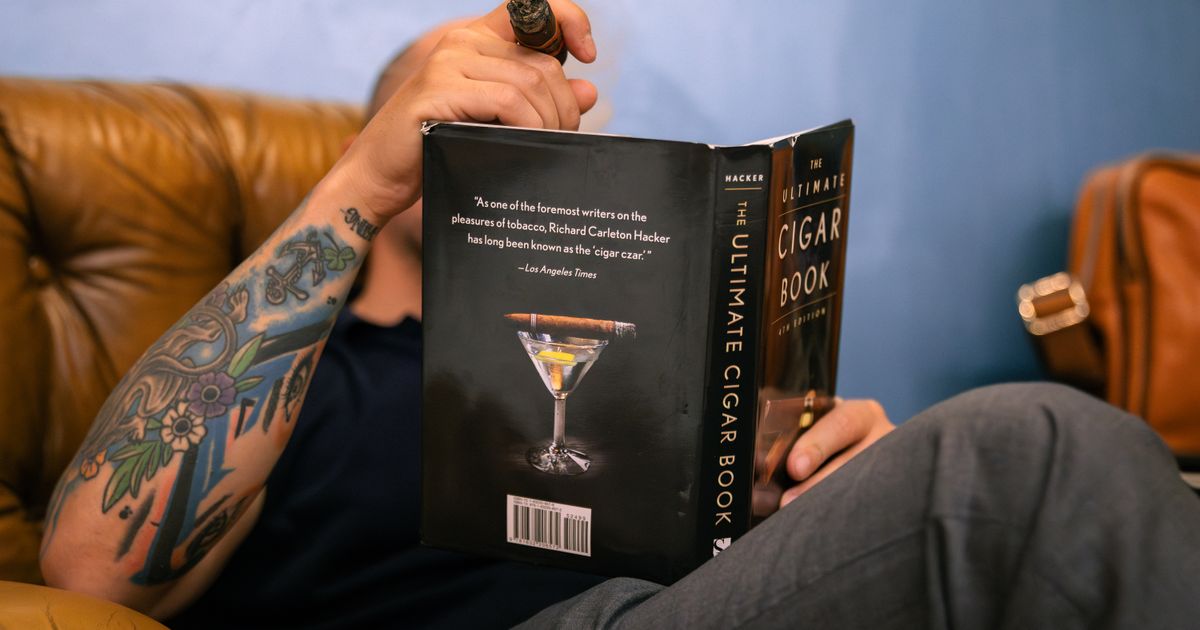
Twenty cigars for $29.99 comes to a buck and a half a stick, and I bought two bundles of the Oliveros Gran Retorno on a Tuesday in June to find out whether a number that low could survive contact with an actual afternoon. Charleston in June is a slow sauna. The porch fan pushed warm air in circles, a glass of rye going watery on the rail, and I lit the first one before I'd formed any opinion, which is the honest way to start a review. The pour cost more than the cigar.
The question I actually care about, the one most reviews of cheap bundles dodge, is a plain one. Does a buck-and-a-half cigar smoke like a buck-and-a-half cigar, or does it smoke like something you'd reach for on a Wednesday without thinking about it? Across a dozen sticks, the answer landed between those two, and the in-between version is more useful than either the rave or the sneer.
Most cigar-lifestyle writing is product placement dressed up in adjectives, which is the exact reason a thirty-dollar bundle is worth taking seriously in print. Nobody's comping me a box of these. There's no launch dinner for a cigar that sells at seventy-eight percent off, no rep sliding me a sample across the counter. I smoke where I pay, mostly at La Casa de los Habanos a few blocks from my place in Charleston, and the Oliveros Gran Retorno is exactly the kind of thing I'd buy there and burn on the walk home.
The math starts at a buck and a half
Each bundle runs $29.99, marked down from a $140 sticker that exists mostly to make the discount look dramatic (per the listing, checked in July 2026). Split twenty ways, that's a buck and a half per cigar. Nobody pays the $140. Bundle MSRPs are a fiction the whole category winks at, and the only price that carries any information is the one at the register.
Now the part that makes the price make sense. Nicaragua is where these come from, and Nicaragua is where most of what Americans smoke comes from. In the first quarter of 2025, the country shipped 59.7 million premium cigars into the United States, close to 64 percent of every premium cigar that crossed the border, per the Cigar Association of America's import tracking. The Dominican Republic and Honduras split most of what's left. So when you buy a competent Nicaraguan bundle, you're buying the same country's leaf that fills the boxes three shelves up, minus the band, the cellophane, and the marketing budget.
A word on what you're buying, name-wise. Oliveros is an old Cuban brand that got revived stateside, and the modern version belongs to Rafael Nodal's Boutique Blends, the same shop behind the Aging Room cigars that win the awards these never will. Nodal brought the Gran Retorno line back around 2016, and the name translates to "great return," which is a lot of romance for a bundle. But the filler underneath is legitimate Nicaraguan tobacco, not floor sweepings, and that lineage is the whole difference between a cheap cigar and a cheap cigar worth smoking.
There's a reason cheap Nicaraguan leaf can still carry a little age. The big growing families down there, Plasencia among them, sit on deep reserves of tobacco, the kind of houses that have farmed the same valleys since the 1860s. The Oliveros listing claims its tobacco gets as long as 33 months of rest before anyone rolls it. I can't vouch for a maturation figure I didn't watch happen, and I'd raise an eyebrow at any bundle's aging story. But these don't taste green, and that part I can stand behind.
Why a hand-rolled cigar at this price still counts as a real cigar, and not machine-bunched filler, is something this magazine has walked through in more detail elsewhere. The short version for a bundle buyer: the federal rules that would have wiped out the cheapest hand-rolled blends never took hold, so the budget end of the case still holds actual cigars and not novelties.
What a dozen of them actually smoked like
I smoked six from each bundle over three weeks, which is the floor for saying anything honest about a cigar. One bundle wears the name Connecticut, the other Habano. Both are 6 x 50, a toro, the size that does the most work in this country because it's long enough to settle into and fat enough to burn cool. Both come cellophaned, unbanded, stacked in a plain bundle with no ceremony at all.
Cold, the draw ran a touch loose on both, the way bundle sticks tend to, and one Connecticut had a soft spot near the foot (I could feel it through the cellophane). First light on the pale-wrapped one, sold as the Oliveros Gran Retorno Swing Connecticut, gave me toast and a dry cedar, mild, the kind of opening that asks nothing of you at eight in the morning. The darker Swing Habano came on with more pepper and a sweetness underneath it, coffee with the sugar not quite stirred in. Neither one is shy. Neither one is loud.
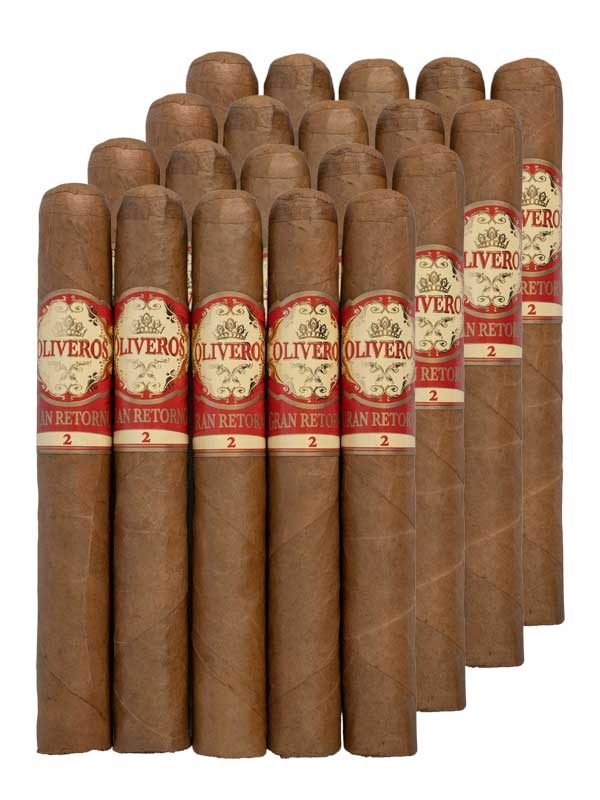
The middles are where a bundle earns or loses your trust. Most of mine burned straight enough to ignore. But the third stick from the Habano bundle, a sticky afternoon in June 2026, tunneled hard up one side and I relit it twice before the burn line pulled back even. That's the tax on the price. In twelve cigars I had one outright dud and two that wanted a touch-up, which, at a buck and a half, I can live with all day.
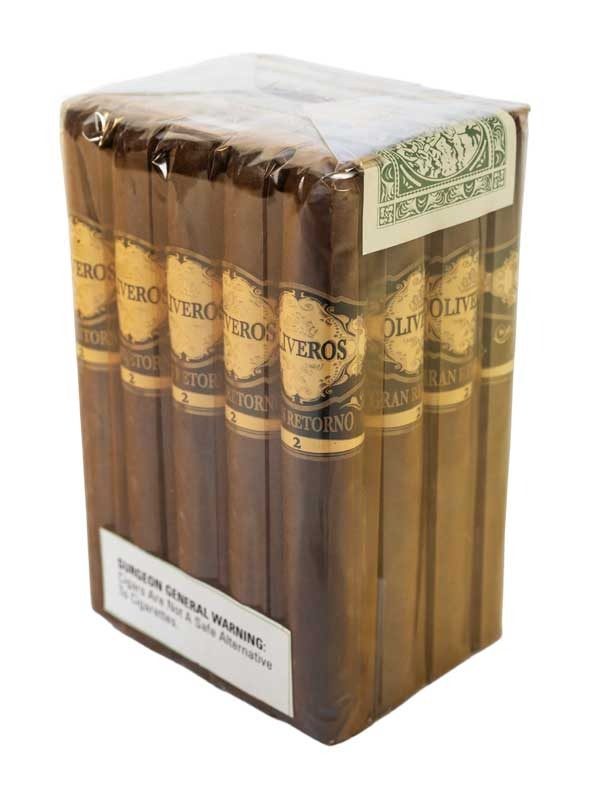
Final thirds are where cheap cigars usually come apart, going hot and bitter as the nub heats up. These mostly held their composure. The Connecticut faded to a quiet, toasty close. The Habano got earthier and a shade sweeter, and I let two of them burn down further than I meant to, which is the nicest thing I can say about a cigar at this money. You forget you're smoking a bargain.
Put it on the ladder and the picture sharpens. A six- or seven-dollar everyday single, a Nicaraguan workhorse you'd pull off the shelf without any bundle deal, will out-consistency this every time, and that extra few dollars buys tighter sorting and one fewer dud per handful. Above twelve dollars you start paying for aged leaf, a scarce wrapper, a name. The Oliveros Gran Retorno isn't in that fight, and it isn't pretending to be. It competes with smoking nothing, or with smoking something worse for the same money, and on that field it wins going away.
As for what to drink with it, skip the pairing-chart advice. This is a cigar for cheap, honest company. The Habano took the rye without complaint and would take a cold lager just as happily on a hotter day. The Connecticut wants coffee, black, the first cup of the morning, or an iced tea if you're stuck on a porch in July. I wouldn't waste a careful pour on either, and I mean that as praise, because a cigar you can smoke with gas-station coffee is a cigar you'll actually smoke.
Here's how the two wrappers split out after three weeks with both.
| Swing Connecticut | Swing Habano | |
|---|---|---|
| Wrapper, as labeled | listed as Ecuadorian Habano | listed as Honduran Connecticut |
| Body | mild; toast and cedar | medium; pepper and coffee |
| Burn | the steadier of the two | one tunneler in six |
| Best hour | morning, with coffee | afternoon, with something brown |
| My pick | the safe one | the interesting one |
The label says one thing, the leaf says another
One oddity is worth flagging, because it tells you precisely which tier you're shopping. The listing can't keep its own story straight. The bundle named Connecticut is spec'd with an Ecuadorian Habano wrapper; the bundle named Habano is spec'd with a Honduran Connecticut. Read those twice. Somewhere between the factory floor and the web page, the labels got crossed, or the names and the specs were never speaking to each other to begin with. It doesn't change how they smoke. But it's a small, honest window into bundle tobacco, where the sorting and the record-keeping are exactly the corners cut to hit the price. On a Padrón box, that mismatch would be a scandal. Here it's just Tuesday.
Where the value quits, and the verdict
So where does this stop being a good idea? A few places. Not every stick in a bundle is a keeper, and if you're the sort who can't shrug off a plugged draw or a fast burn now and then, the bundle life will make you miserable, so buy singles and pay the tax. The consistency wanders from one to the next in a way a $12 stick's doesn't. And storage will punish a cheap cigar faster than a dear one. If you keep these below 65 percent humidity, the thin pale wrapper on the Connecticut splits before the darker one does, so hold them steady and smoke them inside a year rather than babying them for three.
The verdict's the easy part. Buy it. Keep the box by the door for the walk you take every evening, the cigar you light without a thought and don't hand to a guest expecting applause. At a buck and a half, the Oliveros Gran Retorno does the one job an everyday cigar has, which is to show up, burn more or less straight, and stay out of the way of whatever's in your glass. Judge it against the thirty dollars you actually spend, not the $140 fantasy, and it's one of the better deals sitting in the case right now.
One thing the import numbers hint at, if you plan ahead. The Cigar Association of America flagged buyers front-loading orders in early 2025, stocking up before tariff changes could bite. Tariffs and a thin run of harvests are what thin out the deep-discount end of the shelf first, because a thirty-dollar bundle is the last place a maker has room to absorb a cost bump. The buck-and-a-half cigar isn't a fixture. It's a window, and windows close.
I've got fourteen left from the first bundle, and I'll be through them by August without any ceremony. The good ones don't ask you to notice them, and this one, most nights, doesn't. The rye went watery and then it was gone, the fan kept losing to the heat, and I never once reached for anything better to replace the drink or the smoke.
Disclosure: When we link to a specific product, we link to a retailer our writers think charges a fair price for it. The step up from a bundle costs real money, and if you want to taste what a few more dollars buys, a limited toro like the Oliva Serie V 135th Anniversary sits at the far end of the shelf from these. The best-sellers list is where deep-discount bundles like this one keep turning up, the brand directory and the full catalog hold everything in between, and the storefront is the place to start if you're only browsing.
Sources & Notes
- Cigar Association of America, first-quarter 2025 US cigar import report (premium imports 93.3 million units; Nicaragua 59.7 million, roughly 64 percent of the premium total; Dominican Republic 16.9 million; Honduras 15.3 million), drawn from Census Bureau trade data: cigarsusa.org, 2025 year-to-date import report.
- Plasencia Cigars, on the family's tobacco growing in Nicaragua and Honduras and a farming legacy dating to 1865, as context for the aged Nicaraguan leaf the value tier draws on: plasenciacigars.com.
- First-hand: six cigars from each bundle (Swing Connecticut and Swing Habano) smoked over three weeks in June 2026 in Charleston, one tunneler and two touch-ups across the twelve, conditions noted as smoked.
- Pricing, sizes and wrapper labels are from the product listings linked above, checked in July 2026; the 33-month maturation figure is the seller's own claim, not independently verified.