Sunday, the last week of June, and Charleston had gone past ninety degrees by ten in the morning. I was in the file room at the back of the house with the window unit rattling, sorting bands. This is the ephemera collection I've kept since 2019, about two hundred bands now, plus a couple dozen boxes and three Cuban-era humidors and a shelf of period magazines. Once a year I pull the whole drawer out and re-sort it. Usually badly. Usually with an iced coffee going watery on the desk beside me.
That morning I sorted by country of manufacture. Every band off a cigar rolled in Nicaragua went into one pile, and the pile was most of the drawer. No surprise there. I've been buying and smoking and writing about this stuff long enough to know which way the industry tilted.
Then I did a second sort I'd never bothered with. For each of those Nicaraguan cigars, which country grew the wrapper? The pile came apart in my hands. Ecuador, over and over. Honduras. Connecticut, of all places. Brazil. Nicaragua itself turned up maybe one band in six.
That's an odd result for the country that supplies most of what America smokes. It also quietly rewrites the question people ask across the counter every day, which is some version of "what's a good Nicaraguan?" as though the word described a taste. It mostly doesn't. It describes an address.
Sixty percent of the count, and a cheap one at that
Start with the volume, because the volume is genuinely lopsided. The Cigar Association of America's year-end import data for 2025 puts total premium handmade imports into the United States at 429.8 million cigars, essentially flat against 2024. Nicaragua accounted for 258.4 million of them. The Dominican Republic sent 93.7 million, down from 106.0 million the year before. Honduras sent 74.5 million, up from 67.4 million.
Do the division and Nicaragua is a shade over sixty percent of every premium cigar legally imported for American humidors. My colleague's piece on the Tatuaje Havana VI ran the quarterly version of that same number earlier this year, and the quarterly figure runs higher still.
But the number I keep coming back to isn't the count. It's the price. In the CAA's third-quarter 2025 breakdown, Nicaraguan premium cigars landed at an average customs value of $1,403 per thousand. Honduran cigars landed at $1,345 per thousand. Costa Rica came in at $1,239. Mexico, shipping a rounding error of volume, landed at $2,258 per thousand.
So the country that dominates the American premium market does it at roughly a dollar forty a cigar at the dock. Nicaragua didn't win the shelf by charging more. It won by making an enormous quantity of cigars that arrive cheap and leave the shop at a price the customer thinks is fair. Everything downstream of that, including the shelf at your local, is a consequence of landed cost.
The quarterly data sharpens it. In the CAA's January-to-March 2025 report, Nicaragua shipped 59.7 million premium cigars against a total of 93.3 million, a hair over sixty-four percent of the quarter. The association attributed part of that March surge to importers stockpiling ahead of expected tariff increases, which is worth holding onto: some meaningful share of recent Nicaraguan volume is a bet on trade policy rather than a read on demand.
The CAA's own framing of 2025 is worth repeating because it cuts against the volume story: lower-priced cigars keep losing ground while higher-value products hold or grow, and the association's summary concludes that the American market "is no longer chasing volume. It is building long-term value." Total large-cigar imports of every kind fell about six percent last year, from 8.26 billion units to 7.77 billion. Premium held flat. Premium is a sliver of the unit count and something closer to a quarter of the retail dollars.
What José Padrón actually built in Estelí
The reason Nicaragua can do this at all is a story about one kind of infrastructure, and Padrón's own company history lays out the timeline more plainly than any outside account I've read.
José O. Padrón left Havana by plane in April 1961. He reached the United States that December, aboard the steamship Covadonga out of Madrid, worked briefly in New York, and moved to Miami in February 1962. In September 1964 he opened Padrón Cigars with six hundred dollars saved from mowing lawns and doing carpentry, one roller, and a hammer a friend had given him. Between 1965 and 1967 he went looking for growing conditions that resembled Pinar del Río and settled on the Estelí valley. In 1967, per the company's account, he inspected the first shipment of Nicaraguan tobacco to reach the United States.
Read that last date again. Nicaraguan leaf has only been arriving in America since the year the Beatles put out Sgt. Pepper. Sixty percent of the premium market, from a standing start inside one working lifetime.
What Padrón built after that is the part that matters structurally. The company describes itself as controlling the chain end to end: seed germination and seedlings, transplanting and harvest in Nicaragua, drying on cujes in the barn, fermentation in pilón, deveining, aging the leaf in bales, manufacture at the Nicaraguan facility, then sorting and boxing and distribution out of the Miami office. Their phrase for it is "from seed to smoke."
That model (farm, ferment, roll, box, all inside one country and largely inside one company) is the thing Nicaragua turned out to be unusually good at hosting. Cheap land in a volcanic valley. A labor force that got very good at rolling very fast. And enough political stability after the civil-war years, which Padrón's history notes he worked through, along with a factory fire in Estelí, to let people build barns that would still be standing in twenty years. The Padrón history is candid that none of this was smooth going; there were extortion attempts and violence against the Miami operation too.
Now look at the wrapper line on the box
Here's where the drawer-sorting comes back. Vertical integration in Nicaragua produced enormous quantities of filler and binder leaf, and a labor pool that can roll it. It did not produce a wrapper industry to match.
Wrapper is a different agricultural problem. It has to be grown under shade or under very particular sun, picked and handled so the leaf stays cosmetically unblemished, sorted by shade across dozens of gradations, and it carries a huge share of what the smoker registers as flavor in the first ten minutes. Ecuador's near-permanent cloud cover turned out to be extraordinary for it. Connecticut's river valley has been doing it since before anyone in Estelí planted a seed. Brazil and Cameroon and Indonesia all have a claim.
Nicaragua does grow wrapper. Habano-seed wrapper comes out of Estelí and Jalapa, and several of the best cigars I've smoked in the last two years wore it. But the volume isn't there at the scale the industry needs, the yield of cosmetically clean leaf runs lower, and Ecuadorian shade has spent thirty years becoming the default answer for anybody who needs a million wrappers that look alike. Consistency is the whole game at scale, and consistency is what Ecuador sells.
So the cigars that say Nicaragua on the box overwhelmingly wear somebody else's face. I pulled six Nicaraguan-made cigars currently listed at the shop I check prices against and read the spec lines off them:
| Cigar | Rolled in | Wrapper leaf | Binder and filler |
|---|---|---|---|
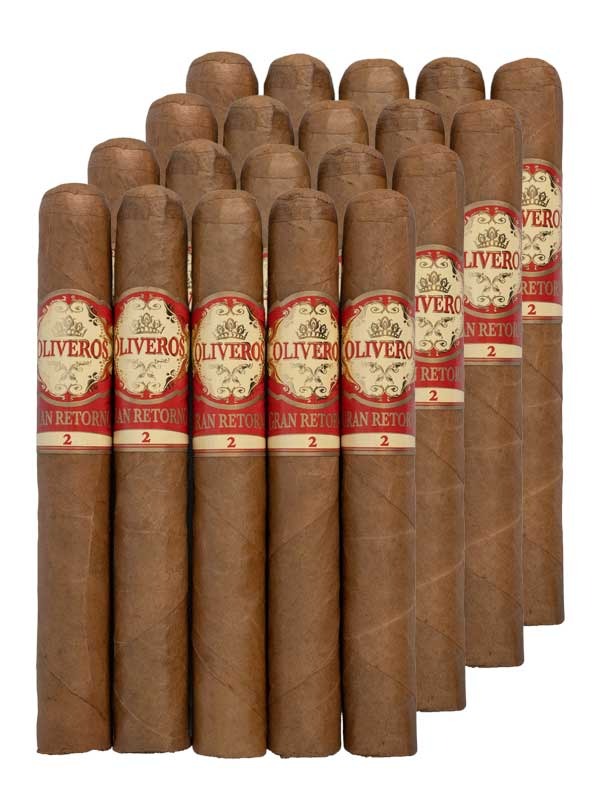
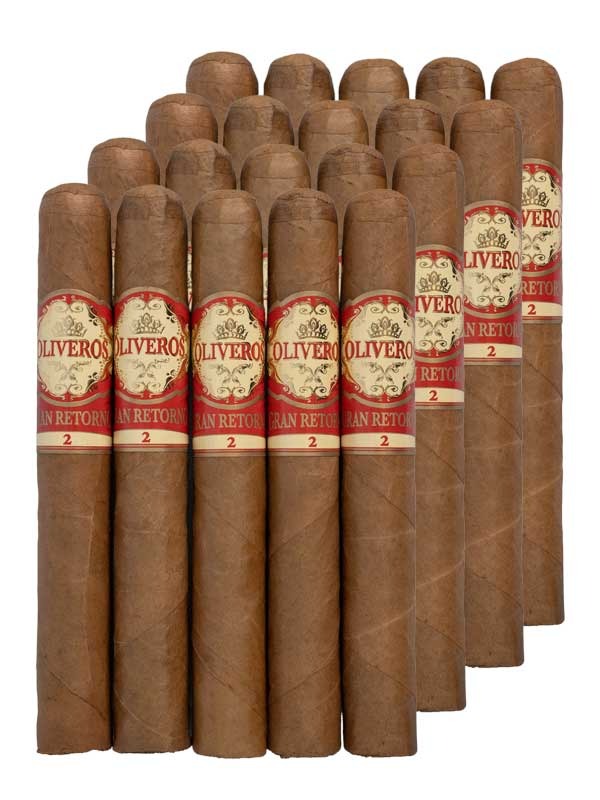
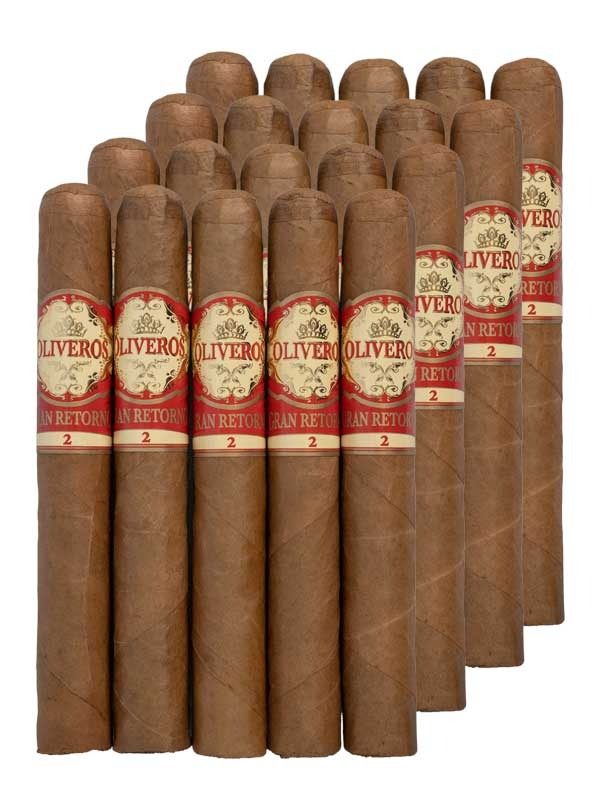
| Oliveros Gran Retorno Swing Connecticut | Nicaragua | Ecuadorian Habano | Nicaraguan binder, Nicaraguan filler |
| Oliveros Gran Retorno Swing Habano | Nicaragua | Honduran Connecticut | Nicaraguan binder, Nicaraguan filler |
| Oliva Serie V 135th Anniversary Edicion | Nicaragua | Ecuadorian Habano | Nicaraguan binder, Nicaraguan filler |
| CAO Bones Blind Hughie | Nicaragua | Connecticut Broadleaf | Connecticut Shade binder; Dominican, Honduran and Nicaraguan filler |
| Hoyo La Amistad Dark Sumatra Espresso | Nicaragua | Ecuadorian Sumatra | Connecticut Broadleaf binder; Nicaraguan, Honduran and Dominican filler |
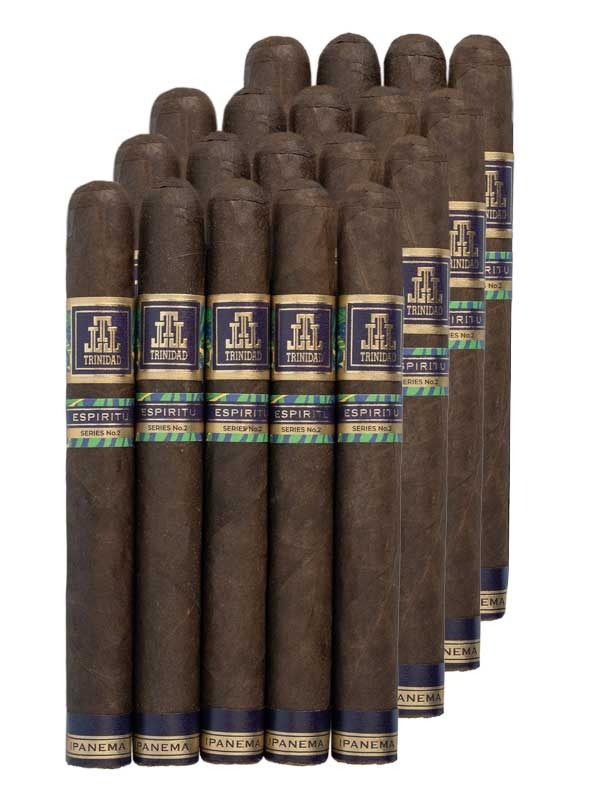
| Trinidad Espiritu Series 2 Ipanema | Nicaragua | Brazilian Arapiraca | Nicaraguan binder; Brazilian and Nicaraguan filler |
Six cigars, six Nicaraguan factories or factory partnerships, and not one Nicaraguan wrapper among them.
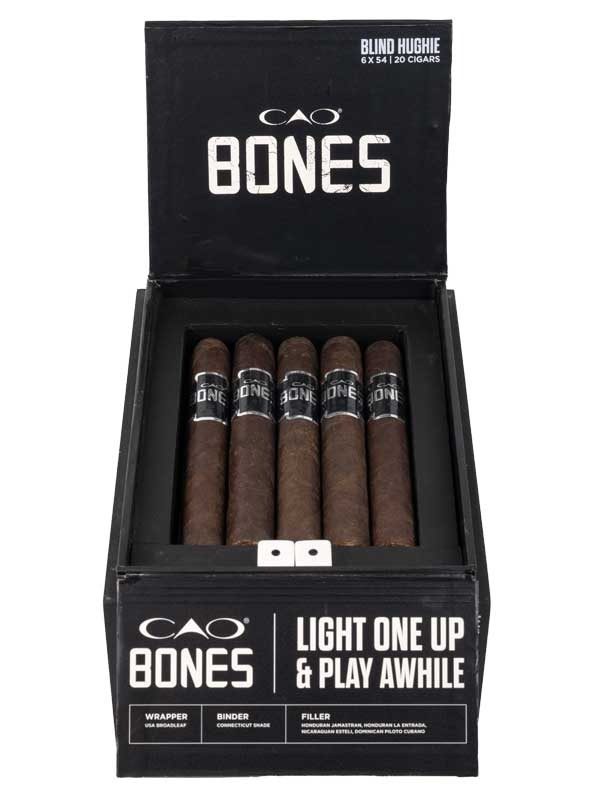
The CAO Bones Blind Hughie is the specimen I'd put under glass. Country of origin: Nicaragua. Wrapper: Connecticut Broadleaf. Binder: Connecticut Shade. Filler: Dominican, Honduran and Nicaraguan. It's a six by fifty-four Toro that costs $5.90 a cigar, and the only Nicaraguan thing about it, strictly speaking, is part of the filler and the hands that rolled it. Call it a Nicaraguan cigar and you're describing the return address.
The Trinidad Espiritu Series 2 Ipanema does the same trick from the other direction, a seven by fifty-four double corona in a Brazilian Arapiraca wrapper over Nicaraguan binder and a Brazilian-Nicaraguan filler blend, at $6.54 a cigar. The dark sweetness people describe in that cigar is largely a Brazilian phenomenon happening on top of Nicaraguan tobacco.
The factory is the product
There's a second reason the origin line has drifted loose from flavor, and it's structural. Plenty of the brands on an American shelf don't own a factory at all. They rent capacity, or they partner, and Nicaragua is where the capacity sits.
The Oliveros Gran Retorno listing is explicit about it. That line is made in Nicaragua in partnership with the Plasencia family, with a maturation process the listing says can stretch as long as thirty-three months. Nothing wrong with the arrangement. Plasencia has been growing and rolling in Nicaragua and Honduras for generations, and a brand that partners with them is buying access to leaf inventory and quality control it could never build alone. But it does mean the phrase "Nicaraguan cigar" can describe a company with no Nicaraguan farms, no Nicaraguan employees, and a blend drawn from four countries. (The CAO Bones in the table above is close to that arrangement, and it's a good cigar; the label just isn't doing the work people assume it's doing.)
Concentration carries a cost as well. When most of a category's manufacturing lives in one country, a bad harvest, a labor dispute, a shipping disruption or a tariff schedule propagates to every shelf at once. The Dominican Republic's twelve-percent drop in 2025 shipments and Honduras's eleven-percent gain, both from the CAA's annual figures, look partly like brands moving production between the few places that can absorb it on short notice. That flexibility exists because a handful of large operations hold the leaf and the rolling floors. Which is efficient, and fragile, in the same breath.
Where Nicaragua actually did win
None of this makes the country a bit player. It makes it a different kind of player than the marketing implies, and the difference is worth being precise about.
Oliva's own account of the Serie V blend is a clean illustration. The family traces itself to Melanio Oliva, who began growing tobacco in Pinar del Río in 1886; the company now farms in Estelí, Condega and the Jalapa Valley. The Serie V is built on Nicaraguan long filler with what Oliva describes as a specially fermented Jalapa Valley ligero at its heart, and then finished with a high-priming Cuban-seed wrapper grown in Ecuador.
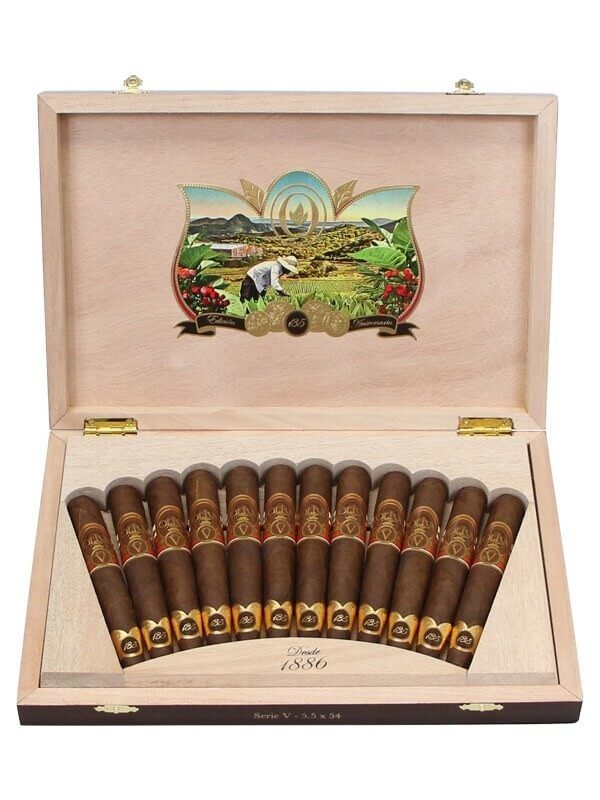
The ligero is the point. That's the top-priming leaf, the oiliest and strongest tobacco on the plant, and Jalapa's version of it is a large part of what people mean when they say a cigar tastes Nicaraguan. Estelí gives pepper and a mineral edge. Condega sits between. Jalapa runs sweeter and rounder. Those are real regional signatures, and a blender who knows them can build a spine that no other origin quite replicates. The Serie V 135th Anniversary Edicion, a five and three-quarters by fifty-four perfecto at $88.24 for the box, is that spine dressed in Ecuadorian clothes.
So the honest sentence is this. Nicaragua won the middle of the cigar and the hands around it. It did not win the outside. When a shop tells you a cigar is Nicaraguan, they're telling you about the filler, the binder some of the time, and the factory always. The wrapper is a separate question with a separate answer, and it's the answer that hits your palate first.
You can taste the whole argument for about three dollars if you buy the two Oliveros Gran Retorno Swing Connecticut and Swing Habano bundles side by side. Same six by fifty format, same Nicaraguan binder and filler, same Plasencia-partnered production the listing describes as running up to thirty-three months of maturation, and both work out to about $1.50 a cigar in twenty-count bundles. One wears an Ecuadorian Habano wrapper. The other wears a Honduran Connecticut. They do not taste like the same cigar, and every variable except the wrapper is held constant. I wrote about that line at more length earlier this month; smoked back to back, the wrapper does most of the talking.
What I got wrong, and how I read a band now
I've been wrong about a category signal before, publicly and at length. In 2022 I argued the post-pandemic cigar-lounge resurgence was durable, and it wasn't. Five of the fourteen Southern lounges I profiled have since closed and two more are drifting toward the exit. My error there was reading a surface indicator, full rooms, as though it described the underlying thing, a business model that worked. Origin labels invite exactly the same mistake in miniature.
And the label is doing real work in the market. Most cigar-lifestyle writing is product placement dressed up in adjectives, and "Nicaraguan" has become one of those adjectives, a shorthand for strength and pepper that a marketing department can print on a box regardless of what's inside it. A mild Ecuadorian-wrapped Connecticut rolled in Estelí is a Nicaraguan cigar. So is a full-strength Jalapa ligero bomb. The word does not distinguish them.
There are limits to how far I'd push this. Factory matters enormously, and a country's factories share techniques, so "made in Nicaragua" does carry information about construction standards and blending house style. What it can't carry is a flavor promise. On March 14, 2026, at that same file-room desk, I lit a Nicaraguan toro I'd been holding since the winter and it tunneled before the first ash dropped, the burn climbing one side and leaving a wall of unlit filler standing. Same country as the one I'd smoked happily the night before. Same shop, different box. Origin predicted neither outcome.
So what should you read instead? Read the wrapper line first, because it's the best single predictor of what the first third will taste like. Read the filler origins second for strength. Read the factory third, for whether the thing will burn straight. And treat the country-of-origin line as what it now is, a manufacturing fact rather than a flavor claim.
If you want to run the experiment yourself, the main cigar catalogue can be filtered by wrapper as well as by country, which is the more useful axis of the two. The best-seller list is a decent snapshot of what people are actually buying, and the Hoyo La Amistad Dark Sumatra Espresso, a four and a half by fifty Robusto at $4.79 with an Ecuadorian Sumatra wrapper over a Connecticut Broadleaf binder and a three-country filler, is a good short lesson in how little the phrase "Nicaraguan cigar" narrows things down.
When we link to a specific product, we link to a retailer our writers think charges a fair price for it.
The drawer went back together that Sunday afternoon, badly, the way it always does. I put the Nicaraguan bands back in their pile because I still think country of manufacture is the right first cut for an archive. But I started a second index card behind them, one line per band, and the only thing written on it is where the wrapper was grown. It's a shorter list than I expected. Ecuador is winning something too, and nobody has printed it on a box yet.
Sources & Notes
- Cigar Association of America, "Cigar Imports 2025: Stability Holds as the Market Shifts Toward Value" - 2025 premium handmade imports of 429.8 million cigars; Nicaragua 258.4 million, Dominican Republic 93.7 million, Honduras 74.5 million; total large-cigar imports down from 8.26 billion to 7.77 billion units.
- Cigar Association of America, "Imports Through Q3: Volume Down, Premiums Hold" - per-country premium unit counts and average customs value per thousand cigars ($1,403 Nicaragua, $1,345 Honduras, $1,239 Costa Rica, $2,258 Mexico).
- Cigar Association of America, 2025 YTD Cigar Import Report (Jan-Mar) - first-quarter country breakdown used to check the annual figures against a quarterly run rate.
- Padrón Cigars, José O. Padrón biography and "Vertically Integrated" - 1961 departure from Havana, September 1964 founding, the 1965-67 search that led to Estelí, the 1967 first shipment of Nicaraguan tobacco to the United States, and the company's seed-to-smoke production chain.
- Oliva Cigar Co., official site - Melanio Oliva's 1886 start in Pinar del Río, the company's Estelí, Condega and Jalapa Valley farms, and the Serie V blend's Jalapa ligero and Ecuadorian Cuban-seed wrapper.
- Product specifications, sizes and prices read from current retailer listings in July 2026. Band counts and the wrapper-origin tally are from my own catalogued collection.