I paid $395 for a box of twenty-five Padrón 1964 Anniversary Maduro Exclusivos in March 2025, and I smoked the last one on a Tuesday this April, on a balcony, with a glass of Flor de Caña 12 going slowly warm beside it. Fourteen months, one box, one size. That's the only honest way I know to review a cigar, and it's the reason this column took a year to file.
For readers new here: I spent eleven years on a Montréal lounge floor, I keep a personal humidor log I started in 2019, and I work by one rule I learned the hard way, which is no rating on fewer than three cigars from the same box. So a full box earns a full review. The Padrón 1964 Anniversary line is older than its name suggests. Per Padrón's own site, the family built it in 1994 for the company's thirtieth anniversary and named it for 1964, the year José O. Padrón started the business with $600 of carpentry money. The maduro is the version I keep coming back to. I want to tell you why it isn't the most interesting cigar Padrón makes, and why that turns out to be the point.
The box, and the conditions
Here is the data the whole review rests on. Twenty-five cigars; a box code dating the production run to 2024; storage the entire stretch at 65% RH and around 68°F in a cabinet I try not to open more than I have to. I smoked them at roughly two a week, never in the same chair two weeks running, and logged each one for draw, burn, the room, and what was in the glass. My notes from those fourteen months run to nine handwritten pages. The short version is that they are boring notes. Almost nothing changed from cigar to cigar, and I mean that as the highest thing I can say about a box.
What did a single cigar cost me? Just under $16. In 2026 that figure drops the 1964 Maduro into an odd middle tier of the market. It undercuts most of the brand-name "limited" and "anniversary" sticks now drifting past $20 apiece, and it sits well above the boutique cigars I keep pushing on anyone who will listen. Per Padrón's site, the line's flavor is credited to its tobacco, which the company says is "aged for four years," and the 1964 was box-pressed from the start, in the Cuban tradition the family came up in. Four years of aging is the figure to hold onto. We will come back to it, because it explains almost everything that follows.
Cold draw and the first third
Cap clipped, the cold draw on a 1964 Maduro reads as dark bread crust and raisin, with just enough resistance to tell you the bunch was rolled by someone who cared. The unlit foot smells of cocoa powder and a little dried fig. The box-press sits square and flat in the hand, no soft spots down its length, and the wrapper carries the fine tooth a sun-grown maduro gets, not slick with oil so much as grained, like good leather before anyone has bothered to polish it. Nothing about the cigar in the hand promises fireworks. It promises something I trust more, which is a cigar that knows exactly what it is.
Lit, the first third opens on espresso, the crema rather than the grounds, with a black pepper that hits the retrohale hard for about an inch and then steps back as though it had been told to. Cocoa settles in under the pepper. A dry cedar, picked up from months in the box, rides alongside. There's no bitterness here, no green sharpness, none of the ammonia a maduro throws at you when it has been rushed to market young. The burn line tracks dead level off the foot and the ash holds in a tight pale grey out past the first inch. So far the cigar is doing its job and declining to perform.
The second third, and the last inch
The second third is the register the 1964 Maduro holds longest, and the one I'd build the cigar's reputation on. The pepper is gone by now. In its place comes dark chocolate, a walnut-skin bitterness that reads as depth rather than fault, and a leather note like a watch strap worn three summers deep. Underneath all of it runs a mineral edge. Call it the Estelí ground if you want to be romantic about it, and Padrón's site is romantic about it, calling that region's soil a match for the Pinar del Río the family farmed before they left Cuba. The strength sits medium-full and stays there. It doesn't lurch anywhere.
Into the final third the cigar builds, and it builds slowly. Char arrives, then a dark-coffee bite, then a black-licorice sweetness I missed in the first few cigars of the box and then caught in every single one after I knew to look for it. Push the pace and the last inch turns hot and a little harsh, which is true of any full maduro and lands on the smoker, not the leaf. Paced properly, an Exclusivo gives you roughly eighty minutes and never once turns on you. I have nubbed more of these past the band than is good for me. Across all twenty-five, the construction tally was this: not one plugged draw, not one tunnel, one slightly fast burn fixed with a single touch-up.
Consistency is the actual product
Now the argument I came here to make. Across twenty-five cigars and fourteen months, the gap between the best 1964 Maduro in that box and the worst of them was almost too small to write down. And here's the part that's uncomfortable to admit in print as a reviewer: the 1964 Maduro isn't the most layered cigar I smoked last year. It doesn't transform on you. It doesn't ambush you with a third act. What it does instead is land in precisely the same place, twenty-five times running, and I've come to think that's the harder trick and the more valuable one.
Our whole scoring culture is built so it can't reward that. The 90+ ratings inflation in the trade press pays out for the cigar that does a trick, the one with a dramatic mid-smoke pivot a reviewer can hang a paragraph on. A cigar that tastes the same on stick one and stick twenty-five reads, on the page, as dull copy. But I have smoked enough boxes to tell you what's really going on: most cigars sold to you as "complex" aren't, they're inconsistent, and reviewers confuse the two constantly. When I ran the 2023 Tasting Group Quarterly, twelve reviewers and blind panels, the blends that split the room hardest were almost always the ones the press had called the most layered. The cigars the whole table agreed on were the steady ones.
Padrón's site is plain about how the company chases the opposite outcome. It grows its own tobacco in Nicaragua, ferments and ages it in bales, and states that it has "tried to maintain enough tobacco for uniformity and consistency in our blends." Read that as a sentence about warehouse inventory if you like. It's really a sentence about taste. When you hold the leaf from "seed to smoke," which is Padrón's own phrase, and age it four years deep before a cigar ever ships, what you buy back is régularité. It's a wine word. It means the bottle lands in the same place every time you pull the cork, and in cigars that is rarer than the fireworks the scores chase, and worth more.
Even the scoring culture I just knocked has never managed to ignore this line. Padrón's own ratings page logs the 1964 family between 90 and 97 across two decades of reviews, with a 2021 Cigar of the Year going to the Maduro Torpedo. I've written here before about how every Padrón release reads as a variation on one long-held strategy, and the 1964 Maduro is that strategy at its plainest. So when a single house scores that tightly for that long, the number has finally stopped measuring drama and started measuring the genuinely hard thing. It's measuring consistency.
What's actually on the shelf
Padrón keeps tight distribution and holds its pricing, and the shop this magazine links to doesn't stock the brand, so you will not find the 1964 Maduro discounted anywhere worth trusting. If the 1964 Maduro is the cigar you want, find a good tobacconist and pay the counter price without complaint; it's worth it. But if what you're really after is the experience of the thing, a four-years-or-older maduro you can order at a discount and smoke a whole box of, there are honest answers, and most of them right now wear an Oliva band. The table below is the comparison I would hand a friend across the lounge.
| Cigar | Wrapper | Size | Aged | Per cigar | My read |
|---|---|---|---|---|---|
| Padrón 1964 Anniversary Maduro Exclusivo | Nicaraguan sun-grown maduro | 5 1/2 x 50 | 4 years, per Padrón | about $16 | 91, buy it |
| Oliva Serie V Maduro Especial Toro | Mexican San Andrés maduro | 6 x 50 | not stated | about $7 | the value substitute |
| Oliva Serie V Melanio Maduro Torpedo | San Andrés maduro | 6 1/2 x 52 | not stated | about $10 | buy now, smoke later |
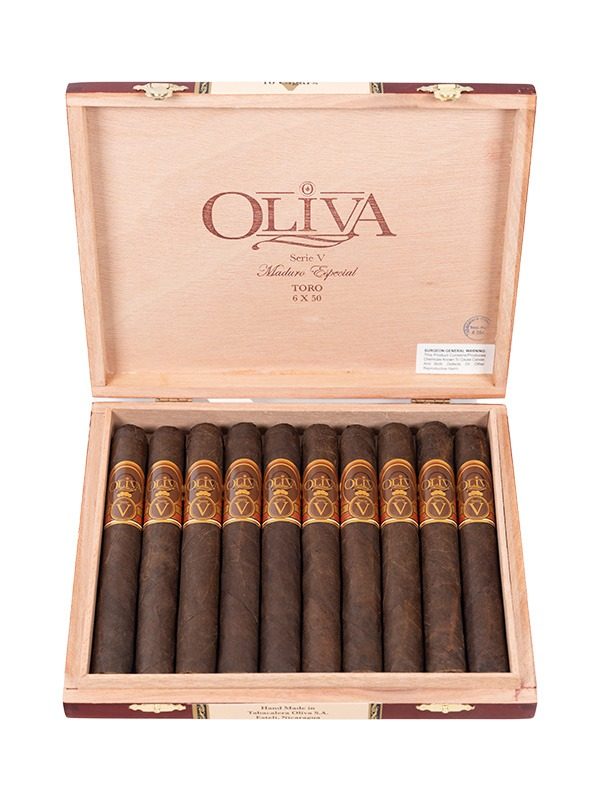
The Oliva Serie V Maduro Especial Toro is the cigar I would put in a Padrón smoker's hand first. It's rolled in Estelí, the same Nicaraguan town Padrón works out of, but it wears a Mexican San Andrés maduro wrapper instead of a Nicaraguan one. That single swap pushes its sweetness toward dark cocoa and stewed plum where the Padrón leans toward bread and licorice. It runs medium-full, and it was cleanly built in the three I have smoked recently off a fresh box. At roughly half the per-cigar price of the Padrón, it is the closest honest value substitute I can point you to, and I do not say that lightly about any cigar standing next to a 1964.
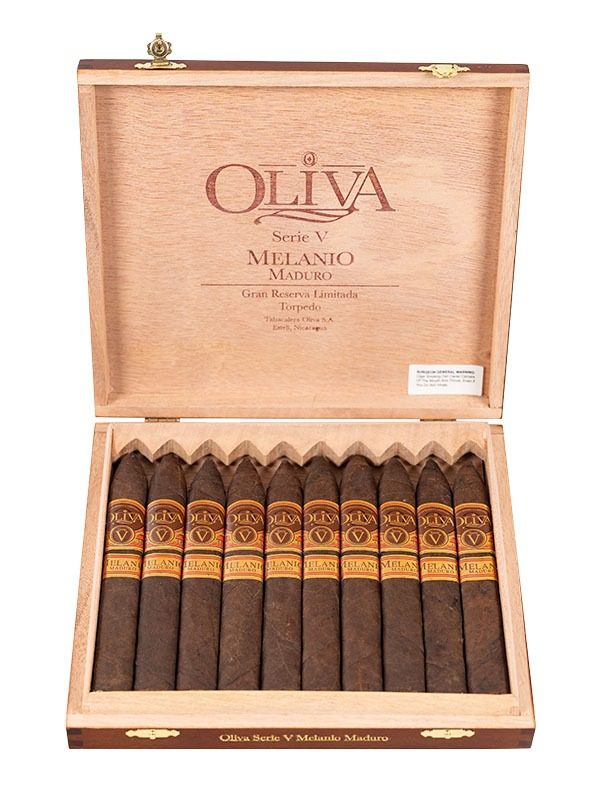
And the Oliva Serie V Melanio Maduro Torpedo is the one to buy now and not light yet. A torpedo concentrates everything toward the tip, and a San Andrés maduro at this size can come across young and faintly ammoniac straight off the truck. I smoked six from one box of the natural-wrapper Melanio to review it in this magazine last week, and the maduro is the same family with the sweetness turned up and a little more grip. How a maduro shows you depends on how long it has rested. Give this one six months at 65% RH and it tightens into something genuinely good. So buy three, smoke one, and let the other two teach you patience.
The verdict
So: buy it, age it, or skip it. The Padrón 1964 Anniversary Maduro is a buy, and I am putting a number on it because I earned the right to, with twenty-five cigars, one box, and a year of notes behind me. Ninety-one. Not a 90, not a 95; a rating that ends in a 0 or a 5 usually means the reviewer rounded instead of tasting, and mine end in 1, 3, 7 or 9. A 91 from me is a cigar I would rebuy without a second thought, that did nothing wrong across a full box, and that I would hand to a newcomer as the benchmark for what the word "consistent" is supposed to taste like.
Why so certain on the strength of a single box? Because I know exactly what the alternative costs. In 2021 I scored a Liga Privada Único Serie the Dirty Rat a 93 after one cigar at a Drew Estate event, published the number, and felt clever about it; the fourth stick from the box I bought afterward tunneled past the band and burned harsh enough that I cut it open and found a knotted bunch, and the six-cigar average crawled in at 87. One cigar is not a review. That mistake is the entire reason I now smoke a box before I print a number, and the 1964 Maduro is the cigar that makes the rule painless, because there's nothing across twenty-five tries to catch it out.
One caveat worth saying out loud. How a 1964 Maduro smokes depends on how long the box has rested and the RH you hold it at; a fresh box smoked hot, in week one, won't show you this cigar at all. Mine had four years on the tobacco before I bought it and another quiet year resting in my cabinet, and that patience is part of the price you're really paying.
Here's what a full box leaves me thinking about the next two or three years. Brand-name "limited" and "anniversary" cigars keep creeping past $20 a stick while the smoke itself gets no better, and the boutique end keeps proving you can do more for $11. The 1964 Maduro holds the narrowing middle: a cigar that's charged about the same honest price for years and simply delivers, every time, the thing it said it would. As the market pulls apart at both ends, steadiness stops reading as boring. It starts reading as scarce. What is a cigar you never once have to think about actually worth? More each year, I would argue, and the box I just finished is the proof I needed.
Disclosure: When we link to a specific product, we link to a retailer our writers think charges a fair price for it.
Sources & Notes
1. Padrón Cigars, "1964 Anniversary Series" - the four-year tobacco aging, the box-pressed format, and the vitola range. padron.com/our-cigars/1964-anniversary-series
2. Padrón Cigars, "José O. Padrón" - the 1964 founding with $600 of carpentry earnings, the family's Pinar del Río roots, and the tobacco grown in Estelí, Nicaragua. padron.com/the-padron-story/jose-o-padron
3. Padrón Cigars, "Vertical Integration" - growing, fermenting and bale-aging its own tobacco, and the company's stated aim of "uniformity and consistency in our blends." padron.com/vertically-integrated
4. Padrón Cigars, "Ratings" - the company's own record of 1964 and 1926 scores, including the 2021 Cigar of the Year for the Maduro Torpedo. padron.com/ratings
5. Personal humidor log, Felix Aubertin: twenty-five Padrón 1964 Anniversary Maduro Exclusivos, one box, March 2025 to April 2026, stored at 65% RH. First-hand tasting notes.