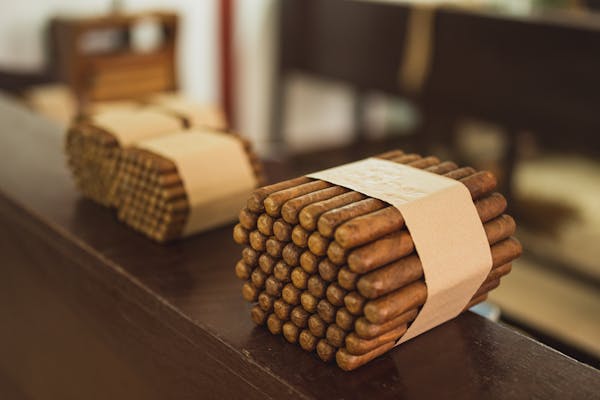
A Wednesday in the middle of March, mid-afternoon, the harbor light coming flat through the front windows at La Casa de los Habanos in Charleston, where I have been a regular since 2022. The rain had quit an hour earlier and nobody had come back in yet. The manager slid a box across the counter, a Nicaraguan toro I buy by the box two or three times a year, and told me the price had gone up again. Eleven dollars a stick, when it had been nine the autumn before. I asked him why. He gave me the answer I have now heard, in some version, from a dozen counters and three manufacturer reps in eighteen months: the leaf. They can't get the aged leaf. Everybody's short.
I want to say plainly what most of the category will not. The aged-tobacco shortage is real at the margins, and it's also the most useful story the cigar industry has told itself in a decade. "We can't get aged leaf" has become the polite, romantic way to announce a price increase that has far more to do with insurance premiums, tariffs, and the cost of labor than with anything sitting in a curing barn. The leaf is doing public-relations work that a spreadsheet should be doing in daylight.
That's not a popular thing to write. Most cigar-lifestyle writing is product placement dressed up in adjectives, and the leaf story runs with the grain of nearly everything published in this category. So let me back it up.
What the brands actually say about aging
Start with the language the companies use, because it's genuinely beautiful and genuinely true and also, quietly, a sales instrument. Visit Arturo Fuente's website and the tagline that greets you is "We will never rush the hands of time." That is not nothing. Fuente has built four decades of reputation on tobacco that sits longer than its competitors can afford, and the line is honest about the patience the family puts in.
Oliva says it has been growing "exceptional tobacco since 1886," the year, by the company's own telling, that Melanio Oliva began working leaf in Pinar del Río before the family eventually moved its operation to Nicaragua. The company describes its Serie V Melanio as a "carefully aged Jalapa blend" and points out the line was rated 96 and named a Cigar of the Year for 2014. Padrón keeps it shorter still: "Hand Crafted Since 1964." Every one of these houses sells time. The aging is real craft, and I've spent enough afternoons in their smoke to know the difference a few extra years in a bale makes.
But notice what the language does when a price goes up. The same word that describes the craft (aged, rested, patient) gets recruited to explain the invoice. And a customer who would push back on "our insurance doubled" will nod along to "the leaf needs more time." One of those sentences sounds like accounting. The other sounds like a vineyard. They're doing the same job.
If you want to taste what genuine aging buys, the honest places to spend the money are the lines that are explicit about it. Perdomo's Double Aged Vintage Connecticut puts the process in the name, and the Connecticut wrapper rewards the rest with a sweetness that a green leaf cannot fake. Oliva's Serie V Melanio is the cigar I'd hand someone who insists aged Jalapa tastes like marketing - it doesn't, and the sampler is the cheapest way to find out. And at the top of the ladder, the Fuente Fuente OpusX is the cigar that built the whole "never rush time" mythology in the first place.
What the survey actually says
Here is where the romance meets the data, and the data isn't on the romance's side. The Premium Cigar Association ran a survey of retailers and manufacturers in early 2026, and the numbers on climate and leaf supply are quieter than the counter talk would have you believe.
Asked about climate's impact on tobacco production, 47.6% of manufacturers expressed some concern, according to the PCA survey - but only 4.8% said they were very concerned, per the association's published results. A full third, 33.3%, reported no concern at all, and another 14.3% said climate conditions had made no difference to their operation. The association's own summary is careful: "many manufacturers are beginning to pay closer attention to how climate conditions may affect tobacco growing and long-term production." Beginning to pay closer attention. That's not the language of a category that can't source leaf. That's the language of an industry watching a horizon.
So if the leaf is not the emergency, what is? The same survey points straight at it. Retailers told the PCA they wanted training on tariffs, pricing pressures, inventory management, and operational costs. On insurance, the association noted that "several respondents noted growing difficulty in securing or maintaining coverage," and that tobacco businesses are "increasingly viewed as 'high-risk.'" Read that twice. The thing keeping shop owners up isn't a curing barn in Estelí. It's whether they can renew a policy.
"You're cherry-picking. A shortage doesn't have to be total to move a price. If aged wrapper is even ten percent tighter, the whole blend gets more expensive, and the brands are just being honest about it."
That's the strongest version of the counterargument, and it's partly right. Tobacco markets are tight in places. Wrapper leaf especially (the prettiest, most weather-exposed part of the plant) does swing with a bad season, and a blend built on a scarce wrapper will cost more to keep making. I'm not claiming the leaf is free or infinite. I'm claiming that a ten-percent tightening in one component doesn't explain a twenty-percent jump at the counter, and that the gap between those two numbers is where the other costs hide.
Where the money actually goes
Aged tobacco is expensive for a reason that has nothing to do with scarcity and everything to do with patience as a balance-sheet decision. When a manufacturer ages leaf, it's choosing to sit on inventory it has already paid for instead of selling it. That's real money, tied up for years, not earning anything. A cigar that leans on older tobacco genuinely costs more to bring to market, and the houses that do it (the ones with the cash to wait) earn the premium honestly.
I have a way of checking this that most people don't, and it is the least glamorous corner of my house. Since 2019 I have kept a collection of cigar ephemera - about two hundred bands, two dozen empty boxes, three Cuban-era humidors, and a small shelf of period magazines, all catalogued in a file room at home. Pull an issue from the early 2000s and read the back-of-book ads. The cigars being sold then were already aged, already premium, already trading on the same houses making them today. What has changed in twenty years isn't the tobacco's age. It's the dollar figure beside it, and that figure has climbed faster than the leaf in the bale got any older. The aging is the constant. The price is the variable. When a constant gets blamed for a variable's behavior, somebody is steering the conversation.
But that premium has been roughly stable for years. It is baked into why an OpusX has always cost what it costs. What's new in 2024 and 2025 isn't the cost of waiting. It's the cost of everything around the waiting: shipping containers, the tariff exposure the PCA's own retailers flagged, the insurance that now treats a humidor like a fireworks warehouse, the wage a torcedor reasonably expects in an economy that has moved. None of those line items sound poetic. So they get bundled, at the register, into a sentence about the leaf.
Take the torcedor for a moment, the person actually rolling the thing. A skilled roller in Estelí or the Dominican Republic isn't working for what that job paid in 2015, and shouldn't be. Wages have moved, as they should anywhere people do precise work with their hands. Add the freight: a container that crossed the Caribbean for one figure two years ago crosses it for another now, and that cost rides on every box inside. Neither of those increases has anything to do with how long a bale of filler sat in a barn. Both of them are real, both are defensible, and both would survive being said out loud. The brands could name them. Mostly they reach for the leaf instead, because the leaf is the part of the cigar a customer has already agreed to feel sentimental about.
Line the explanations up against the evidence and the seams show. "We can't get aged leaf" sits next to a survey in which 4.8% of makers called themselves very concerned about climate and a third reported no concern at all. "The wrapper crop failed" sits next to retailers naming tariffs and pricing pressures as the things they most need help understanding. "Aging takes longer now" sits next to shops being told they are an insurance risk. The blamed cause and the documented cause keep failing to be the same thing.
I'm not saying the brands are lying. Most of them believe the story, because the story is built out of true things - aging is real, wrapper crops do fail, time does cost money. It's just that the true things have been arranged into a narrative that flatters the product and spares the operator from saying the duller truth out loud. The same instinct shows up everywhere the category talks about itself; I wrote about it when I argued that the word "boutique" had stopped telling you anything about who actually makes a cigar.
The value end is still there, which proves the point
If aged leaf were the binding constraint, the cheap end of the shelf would have collapsed first. It hasn't. Walk the low shelf and the value is, if anything, better than it was three years ago.
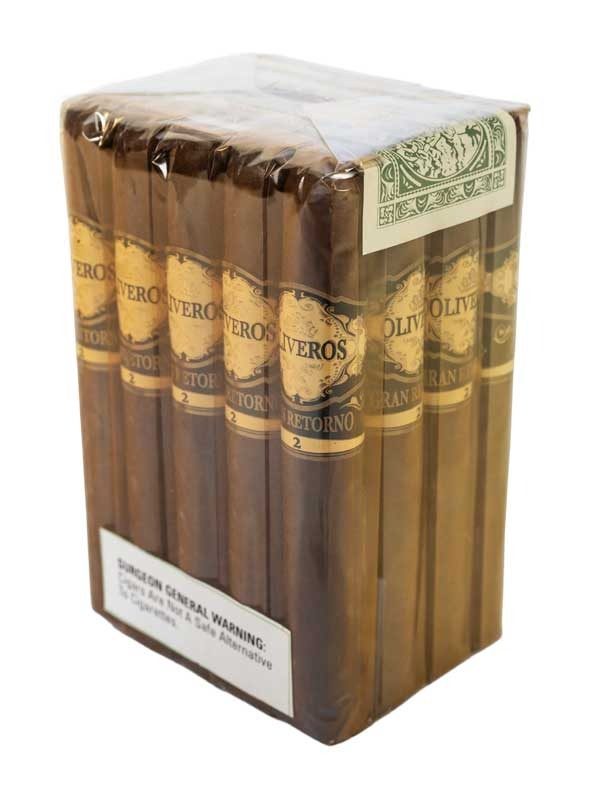
The Oliveros Gran Retorno Swing Habano runs about a dollar-fifty a stick - a mild Nicaraguan toro under a Honduran-grown Connecticut wrapper, from a brand Rafael Nodal revived in the early 2000s after it had gone quiet. It's not a cigar anybody aged for a decade. It's a perfectly honest morning smoke with coffee, and its existence at that price tells you the leaf pipeline is not actually empty. Nobody sells a dollar-fifty toro out of a barrel that has run dry.
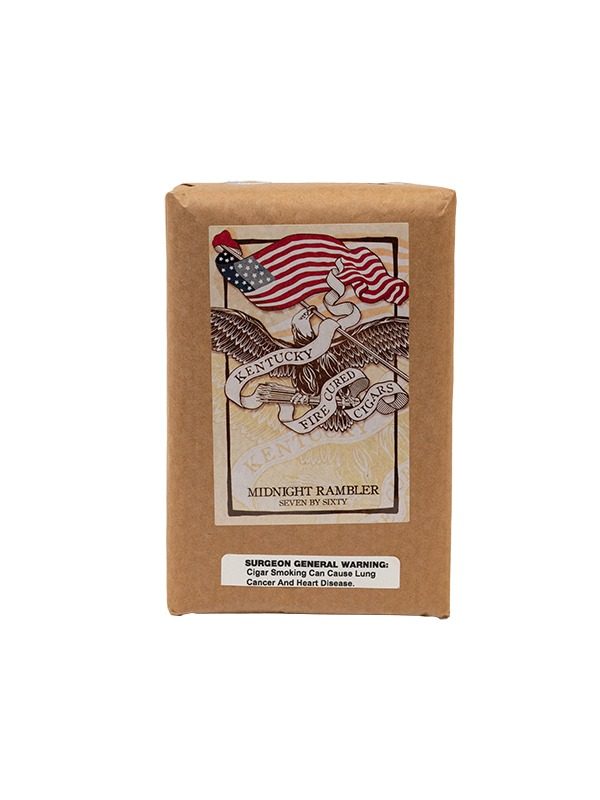
Or take the Kentucky Fire Cured Midnight Rambler, a 7x60 gordo around six dollars a stick. Its whole identity is a different process entirely - the tobacco is fire-cured over hickory and oak instead of air-cured and rested, so the flavor is built by smoke and heat rather than years. That is the tell. When a maker wants character without the carrying cost of aging, the craft finds another road: fire, infusion, fermentation pushed harder.
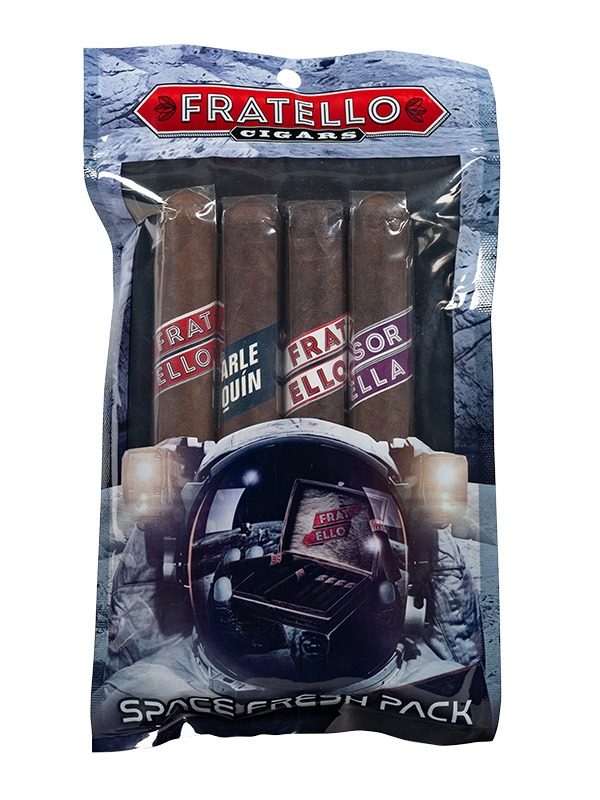
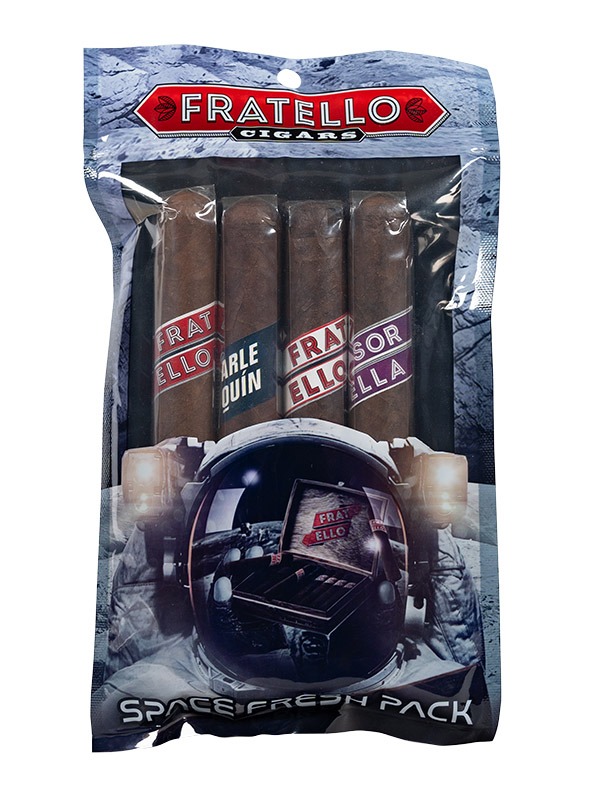
The Fratello Fresh Space Pack runs around twelve-fifty and works the same angle from the other direction. It is a Nicaraguan toro, and the two newer blends in the pack (the Arlequin and the Sorella) are made at the Joya de Nicaragua factory, the Arlequin under a Mexican wrapper over Ecuadorian binder and Nicaraguan and Peruvian fillers, the Sorella under an Ecuadorian Habano wrapper. That is a lot of geography for a cigar nobody pretends spent a decade resting. The interest comes from the blend (from where the leaf is grown and how the pieces are stacked) rather than from vintage. None of these cigars would exist in a true leaf famine. You can't build a value shelf this deep on tobacco that isn't there. The fact that the cheap, the fire-cured, and the cleverly-blended are all thriving is the quiet rebuttal to the scarcity story the top of the market keeps telling.
So here is the anchored failure, because no honest essay about aging should pretend every cigar earns its rest. In March 2026 I opened a 2024-box bundle of cheap Nicaraguan toros I'd bought on a whim, and even after two weeks resting at 65% RH it still wouldn't draw clean (a harsh, under-aged, ammoniac bite and a burn that tunneled up one side after barely an inch. That cigar was not the victim of a shortage. It was underrested) rolled and shipped before it had sat long enough - which is the opposite problem. There is no leaf famine in a cigar that simply wasn't given its weeks. The failure was haste, not scarcity, and haste is a choice a company makes about its own margins.
Where I have been wrong, and why it matters here
I owe a caution here, because I have misread this category before. In 2022 I argued in print that the post-pandemic cigar-lounge resurgence was real and durable. It wasn't. Of the fourteen Southern lounges I've profiled since 2023 (Charleston, Atlanta, Birmingham, New Orleans, Nashville, Memphis, visited each at least twice and learned the regulars by what they drank) five have since closed and two more are on a slow exit. I credited the category with a sturdiness it didn't have.
That mistake is exactly why the leaf story deserves scrutiny rather than applause. An industry under genuine pressure (fragile lounges, hard insurance, real tariffs) has every incentive to reach for the explanation that preserves the romance and the margin at once. I reached for the flattering read in 2022 and it cost me. The category reaches for "the leaf" now because it's the version of the truth that keeps the candlelight on. I understand the pull. I just don't think we should print it without the survey sitting next to it.
When I built a long essay two years ago out of interviews with three people who attended the 1996 Habanos Festival, the thing they kept circling back to was not scarcity. It was theater - the sense that the value of a cigar is partly a story you agree to believe in the room. Aged tobacco is the best story the modern industry has. That doesn't make it the whole invoice.
"Fine. But what do you want the brands to do - itemize my insurance bill on the band?"
No. I want the writing about cigars to stop laundering an operating-cost increase through a word that belongs to craft. The brands can charge what the market bears; that is their right, and the good ones earn it. What I object to is the press that takes the leaf line at face value and reprints it as reverence. When we link to a specific product here, we link to a retailer our writers think charges a fair price for it - and a fair price is one you can actually explain, leaf and freight and insurance and all. If you'd rather read about a house that does sit on its tobacco for real, the Fuente OpusX and the other explicit-aging lines from the brands worth the premium are where the story and the invoice finally agree.
The leaf isn't lying to you. The barns in Estelí are doing what they've always done, on roughly the schedule they have always done it. It is some of the people invoking the leaf who have learned that "aged tobacco" is a phrase you can hide a tariff inside. I bought my Nicaraguan toro anyway, at eleven dollars, because I like it and because the manager was straight with me about the rest of the math when I pushed. That is the whole ask. Not cheaper cigars. Just the real reason, said in daylight, the way you would say it about anything you weren't a little embarrassed to charge for. A small observation to close on, earned and not declared: the romance was never the problem. The arithmetic wearing the romance is.
Sources & Notes
- Premium Cigar Association, "New PCA Survey Reveals Retailer and Manufacturer Concerns in 2026" - climate-concern percentages (47.6% concerned, 4.8% very concerned, 33.3% no concern), insurance "high-risk" language, and retailer training priorities (tariffs, pricing pressures). https://premiumcigars.org/new-pca-survey-reveals-retailer-and-manufacturer-concerns-in-2026/
- Arturo Fuente, official website - "We will never rush the hands of time." https://www.arturofuente.com
- Oliva Cigar Co., official website - "Exceptional Tobacco Since 1886," the Melanio Oliva / Pinar del Río origin, the "carefully aged Jalapa blend" description of Serie V Melanio, and its 96 rating / 2014 Cigar of the Year. https://www.olivacigar.com
- Padrón Cigars, official website - "Hand Crafted Since 1964" and the family's founding date. https://www.padron.com