I can't review the AVO Expresivo 2026 yet. Neither can anyone outside the company. It doesn't reach US shelves until June 25, 2026, with the rest of the world following on July 30, per AVO's announcement at the PCA Trade Show. So this isn't a tasting. It's a read of what AVO told us about the cigar before any of us could light one, and a note on which part of that I think actually matters.
And the part that matters is not the part the press materials lead with. AVO wants you looking at the wrapper and the new logo. I'm looking at the country it's rolled in and the price on the band. Those two things, taken together, are a bigger statement about where this brand is going than any rebrand campaign.
AVO Has Never Been a Honduran Cigar
Start with the fact that buries the lede. The Expresivo is the first AVO ever made in Honduras (per AVO's PCA announcement). For a brand that has lived its entire life as a Dominican product out of Davidoff's operation, that's not a tweak. That's a different house, different rollers, different curing barns, a different center of gravity for the whole blend.
The blend AVO describes is an Ecuadorian wrapper over Nicaraguan and Honduran tobaccos (per the PCA release). Read that as a deliberate move toward weight. Dominican-grown filler, the backbone of classic AVO, tends to sit in the mild-to-medium register, polite and a little reserved. Nicaraguan and Honduran leaf brings pepper, earth, and a darker sweetness, and an Ecuadorian wrapper over the top keeps the first inch civil before the engine room kicks in. On paper this is AVO reaching for a fuller body than the line has ever carried.
There's a reason I keep circling the factory question. A blend isn't just a recipe; it's a recipe executed by specific hands in a specific climate. Honduran fermentation tends to run warmer and faster than the cooler, slower Dominican style AVO grew up on, and that pushes a leaf toward earthier, more savory ground and away from the bright cedar classic AVO leans on. The rollers matter too. Bunch density, the draw a given torcedor likes to leave, the way a cap gets finished, all of it travels with the factory, not the name on the box. So when AVO says Honduras, I don't hear a marketing detail. I hear that the cigar I'll smoke in July was built by a team that has never made an AVO before, working from a blend sheet that's new to them. That's exactly where first-run inconsistency lives.
The line lands in three sizes. I'm putting them in a table because the dimensions matter more than a sentence can carry, and because I want you to notice there's no petit format here. AVO went straight for the heart of the American humidor.
| Vitola | Size | What it tells me |
|---|---|---|
| Robusto | 5 x 52 | The format that sells; where AVO needs this to work |
| Toro | 6 x 54 | The fattest of the three, built for the fuller blend |
| Churchill | 7 x 48 | The thin one, a longer slower read on the same tobacco |
No lancero, no corona, no petit. (Sizes per AVO's product listing.) That tells you who this is for. The lancero crowd wants nuance and will pay for it; the Robusto and Toro buyer wants a satisfying hour and a fair price. AVO picked the second customer. So the question that runs under this whole launch is whether a Honduran-made AVO can hold the balance the name promises while delivering the weight the new tobaccos suggest. I've smoked enough AVO Syncro Nicaragua over the years to know the brand can handle Nicaraguan leaf without losing its manners. Whether it can do that from a new factory, in its first run, is exactly the kind of thing one cigar can't answer.
The Price Is the Story, Not the Wrapper
Here's where I break with the way this launch is being talked about. The Expresivo's single sticks are landing in the mid-teens, somewhere around $16 apiece [market range, mid-2026], which drops AVO into the sub-premium tier the brand said it was targeting (per its PCA announcement). That's the headline to me. Not the leaf. The price.
Think about the direction of that move. Nearly every brand with a name worth protecting has spent the last five years climbing the price ladder, chasing the $20 line and then stepping over it. AVO, a Davidoff property, went the other way on purpose. They built a fuller, more aggressive blend and aimed it at the smoker who wants to spend mid-teens and not feel cheated. In a category that keeps telling itself the customer will pay anything, that's almost contrarian.
Davidoff didn't need the money from a sub-premium cigar; the parent company sells plenty at the top of the market. Which means somebody in Geneva decided the brand's future is wider rather than higher, and bet a first run in a new country on it. That's a strategy worth taking seriously, even sight-unsmoked. It's also a strategy that only works if the cigar is good, because a cheap stick with a famous name on it does more damage to a brand than a quiet failure ever could.
I've said for years that premium-cigar price-to-quality above $20 is broken, that in my own cellar log there are $11 boutique sticks outperforming $35 brand-name ones and nobody says it loudly enough. So a major house deliberately building down to a price gets my attention more than another safe limited release nobody needed. The risk, of course, is that "accessible" becomes a polite word for "thinner than it should be." We won't know until the box arrives.
If you want to know what a sub-premium Nicaraguan-leaning stick can do at a fair number while you wait, the value benchmark I keep coming back to is the Oliva Serie O Torpedo, a pure Nicaraguan puro that has held its blend and its price for years. The whole Oliva range is the comparison set I'll be scoring the Expresivo against, because Oliva is the brand that proved a Nicaraguan-forward cigar in the teens can be consistent box after box. That consistency is the bar. AVO set it for itself the moment it went down-market.
What 'Burn Brighter' Is Actually Selling
The Expresivo launched alongside a full davidoff avo brand refresh, the company's first real identity overhaul for the line in years, wrapped in a campaign called "Burn Brighter." AVO says the campaign is built to highlight "creativity, authenticity, and shared experiences" (per the PCA announcement). The new packaging is meant to become the template the older lines get reskinned into over time.
I read that two ways, and only one of them is about the cigar. A rebrand is shelf strategy. AVO Classic, AVO XO, the Syncro family, they've shared a visual language for a long time, and a refreshed look pulls a tired shelf forward and gives a rep something new to talk to a retailer about. That's fine. That's what marketing is for. But that phrasing could sit under any consumer brand on earth, and I'd caution any reader against confusing a new logo with a new cigar. The band changed. That tells me nothing about whether the tobacco under it is any good.
A rebrand changes what the cigar looks like on the shelf. It changes nothing about what happens between the cold draw and the nub. I've never once tasted the packaging.
What I'll give AVO credit for is the discipline of the move. They didn't slap a new blend on the old name and call it a day; they launched the rebrand and the first new-direction cigar together, so the story holds together. Whether the story is true is a tasting question, and tasting is the one thing the calendar won't let me do yet.
What I'll Be Watching For When the Box Lands
So here's how I'll actually review this thing, and why there's no number in this piece. I won't publish a rating on a cigar I haven't smoked, and even once I have one in hand, I won't publish a number on fewer than three from the same box. That rule cost me before. In 2021 I gave a Liga Privada Unico Serie the Dirty Rat a 93 after one smoke at a Drew Estate event; I smoked five more from that box over the following year, they let me down one after another, and one was an outright bad stick that averaged the whole box down to an 87. One cigar is not a review. I learned that the hard way, and it's why my personal humidor log notes the box code on every entry now.
When the Expresivo box lands, I'll walk it the way I walk everything. The cold draw tells me about the roll and the moisture before any flame, and on a new-factory cigar that's where first-run problems show up first. The first third tells me whether that Ecuadorian wrapper is doing its civilizing job or whether the Honduran ligero is already shouting. The second third is where a blend either develops or just repeats itself louder, and where most "complex" cigars turn out to be merely inconsistent. The final third, into the nub, is where a cheap blend goes hot and bitter and an honest one holds its line.
On the cold draw I want the wrapper leaf itself, a little hay, maybe cocoa, and I want the air to move without my having to pull like I'm clearing a blocked straw. A tight cold draw on a fresh box usually means moisture, and moisture I can fix with a few days in a drybox at sixty-two percent. What I can't fix is a bunched, plugged roll, and that's the factory tell I'll be watching for on the first stick out of the cellophane. If two of my three smoke tight, that isn't bad luck. That's the run, and it's the difference between a brand that's ready and a brand that shipped early.
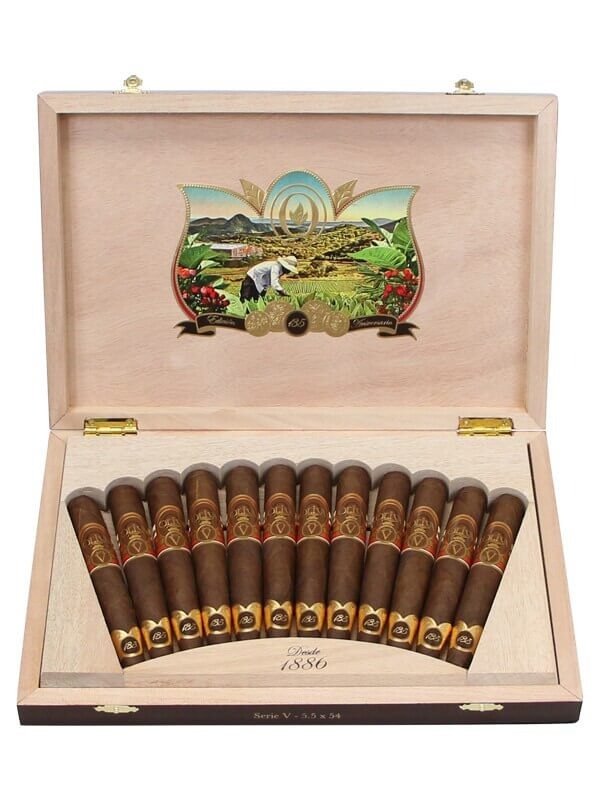
I'll score it against cigars in its actual price neighborhood, not against its own marketing. The Oliva Serie V Melanio Maduro No. 4 is the fuller-bodied Nicaraguan stick I'll have burning next to the first Expresivo, because it's a brand-name cigar that earns its number, and a My Father Fonseca Cosacos for the leaner read. If a first-run Honduran AVO can stand in that company at a lower price, the brand has done something real. If it can't, the rebrand was the whole event. New lines from the bigger houses tend to surface first on the new-arrivals shelf, which is where I'll be checking for it the week of the 25th.
A word on the limits of this read, and where this doesn't hold. Everything above is built on what AVO published and on eleven years of smoking the brand's other lines, not on the Expresivo itself. First production runs change; a blend can settle six months after launch into something better or worse than the debut box. And country of manufacture is a signal, not a verdict. Plenty of brilliant cigars have moved factories without losing a step, and plenty of safe blends have come out of famous houses. So treat this as a map of the launch, not a rating of the cigar.
For readers who track this kind of thing the way I do, the discipline I'm describing is the same one I laid out in my review of the Padron 1964 Anniversary Maduro, where I smoked through most of a box before putting a number on it. It's slower. It's also the only honest way I know to do this. When we link to a specific product, we link to a retailer our writers think charges a fair price for it.
The 90+ ratings inflation in the trade press has made the whole scoring system soft, and the fastest way to keep a number meaningful is to refuse to hand one out before you've earned it. So my verdict on the AVO Expresivo today is the only honest one available: wait. Not buy, not skip, wait. I'll have three from a box by July, and a number after that. What I'm watching for is simple. Did AVO build a real cigar to a fair price, or did it just build a better band?
Sources & Notes
- Premium Cigar Association, "AVO Cigars Introduces Expresivo Line and Unveils Updated Brand Identity": https://premiumcigars.org/avo-cigars-introduces-expresivo-line-and-unveils-updated-brand-identity/ (launch details, blend origins, US and global release dates, "Burn Brighter" campaign language).
- Davidoff of Geneva (USA), AVO brand page: https://us.davidoffgeneva.com/discover/avo (current AVO line structure and brand positioning).
- Davidoff of Geneva (USA), AVO Expresivo Robusto product listing: https://us.davidoffgeneva.com/product/avo-expresivo-robusto (vitola, dimensions, and tobacco origins as published by the maker).
- Davidoff of Geneva (USA), AVO Expresivo Toro product listing: https://us.davidoffgeneva.com/product/avo-expresivo-toro (vitola and dimensions).