Walk into an American cigar shop in 2026 and the open humidor in front of you is a map of one federal rule. The bands read Nicaragua. They read Honduras, the Dominican Republic, Estelí, Danlí. And the names on a good number of them (Montecristo, Romeo y Julieta, H. Upmann, El Rey del Mundo, Punch) are Cuban names. The tobacco inside almost none of them ever saw Cuba.
That is the result. A retail counter two hundred miles from Havana sells everything except Havana, and the brands that sound most Cuban are rolled a thousand miles from it. How that happened is a sequence of government documents, not an accident of taste. Here is the mechanism, in order.
Start With What's in the Humidor
The premium cigars an American can legally buy are, overwhelmingly, products of three countries: Nicaragua, the Dominican Republic, and Honduras. None of them grew a commercial premium-cigar industry of any size before 1962. All three built one after.
The brand names complicate the picture, because many of them predate the split. There are two Montecristos in the world. Two Romeo y Julietas. Two Cohibas, two H. Upmanns, two Partagás. One version of each is made in Cuba and sold by the state monopoly almost everywhere on earth except the United States. The other is made outside Cuba and sold legally to Americans. Same name on the band, different leaf, different factory, different company.
So the humidor in front of you is not a Cuban cigar shop with the Cubans removed. It is a parallel industry that grew into the space the embargo cleared, kept the old names where it could, and put new soil underneath them. The rest of this is how each piece of that got built.
The Rule: 12:01 A.M., February 7, 1962
President John F. Kennedy signed Proclamation 3447, "Embargo on All Trade with Cuba," on February 3, 1962. The operative paragraph prohibited "the importation into the United States of all goods of Cuban origin and all goods imported from or through Cuba," effective 12:01 A.M. Eastern Standard Time on February 7, 1962, according to the codified text published by the National Archives. The authority cited was section 620(a) of the Foreign Assistance Act of 1961.
The proclamation directed the Secretary of the Treasury to carry it out and to write the rules. Those rules became the Cuban Assets Control Regulations (31 CFR Part 515) now administered by Treasury's Office of Foreign Assets Control. Sixty-four years later, that same body of regulation is what stands between an American and a Cohiba from Havana.
One detail gets lost in nearly every retelling, and it matters for what follows: the 1962 rule was an import ban, a trade measure. It was not written to police your taste or your humidor. That distinction is the seam the entire non-Cuban industry grew out of, and it is where most explainers go wrong. More on that below.
The famous part, the one the marketing departments wish I'd report straight, is the story that Kennedy had an aide buy up roughly a thousand H. Upmann Petit Coronas the night before he signed. Pierre Salinger, his press secretary, told that version for decades. I can't put a primary document under the cigar count, so I'll report it as what it is: a well-worn anecdote, sourced to one man's memoir, not to a receipt.
The Families Left, and the Soil Followed
An import ban does not, by itself, build a factory in Estelí. People did that. When the Cuban government nationalized the tobacco industry in the early 1960s, the families who had grown and rolled the leaf for generations largely left. They carried two things that survive a border: seed and knowledge.
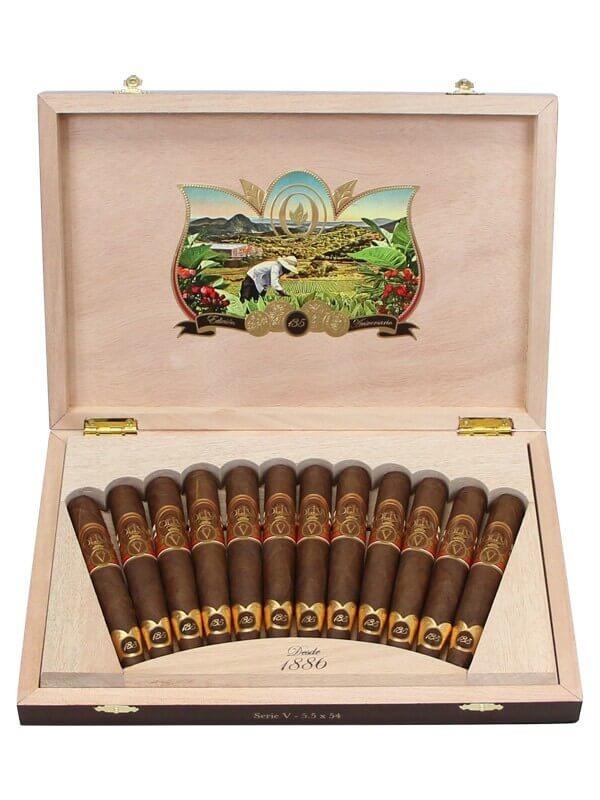
The clearest single illustration sits in a box you can buy right now. The Oliva Serie V Melanio line is named for Melanio Oliva, who, per Oliva's own company history, first grew tobacco in Cuba in the 1880s. The family farmed Cuban soil for three generations. After the revolution they moved (through Spain, Nicaragua, Honduras) and ended up growing in Nicaragua, where the company is rooted today. The cigar carries a Cuban man's name and a Nicaraguan address. That is the diaspora in a single band.
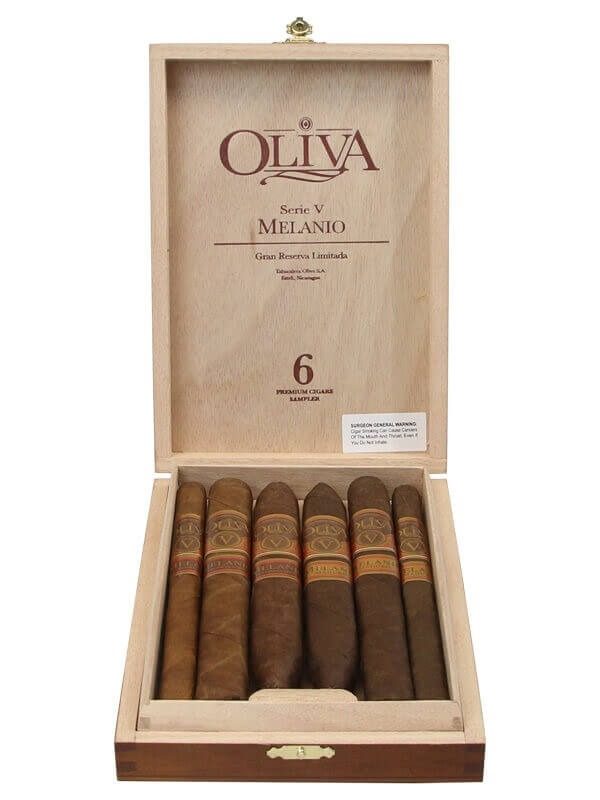
Oliva is not the exception. It is the template. The same pattern (Cuban family, Cuban seed, new country) produced most of the houses an American collector knows. Nicaragua got the volcanic soil of Estelí and Jalapa. The Dominican Republic got the Cibao Valley. Honduras got Jamastrán. Each turned out to grow tobacco with its own signature, which is why a Nicaraguan puro tastes nothing like a Dominican one, and why neither is trying to be a carbon copy of a Cuban Habano.
That last point is worth sitting with, because it cuts against the reflex. The good non-Cuban houses stopped chasing the Havana profile years ago. Ask the people behind the Fonseca made by My Father in Nicaragua (another Cuban heritage name, now a Garcia-family product) whether they're trying to clone a Cuban cigar, and you'll get a flat no. The soil is different on purpose.
Three Soils, Three Signatures
The reason the embargo produced an industry instead of a vacuum is that the leaf turned out to travel better than anyone expected. Cuban seed, planted in foreign dirt, kept enough of its character to be worth growing and changed enough to become its own thing.
Nicaragua is the loud one. The volcanic soil around Estelí and in the Jalapa Valley produces tobacco with pepper, earth, and a dark cocoa weight that the Oliva and Garcia families built whole catalogs on. It is the country an American is most likely to be smoking on any given night, and it did not exist as a serious premium origin in 1962.
The Dominican Republic is the polite one, at least at first read. The Cibao Valley grows a rounder, more restrained leaf, and it is the home of the Fuente family and the largest of the brand-name relocations. A great many of the Cuban marques that an American buys legally are rolled in Santiago, not Estelí.
Honduras is the one the market keeps forgetting. Jamastrán and the Copán valley grow a leaf with a leathery, sometimes wild edge, and it is where a cluster of Cuban heritage names quietly landed. The El Rey del Mundo and Punch that an American can buy are Honduran cigars wearing Cuban names.
So when a shop tells you a cigar is "Cuban-style," ask which Cuba they mean. There hasn't been a single answer since the families scattered across three borders and three kinds of dirt.
One Brand Name, Two Cigars
This is the part that confuses every newcomer, and the part that keeps trademark lawyers employed.
When the industry split, the brand names split with it. The Cuban state kept the names inside Cuba and, through its export arm, registered and sold them across most of the world. The exiled owners (and, later, the American and multinational cigar companies that bought their marks) kept or claimed the names for the United States. The result is a set of brands that exist twice, with no relation between the two cigars beyond the spelling.
You can see both halves on a single American shelf, because the U.S. half is sold here freely:
- Romeo y Julieta's Reserva Real: a Cuban name that, in its U.S. form, is a Dominican and Nicaraguan blend.
- El Rey del Mundo's natural en vidrio: a Cuban marque whose American version is made in Honduras.
- Sancho Panza Extra Fuerte: Cuban in origin, Honduran on the American shelf.
None of those three is a counterfeit. Each is a legitimate, legally trademarked U.S. brand that happens to share a name with a Cuban one. The most litigated example is Cohiba: the dispute between General Cigar, which sells a non-Cuban Cohiba in the United States, and Cubatabaco, the Cuban state entity, has been through U.S. federal court more than once over who owns the American trademark. I won't summarize a ruling I haven't read end to end; the point for a buyer is narrower. A "Cohiba" on a U.S. shelf is the American Cohiba. Full stop.
Here is the practical takeaway most embargo explainers bury: it is not illegal for an American to smoke a Cuban cigar. The 1962 rule is about importation and commercial dealing. What changed, and changed twice in four years, was whether you could legally bring one home.
The Whiplash Years: 2016 and 2020
For most of the embargo's life the personal-import answer was simple: no. Then it moved twice, fast, and the cigar press spent two presidencies trying to keep up.
On October 17, 2016, OFAC amended the Cuban Assets Control Regulations to lift the dollar caps on what an authorized traveler could bring back. The prior rule under 31 CFR 515.560 had allowed up to $400 of merchandise as accompanied baggage, of which no more than $100 could be alcohol or tobacco. The 2016 amendment removed those limits, leaving only the ordinary customs duty exemptions, according to the Federal Register notice. In plain terms: for the first time in decades, a traveler could legally return with Cuban cigars for personal use.
It lasted under four years. On September 24, 2020, OFAC published a final rule that reversed it. The amendment barred travelers from returning to the United States with Cuban-origin alcohol and tobacco as accompanied baggage, and it eliminated the prior allowance for buying Cuban goods in a third country and bringing them home, per the Federal Register. As of that date the personal-import window was shut again, and it has stayed shut.
I write a weekly Cigar Industry Brief off PCA dispatches, FDA filings, and a back-channel built over six years on this beat, and I keep a running file beside it I call What the FDA Actually Said - the operative paragraph of every premium-cigar ruling since 2021, quoted directly, with the industry's response logged next to it. The OFAC reversals sit just outside that file's window, but they taught me the same lesson it does: read the rule, not the headline. The 2016 coverage breathed like the embargo was ending. It wasn't. One regulatory amendment had moved, and another one moved it back.
And the volatility cuts at the consumer, not the regime. None of this touched the non-Cuban industry's legality for a second. A box of Nicaraguan Oliva was as legal to buy in 2015 as in 2017 as in 2021. The only thing that flickered on and off was the souvenir.
Where the Myths Come From
The embargo is the most mythologized subject in this category, and I've been burned by it. In late 2024 I chased a rumor that a major Nicaraguan-made house had quietly reformulated a flagship blend, sourced to one anonymous person who claimed inside access. The item ran on a small site for about six hours before I pulled it; the "source" turned out to be a competitor planting a smear, and I hadn't triangulated before publishing. My rule since: every claim gets a date and a source, and if a company won't respond, the article says so, by name. The story I should have written was the one about how fast a sourceless rumor moves in this industry. The embargo runs on the same fuel.
The most durable myth is that a Cuban cigar is, by definition, the better cigar. It is the marketing claim the embargo accidentally wrote, and it doesn't survive contact with construction. A box-pressed Montecristo No. 2 a colleague carried back from Havana in February 2019 plugged solid at the band by the second third - the draw closing to nothing, the burn coning hard to one side, the back half a fight. Cuban quality control has been famously uneven for years. A good Nicaraguan puro at a third of the gray-market price will usually smoke better, box after box.
So if you've inherited the assumption that the embargo is keeping the good stuff out of reach, look harder at what the rule actually did. It didn't lock the good stuff away. It relocated it, renamed half of it, and built three national industries to make it. And it handed the United States a domestic premium market that now runs on Central American and Caribbean leaf, with the Cuban version reduced to a souvenir you can't legally carry through customs.
What You Can Actually Buy
The honest version of "I want a great Cuban-style cigar" is "I want a great cigar from the people who left Cuba." That's a real and stocked shelf.
Start with the family that carries the clearest through-line. The Oliva Serie O torpedo is the everyday Nicaraguan puro from the Melanio Oliva line - Cuban roots, Nicaraguan leaf, an honest medium-bodied smoke. If you want the family's top shelf, the Serie V Melanio sampler linked above puts the award-anchored blends in one box at $43.87.
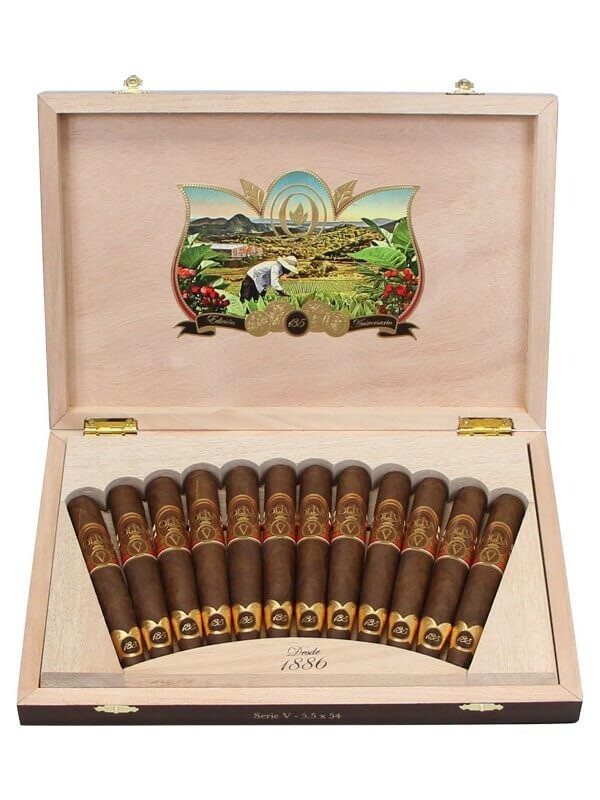
For the collectors' end of the same lineage, Oliva released the Serie V 135th Anniversary Edicion Limitada to mark the year Melanio first grew tobacco in Cuba - a 5 3/4 x 54 perfecto in an Ecuadorian Habano wrapper, capped at 15,000 cigars, at $88.24. It is the embargo story compressed into one limited run: a Cuban anniversary, a Nicaraguan cigar.
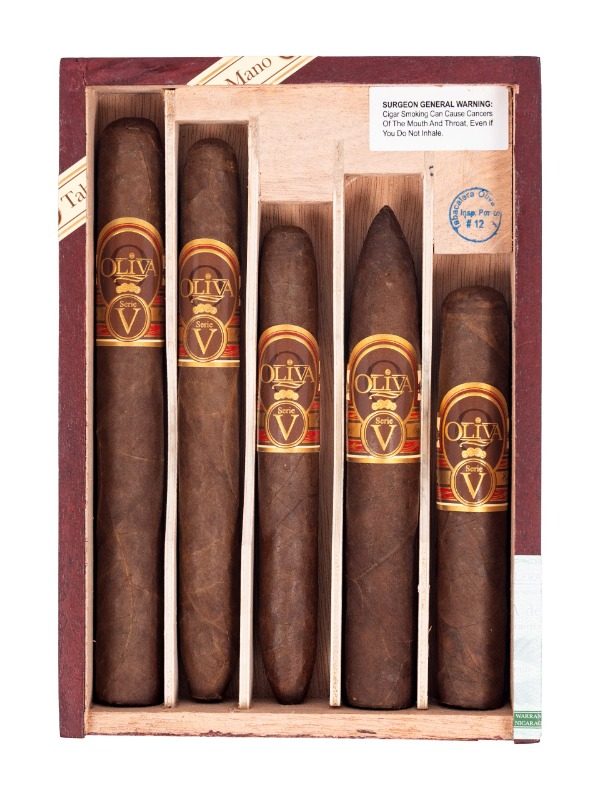
If you'd rather sample across the Serie V range before committing to a box, the Oliva Serie V Special Sampler does that for $37.99 - a Habano sun-grown set out of the same Nicaraguan factory. And for a short, fast smoke that won't eat an afternoon, the Nub by Oliva Variety Sampler runs $30.99 and ships with a torch lighter.
Want a Cuban heritage name without the Cuban-soil mythology? The Nub Habano 466 and the Honduran El Rey del Mundo linked above both carry the lineage on the band and the leaf of their adopted country in the cigar. They are not Havana. They were never trying to be.
If you're new to all of this and unsure where the American shelf even starts, our explainer on what the 2026 FDA ruling actually changed for premium cigars covers the other federal rulebook every one of these cigars has to clear before it reaches the counter.
When we link to a specific product, we link to a retailer our writers think charges a fair price for it. We don't name the store in the prose, and we don't link the cigar you can't legally buy here - only the one you can.
The embargo is sixty-four this February. The map it drew (Cuban names over Nicaraguan, Honduran, and Dominican leaf) is the one in the humidor in front of you, and it has held longer than most of the people reading this have been alive. The next time it redraws, if it redraws, the line will be moved by a pen in Washington, not by a harvest in Pinar del Río. Watch the Federal Register, not the rumor mill. I learned that one the hard way.
Sources & Notes
- Proclamation 3447, "Embargo on All Trade with Cuba," President John F. Kennedy, signed February 3, 1962, effective February 7, 1962 - codified text, U.S. National Archives, Office of the Federal Register: archives.gov/federal-register/codification/proclamations/03447.html
- Proclamation 3447, full text and statutory authority (Foreign Assistance Act of 1961, sec. 620(a)) - The American Presidency Project, UC Santa Barbara: presidency.ucsb.edu/documents/proclamation-3447-embargo-all-trade-with-cuba
- "Cuban Assets Control Regulations," final rule lifting personal-import dollar caps, Office of Foreign Assets Control, U.S. Treasury, Federal Register, October 17, 2016: federalregister.gov/documents/2016/10/17/2016-25032/cuban-assets-control-regulations
- "Cuban Assets Control Regulations," final rule barring return with Cuban alcohol and tobacco, Office of Foreign Assets Control, U.S. Treasury, Federal Register, September 24, 2020: federalregister.gov/documents/2020/09/24/2020-21084/cuban-assets-control-regulations
- Reporting note: Oliva family history (Melanio Oliva, first Cuban crop in the 1880s; relocation to Nicaragua) is drawn from Oliva Cigar Co.'s own published company history; the Kennedy pre-signing cigar-purchase anecdote is attributed to Pierre Salinger's memoir and is reported here as an unverified account, not a documented count.