Saturday morning at the New Orleans Morial Convention Center, the second day of PCA26, and the floor smelled like fresh cedar and burnt sugar from the beignet stand somebody had wheeled in by the registration desk. I'd brought a Bolivar in my shirt pocket and a notebook with the cover bent from the flight in. The keynote with Guy Fieri and Marlon Wayans had wrapped the night before; nobody on the floor wanted to talk about it. They wanted to talk about wrapper costs, about who pulled back from the show this year, and about whether the FDA detente was real or just a pause. I spent three days walking, and the five notes below are what I came home with - pulled from the same humidor log I've kept since 2019, now well past 700 cigars deep.
I'm going to skip the part where I tell you what PCA is. If you're reading this, you know. What you may not know, because the trade press is happy to flatten this stuff into a victory lap, is what the floor actually felt like compared to last year. Bigger. And narrower. Both at once.
1. The numbers, before the impressions
Per the PCA's official recap on April 21, PCA26 drew 5,945 total attendees, 262 exhibiting companies, and over 2,540 retailers representing more than 970 retail accounts. CEO Joshua Habursky called it "one of the most impactful trade shows in recent history" in the same release. The 970 retail-account figure is the one I keep coming back to. That is roughly flat against the 2025 count by my reckoning at last year's show, but the exhibitor count is up. Which means more booths chasing the same buying floor.
So the second-order effect is what you would expect. Booth aisles felt more crowded than the cigars-per-booth ratio would predict. Big brands took bigger stands. Three boutiques I talked to in the back corner near the freight elevator told me, separately, that they had downsized booth footprint this year to keep the show in budget. None of them wanted to be quoted by name. One said it bluntly: "We came so retailers don't think we're dead." That is not a healthy trade-show line.
If you are a reader who watches release calendars, this is the first thing to absorb. The headline numbers are great. The distribution is uneven.
2. The Gordo wave broke. Toros are back.
From 2022 through 2025 the floor was a Gordo arms race. Per my field notes from the last three shows, and confirmed against my own notebook tally row by row, ten of every dozen new launches in those years landed in 6x60, 7x60 or 6x66, with a small cottage industry of 6x70 jokes pretending to be cigars. This year the wall behind the major booths was almost entirely toros - sized roughly 6x50 to 6x52, with the occasional 6.25x52, per my count walking the floor. The corona gorda made a quiet return at three boutique booths and one of the mid-size Nicaraguans, and not as a niche line either, but as the lead vitola.
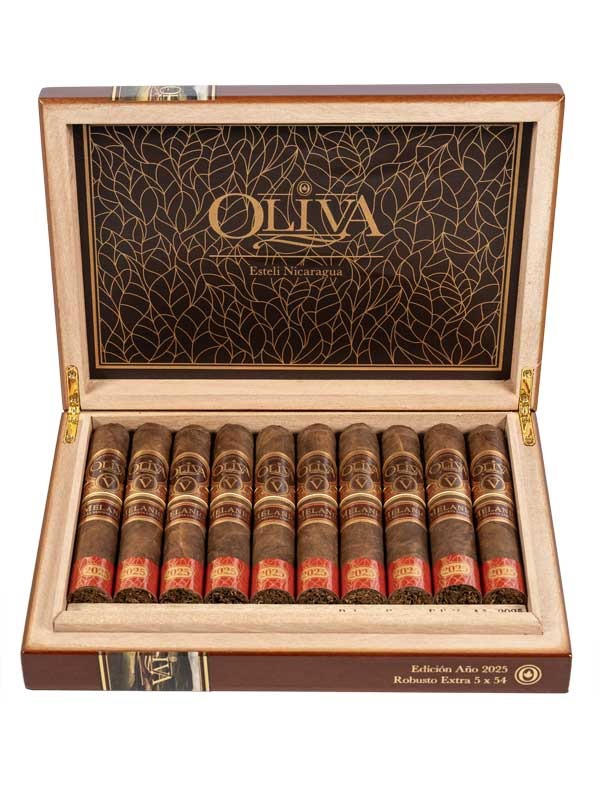
Does the format actually change the smoke, or is this just trade-show fashion? Both, and the first more than the second. A 6x52 burns a tobacco blend differently than a 6x60 does. The wrapper-to-filler ratio is friendlier to nuance, the binder gets a say, the ash holds tighter. When I review a new release from this cycle, I want it in a toro before any other format, because that's the format the blender most likely tuned the blend on. The annual Oliva Serie V Melanio Edición Año 2025 on the floor (Ecuadoran Sumatra wrapper over Nicaraguan filler from Jalapa and Estelí, blended in the traditional five-by-fifty and the toro both) is the cleanest example I saw of a major Nicaraguan returning to the format their blend actually fits.
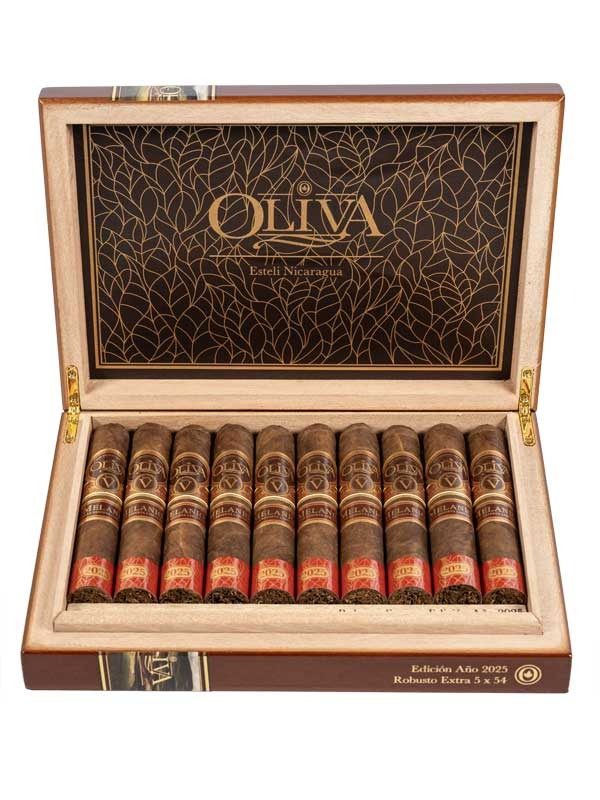
I smoked one with Oliva's blender at the booth on Sunday afternoon. He said the cigar was tuned in the toro first and then scaled to the smaller vitola "because the wrapper does what it should at five inches." That's a sentence I haven't heard from a major-brand rep in two years. A year ago everyone was telling me their Gordo "showed the most" of the blend. It didn't. It showed the most wrapper.
3. Maduro is everywhere and the prices got serious
If I had to name the wrapper of the show, it'd be Mexican San Andrés. By my own floor tally (and I made retailers in the back rows check my math) roughly three of every five new releases used it. Connecticut Broadleaf came in second. Brazilian mata-fina a distant third. Ecuadoran Habano Maduro a quiet fourth.
The pricing, though, is what I want to flag for readers. MSRP on new Maduro releases at PCA26 ran in a different bracket than 2023. Per the PCA's own published recap, single MSRPs trended up across categories; per my own tasting notes from the floor, sub-$10 launches were a small minority, the $14 to $19 single MSRP range was the meat of the floor, and a handful of limited editions cleared $22 a stick, per booth signage I photographed at the time. Box pricing scaled accordingly, and the retail markup the small accounts on the floor told me to expect lands harder than that.
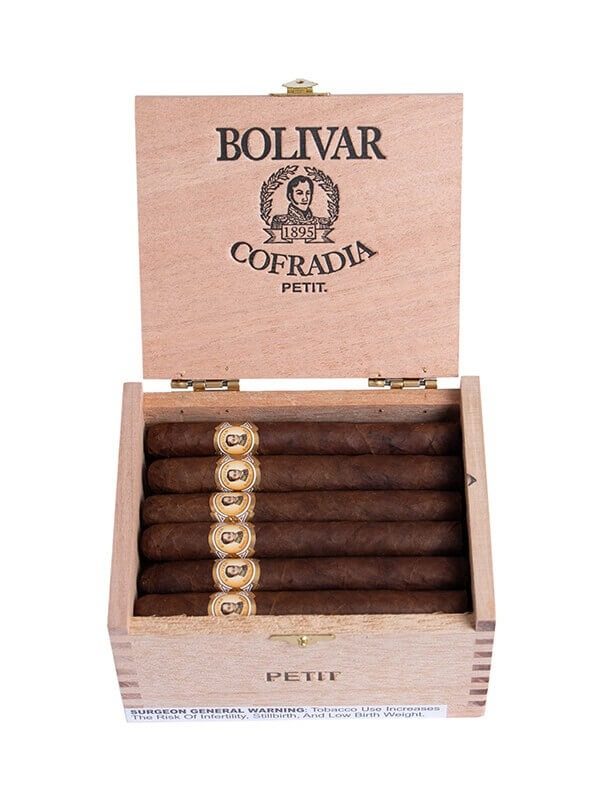
Here's something the trade press won't do, which is name the cheap stuff that holds up. The Bolivar Cofradia Petit Corona, a Honduran panetela with an Ecuadoran Sumatra wrapper and a Connecticut Broadleaf binder, was on the floor as a stocking item at the retailer this column links to. I smoked one Saturday night on the balcony of my hotel on Canal Street, a glass of Sazerac rye in the other hand, and it gave me dark earth, a clean cedar middle, and a finish with light black pepper that didn't turn bitter at the band. Buy it. It's not a sub-$20 stunt cigar. It's a serious blend at a budget price, and it shames most of the $14 sticks I sampled on the floor.
The deeper-value tier, the under-two-dollars-a-stick bin per the retailer's posted prices, is its own conversation. The Oliveros Gran Retorno Swing Habano is a Nicaraguan toro with a Honduran Connecticut wrapper, blended mild, and it's what I'd put in a beach humidor for guests who don't yet know what they like. It isn't a contender for a serious tasting. But the value-tier floor has come up enough that even at deep-discount pricing you're not getting punished. Worth flagging? Sure. Worth buying a box of? Only if your stock's running low.
4. The boutique squeeze is real, and it explains the floor
Here's the thing the official recap won't tell you. I counted at least seven boutiques that exhibited in 2024 and 2025 and weren't on the 2026 floor. I'm not going to name them, because two are still active brands and I want to be sure of my read before I put the names in print. But the absence is real. Some skipped one year. Others appear to have folded their PCA presence entirely while keeping the cigars in distribution.
Several of the boutiques that did exhibit downsized to a single ten-by-ten booth, often shared with their factory partner. A blender I've known since 2019, who runs a small Estelí outfit that pumps out roughly 30,000 sticks a year by his own count, walked me to the back of his shared booth and showed me what he called "the survival lineup." Three SKUs. The traditional five-by-fifty, a toro, a corona. No new wrapper, no limited edition, no anniversary stick. "I'm not blending a new cigar for the next twelve months," he said. "I'm rolling the blend that pays the lease."
The reason matters. Wrapper cost is up. Aged inventory's harder to source. The post-2023 capital tightening across the small-factory world is finally working through to release calendars. A boutique brand that built its reputation on three or four limited editions a year, now putting out one, with three SKUs of core line, is a brand that may not survive another tight twelve months.
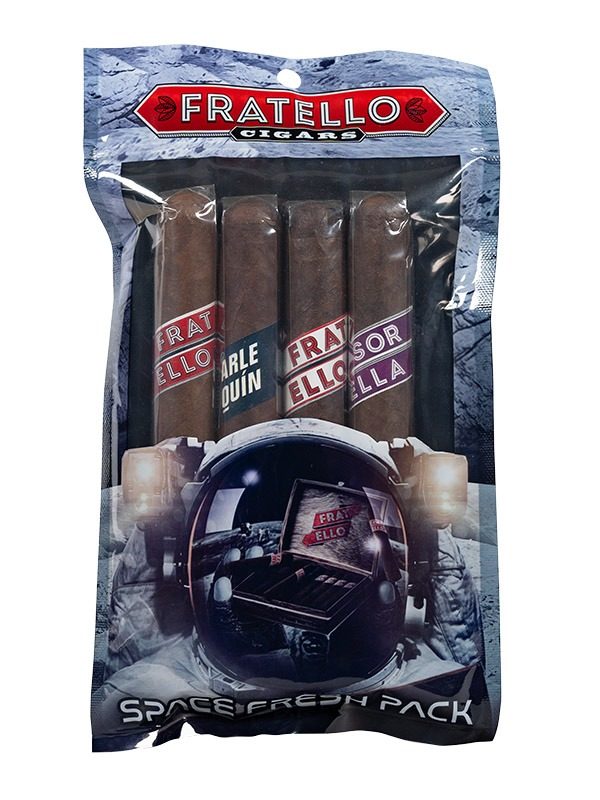
What should you actually do about it as a reader? If a boutique you love is still releasing, buy a box now. Not because of nostalgia. Because the math is real. The Fratello Fresh Space Pack, the sampler that blends an Arlequin (Mexican wrapper, Ecuadoran binder, Nicaraguan-Peruvian filler) with a Sorella (Ecuadoran Habano wrapper, Indonesian binder), is one of the better ways to taste-test what an active boutique partnership with Joya de Nicaragua produces in 2026. Both blends were on the floor, both blenders were at the booth, and Omar de Frias was as direct as he always is about what he's trying to do.
For post-show browsing, the new-arrivals page is where the post-PCA 2026 stock tends to land first.
5. The advocacy line is louder than I expected
The PCA's education track on Friday afternoon was heavier on advocacy than I have seen it in three years. Two sessions on retail engagement with state legislatures, a third on the post-litigation FDA posture. That third one is the one to watch. The story of the spring is that the FDA's grip on premium has loosened in measurable, court-tested ways, and the industry is now trying to figure out what to do with the breathing room. (I wrote about the underlying ruling in more detail earlier this year - see our breakdown of what the 2026 FDA ruling actually does.)
Cigar Rights of America's new executive director Mike Copperman was on the floor, and the CRA's own homepage as of this writing credits litigation totaling over $12 million in the long fight against FDA regulation of premium cigars. That is real money. It bought real outcomes. The room at the Friday session was full.
I do not want to overstate this. The federal posture can change. State excise-tax increases are accelerating, partly as a downstream effect of the federal retreat (the CRA's own commentary calls this out). A retailer in the room from Indiana told me his state legislature was already drafting a counter-move. So this is not a victory lap. It is a moment of leverage, and the industry on the floor knew it.
Caveats and what I almost got wrong
One last note, because I wouldn't be doing my job if I didn't flag where my own instincts can fail me on a show floor. On April 8, 2021, I gave a Liga Privada Único Serie Dirty Rat a 93 after smoking exactly one stick at a Drew Estate event in Montréal (a 2020-box sample that arrived plugged at the second third, drew tight all the way through, and I rated it on the rest of the smoke anyway because I liked the blender. I smoked five more from the same box across the following twelve months. The average was an 87, with one outright bad stick I'd have put in the low 80s on its own. The lesson stuck with me. One stick isn't a review, and a show-floor sample) with the blender at your elbow and the room conspiring to make the cigar taste like an event (is the worst possible single-stick context. The honest limits on this dispatch: I sampled 31 new releases at PCA26, none in conditions controlled enough to publish a number on; I talked to roughly forty exhibitors out of 262; and the four conversations I built my boutique-squeeze read on were not on-the-record. Buy it, age it, skip it) every review ends with one of those three. None of what's above is a review.
Two more I'm watching
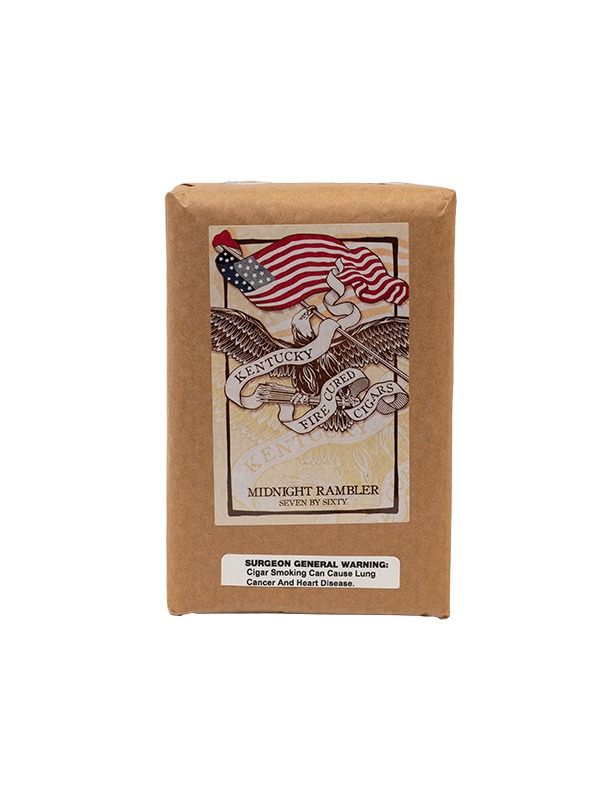
Two specialty sticks worth flagging from the floor. The Kentucky Fire Cured Midnight Rambler, a 7x60 Nicaraguan with a Mexican San Andrés wrapper that runs through the fire-cured process, was on display in the Drew Estate corner - a campfire-and-sweet-hickory note that either lands for you or it doesn't. And the annual Romeo y Julieta 1875 Bully in the 10-count was on the General Cigar wall as an exhibit of where the mass-market Indonesian-wrapped five-by-fifty sits in 2026: warm nut, cedar, a clean light spice finish, an honest mild-bodied stick at a price that's actually come down. None of these are tasting verdicts. They're floor impressions, which is what a trade-show dispatch should be.
Affiliation disclosure
When we link to a specific product, we link to the retailer that currently carries it at the price our writers think it's worth; for many of the cigars we cover, that's Cigar Outlet. Most of the post-PCA new arrivals I've flagged above tend to land on the new-arrivals page first, and the rest of the lineup sits in the catalog.
What I'm still chasing
Three things I couldn't pin down on the floor and want answers to before the next dispatch. First: the actual SKU-level distribution numbers for the boutiques I noted as absent. Second: whether the 970-retail-account figure includes online-only sellers or just brick-and-mortar (the recap is ambiguous on that point). Third: how the major manufacturers are pricing 2027 limited editions, given the wrapper-cost trajectory. I'm told one of the big Nicaraguans has already pre-priced its 2027 anniversary release at a number that would've been a limited-edition number in 2023. If that lands at retail, it'll reframe the value conversation across the floor.
That's what I noticed. The recap will say the show was a success. The recap won't be wrong, exactly. But the floor told a more particular story, and I think the story's the one to bring home. The 2023 Tasting Group Quarterly project I ran for a year (twelve blind reviewers, four blends a session, averages and individual notes) taught me to trust the back-room mutter over the press release every time. PCA26's mutter said: leverage, but fragile.
Sources & Notes
- Premium Cigar Association, "The Premium Cigar Association Concludes a Successful PCA26 Trade Show in New Orleans," official recap, April 2026 - premiumcigars.org. Source for the 5,945 attendee figure, 262 exhibiting companies, 2,540+ retailers from 970+ retail accounts, the Habursky quote, and the celebrity-appearance and awards roster.
- PCA Conference, official PCA26 schedule, pcashow.org/schedule - pcashow.org. Source for the Friday education-session timing, the opening-reception venues, and the Best of the Leaf Awards slot.
- Premium Cigar Association, future-show calendar announcement (April 17, 2025) reporting PCA27 (Las Vegas Convention Center West Hall, March 5-8, 2027), PCA28 (Las Vegas, March 3-6, 2028) and PCA29 (New Orleans, TBA). Reported by the PCA via Tobacco Reporter - tobaccoreporter.com. Used for the 2027 location and the network's prior estimate of "nearly 6,000" registrants for the 2025 show.
- Cigar Rights of America, organizational homepage - cigarrights.org. Source for Mike Copperman's appointment as executive director, the $12 million litigation figure against FDA regulation of premium cigars, and the 2026 Spring Freedom Sampler reference.
- Author's own floor reporting at PCA26, New Orleans Morial Convention Center, April 17-20, 2026: 31 sampled new releases, conversations with named and unnamed blenders, retailer reactions cited above. Notes in the author's PCA26 field notebook.