A Wednesday morning in March, the second week of it, and Ybor City smelled like wet brick and Cuban bread. I had a cortadito going cold in one hand and a cheap umbrella in the other, because the forecast had lied to me. Ninth Avenue was empty the way old industrial streets go empty before ten: pigeons, one delivery truck, the sound of my own shoes on hexagonal sidewalk tile that has been underfoot longer than my grandmother has been alive. I'd driven over from Charleston to photograph cigar bands for a piece on early Tampa label art. Instead I spent twenty minutes standing in front of the old Ybor Factory doing nothing useful at all.
It's a long red-brick box, three stories, with a small portico of cast-iron steps facing 14th Street. In 1893 the Cuban patriot José Martí stood on those steps and asked a crowd of cigar workers to fund a revolution, and they did. The portico you see today is a reproduction. The original was shipped to Havana and enshrined there, which tells you how this story ends before I've started telling it.
Here's the version of Ybor City cigar history you usually get: a slow, sad fade. Changing tastes. The Cuban embargo. Nothing anyone could have stopped. That version is wrong on the timeline and wrong on the cause. Tampa's hand-rolled trade didn't drift away across half a century. It was killed in roughly fifteen years, by three forces you can name out loud - and you can date the hinge to a single year. So this isn't a nostalgia walk. It's nearer to a coroner's report.
Read the Factory Before You Read the Plaque
Stand close to one of these buildings and it will tell you what it was built to do. The cigar factories of Ybor City are almost all brick, almost all oriented on an east-west axis, with long ranks of windows running down the north and south walls. That wasn't a style choice. Hand-rolling needs even, shadowless light, and a wall of north glass delivers exactly that, all day, for free. Brick instead of wood because cured tobacco burns and Florida has termites. The factories were, in the most literal sense, machines for making light and keeping fire out.
Go inside one that's been opened to the public and the floors still read like a process. The old Ybor Factory is Ybor Square now, shops and offices, and you can walk it. Curing and storage went into the raised basement, around the old tobacco crypts. Packing and shipping on the ground floor. The rolling itself happened upstairs, in those bright unpartitioned rooms. If a factory had a third story, that's where the blending was done, the part the company kept quiet, because the blend was the brand.
None of this was a small operation. By 1900, the National Register nomination for the district (a forty-plus-page federal document I read end to end before I drove down) calls Tampa, flatly, "the hand-rolled cigar capital of the world." The figures behind the phrase hold up. At its peak the industry employed around 20,000 people, hand-rolling cigars in 36 different sizes and shapes. The customs house told the same story: import-export duties collected at the port of Tampa ran $683.08 in 1885 and crossed $871,000 by 1900, according to that same nomination.
Nine cigar factories from the era still stand inside the historic district, by the National Park Service's count. Here's a sample of what they were and what they've become.
| Factory (original firm) | Built | What it is today |
|---|---|---|
| Ybor Factory Complex | 1886 | Ybor Square: shops, offices, a demonstration roller |
| Havana-American (J. Seidenberg & Co.) | 1895 | The district's second-oldest masonry cigar factory |
| R. Monne & Brothers | c. 1890 | The lone surviving wood-frame factory; later held Oliva Tobacco |
| Gonzalez, Fisher & Co. / Berriman Bros. | 1908 | Used as a storage warehouse |
| E. Regensberg & Sons ("The Clock Factory") | 1910 | Still rolling cigars at the time of the 1990 landmark survey |
| Arturo Fuente Cigar Factory (built for Garcia & Co.) | 1895 | A cigar warehouse |
Read the right-hand column and the shape of the loss is right there. A building that once held hundreds of rollers is a self-storage depot. At the time of the 1990 landmark survey, exactly one address in the district was still making cigars on any real scale: the old Regensberg plant, the one with the clock tower. One. So the buildings didn't fail. The brick is fine. Something happened to the work that went on inside it.
The Man on the Platform
The thing I keep returning to, the reason I think Ybor City still matters to anyone who smokes, is that a cigar factory here was a strange and specific kind of room. Hundreds of people doing close, repetitive, near-silent handwork. And, at the front of the floor, on a raised platform - one person, reading out loud.
They were the lectores: the readers. Here's the detail that matters most. The factory didn't pay them. The workers did, out of their own wages, by a vote of the floor. A lector read the morning newspapers, then politics, then literature, often a novel in installments through the afternoon. The rollers chose the material, and they hired and fired the man who read it. It was, in the most literal sense, a culture they bought for themselves.
Why does a detail like that survive a century? Because it changed what the room was. A roller could be barely literate and still spend forty hours a week inside news, argument, and fiction. The National Register nomination is blunt about the result: with lectores reading patriotic texts aloud, it says, "the cigar factories became without a doubt the most efficient places for the dissemination of the ideal of independence." That's a federal historic document calling a cigar factory a political engine.
The reading platform is also why José Martí belongs in this story. When he climbed those cast-iron steps in 1893, he wasn't speaking into a void. He was speaking to rooms that had been read to, every working day, on the subject of Cuba. The money followed the words. Many workers gave a full day's pay each week to the independence cause. The cigars of Ybor City helped pay for a war, and the men who rolled them knew it.
1931, When the Room Went Quiet
Now the coroner's section. Three forces came for the hand-rolled cigar at roughly the same time, through the 1920s and into the early 1930s, and not one of them was the embargo, which was still three decades off.
The first was the cigarette: cheap, fast, machine-made, advertised hard. Through the prosperous 1920s the cigar trade barely registered how quickly it was losing the casual smoker. The second was the cigar machine itself. By the late 1920s, machinery could turn out a cigar close enough to a hand-rolled one that most smokers couldn't tell them apart. The third force was the ugliest. To break the public's preference for handwork, the makers of machine-rolled cigars ran what the National Register nomination calls a "spit campaign," advertising that human saliva played a major role in hand manufacture. It worked. It made handwork sound unsanitary, and that was the entire point.
And then 1931. A major strike hit the Tampa cigar industry that year, and when the owners broke it, they did two things at once. They brought in lower-paid workers. And they took the lectores off their platforms, permanently. Read that twice. The strike was the pretext; the reading platform was the target. Owners had wanted those men gone for years, because a floor that listens to politics all day is a floor that knows how to organize.
Was 1931 the single cause of the collapse? No. The cigarette and the machine would have finished the work on their own. But 1931 is the hinge, because it's the moment the room itself changed, the moment the Ybor City cigar factories stopped being those loud, literate, particular spaces and became ordinary industrial floors. After that, the rest was arithmetic.
And the arithmetic is brutal. Between 1930 and 1940, by the nomination's count, one-quarter of Tampa's foreign-born white residents and more than half of its Afro-Cuban residents left the city. Factories mechanized or shut. Hand-rolling carried on at a small scale, the way a language carries on with a handful of last speakers. Then, in 1965, an urban renewal project bulldozed 70 acres of the neighborhood: 660 houses, two ethnic clubs, a fire station, and, with a cruelty almost too neat to be true, a cigarmakers' school. Interstate 4 took the rest, slicing the district into the separate pieces it sits in today.
What the Brick Is Good For Now
So what do you do with all of this, standing on a hexagonal sidewalk with a cold coffee and a useless umbrella? You tour the buildings, for one, and you should. The Ybor Factory is Ybor Square. The old Ferlita bakery is the Ybor City State Museum. And you can still buy a cigar rolled by hand on the spot, at a small operation that keeps a roller at a table for exactly that reason.
I bought one. The hand-rolled corona I picked up off a rolling table that morning, fresh in March 2026, tunneled within twenty minutes, one side galloping ahead while the other sat cold and damp with an uneven burn. Fresh-rolled cigars do this. They haven't rested, and the romance of watching one made should never be mistaken for the cigar in your hand being any good yet.
And that's the honest pivot here, because I'm not going to send you to a museum gift shop. The cigar Ybor City actually made (the Spanish-and-Cuban-leaf "Havana" cigar built by hand outside Cuba) didn't die. It moved. The lineage runs from Tampa down to Honduras and Nicaragua, where the old Cuban marca names still get stamped on bands and the work is still done by hand.
I've spent three years now profiling Southern cigar lounges, fourteen of them, Charleston to Memphis, and I'll be straight about the bias I bring to a place like this. Most cigar-lifestyle writing is product placement with a better vocabulary, and I think that has to change before the category grows up. Here's the other half of my bias: in 2022 I argued in print that the post-pandemic cigar-lounge boom was real and durable. It wasn't. Five of those fourteen rooms have closed since. I had the fragility badly wrong, and Ybor City is the same lesson written at scale - an entire industry, the largest of its kind on earth, can be gone inside two decades.
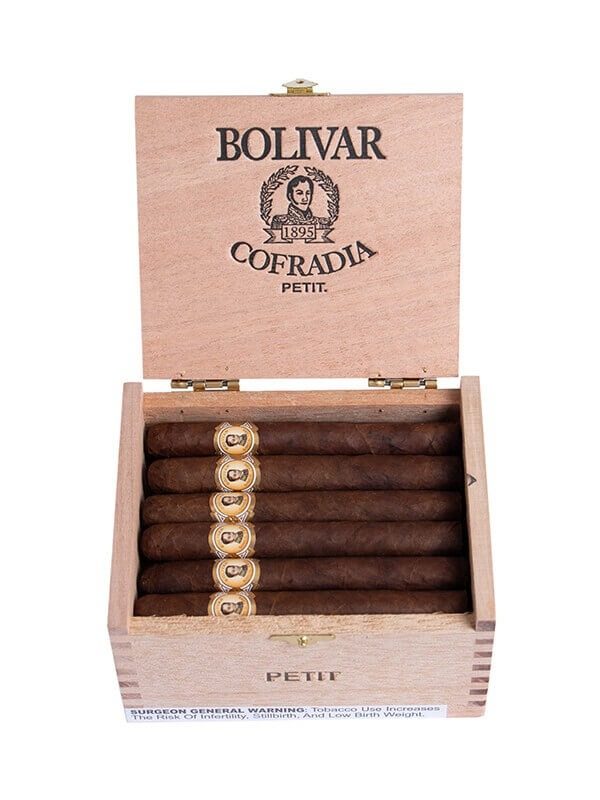
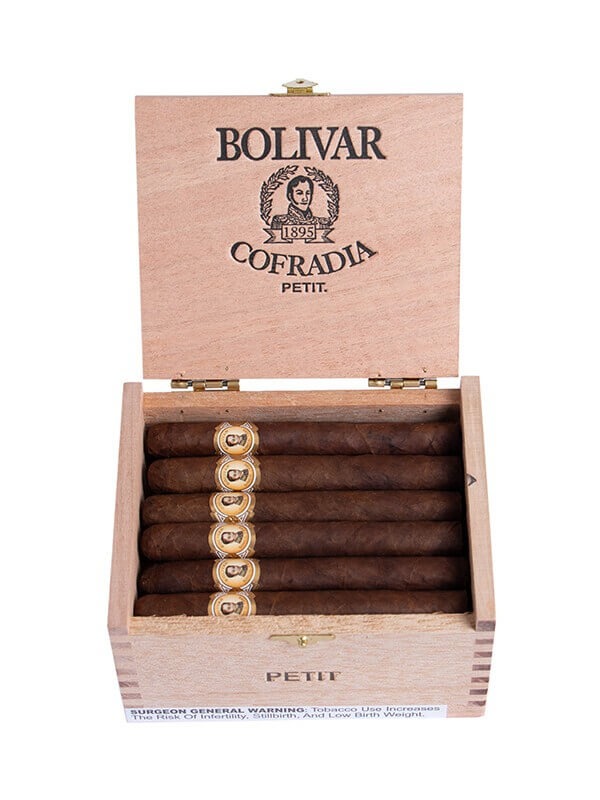
Start cheap, the way an Ybor City roller would have. The Bolivar Cofradia Petit Corona runs about $2.40 a cigar at the moment. Bolivar is an old Cuban marca, and this Cofradia line is made in Honduras under an Ecuadorian Sumatra wrapper and a Connecticut broadleaf binder, with Nicaraguan and Honduran leaf in the bunch. It's a genuinely small cigar, a true short corona, and small formats were the daily smoke of the factory floor: quick, inexpensive, no occasion required. If you want the through-line on your palate, begin with something like this, not with a $30 anniversary cigar.
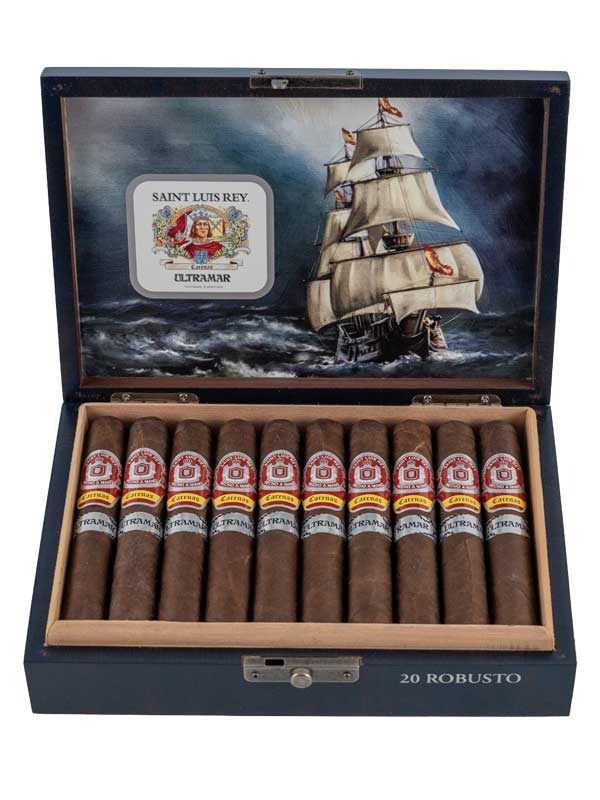
Move up a step and there's the Saint Luis Rey Carenas Ultramar, around $4.96 a cigar. It's another resurrected Cuban name doing plain, honest Honduran work: a Nicaraguan Habano wrapper, a Honduran binder, coffee and baking spice and a dark earthiness that lands medium and never shouts. It's the cigar a Tampa lector might have recognized in spirit, if not in passport.
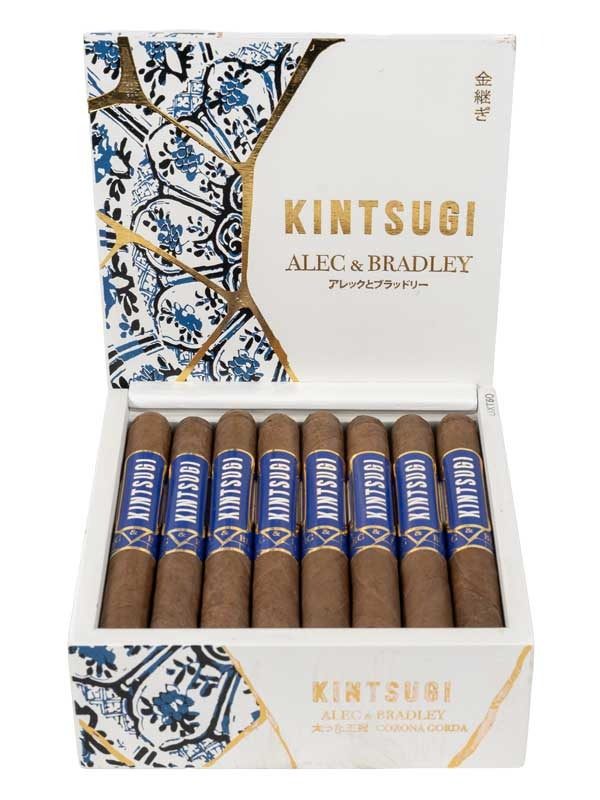
For something with no Cuban name attached, the Alec Bradley Kintsugi Corona Gorda, near $4.15, is a straightforward modern Honduran blend under a Honduran Habano wrapper. It's named for the Japanese craft of mending broken pottery with gold, which is a heavy idea to hang on a cigar, and also, oddly, the right idea for a neighborhood that got bulldozed and is somehow still here.
None of these is a great cigar the way a top Cuban or a top Nicaraguan puro is great. They're inexpensive, and they'll smoke like it if you abuse them; how a $2.40 cigar performs depends on humidity and on whether you give it a week to rest before you light it. But that was true in Ybor City too. The chinchales, the hundreds of tiny back-room shops the trade nicknamed "bedbugs," turned out plenty of rough smokes alongside the famous ones. A cheap honest cigar is part of the tradition, not a betrayal of it.
If you'd rather follow the thread by name than by neighborhood, it's easy enough: the revived Cuban marcas sit in the brand directory alongside the modern Honduran and Nicaraguan houses, and you can read a blend's pedigree straight off the label. I did the on-foot version of this last year, walking factory floors in Estelí, and if that's the trip you'd rather take, our report from Estelí's working factories covers the same craft, still running. You don't need a guide or a big budget; the full lineup there is mostly inexpensive Honduran and Nicaraguan leaf, which is to say it's mostly the living descendant of what Ybor City built.
I walked back to the Ybor Factory before I left town, to the cast-iron steps. The portico is a reproduction; I said so at the start. The real one is in Havana, behind glass. Stand on the copy long enough and the whole arrangement starts to feel like the story in miniature - the genuine article left, and what stayed behind is a faithful reproduction that most people drive past without slowing down. The cigars did the same. The good ones moved to Honduras and Nicaragua. What's parked on the old corner is the building, the plaque, and a man rolling a fresh corona for visitors who'll mostly never learn that the cigar in their hand hasn't rested. Both are worth your attention. Only one is worth your money.
Disclosure: Latest PR is an editorial publication, not a storefront, and this article links to CigarOutlet. When we link to a specific product, we link to a retailer our writers think charges a fair price for it. Per-cigar prices were accurate when this piece was written and will move.
Sources & Notes
- National Park Service, "Ybor City Historic District, Tampa, FL." nps.gov. Founding in 1885-86, the first 176 worker houses, the 1920s peak, the nine surviving cigar factories, the 1965 urban renewal.
- U.S. Department of the Interior, National Park Service, National Register of Historic Places / National Historic Landmark Registration Form, Ybor City Historic District (NRHP reference 74000641). npgallery.nps.gov. The lectores and their removal in the 1931 strike, the "spit campaign," port customs figures, the 1930-1940 population loss, José Martí's 1893 speech, and the factory-by-factory descriptions including the Ybor, Regensberg, Monne, Berriman, and Arturo Fuente buildings.
- National Park Service, "Ybor City: Cigar Capital of the World," Teaching with Historic Places. nps.gov. José Martí's 1890s organizing and the role of cigar making in the founding of the community.
- City of Tampa, "Historic Ybor." tampa.gov. Ybor's 1886 move from Key West and the role of mechanization in the closing of the factories.