What is the Liga Privada No. 9, and why do people call it the Broadleaf Bully?
Drew Estate built this blend for an audience of roughly a dozen people, none of them customers. It was a private cigar (liga privada is Spanish for private blend) rolled for the staff and friends who ran the company, and for a while it never left the building. According to Drew Estate's own history of the line, the recipe went through nine attempts before the ninth one landed, and the number simply stayed attached to the name. It reached the public in 2007, and it's been hard to keep on a shelf ever since. Eighteen years later, a shop that gets a No. 9 delivery often sells through it before the next one shows up.
Here's what's actually rolled into it. Drew Estate's product page lists a Connecticut River Valley Broadleaf No. 1 Dark wrapper over a Brazilian Mata Fina binder, with filler tobacco drawn from Nicaragua and Honduras. The company also makes a point of the wrapper being stalk-cut and stalk-cured, an older and slower curing method that ferments the leaf darker and oilier than the usual approach. Every No. 9 is built in a dedicated room inside La Gran Fabrica Drew Estate in Estelí, Nicaragua, by the senior buncher-and-roller pairs the company keeps on that particular bench. Drew Estate nicknames the cigar "The Broadleaf Bully" and sells the flavor as "dense earth and espresso." That's marketing copy, and the job of this review is to tell you how much of it survived contact with five actual cigars.
A word on method, because it changes how you should read what follows. Buy it, age it, skip it - every review ends with one of those three, and I won't put a number on a cigar I've smoked fewer than three times from the same box. That rule has a scar behind it. In 2021 I gave a Liga Privada Único Serie the Dirty Rat a 93 after a single smoke at a Drew Estate event, then worked through five more from that box across the next year and watched the average sink to an 87, with one stick harsh enough that I set it down half-finished. One cigar is not a review. So for this piece I bought a full box of twenty-four and smoked five of them, slowly, before writing a single line.
How does the No. 9 smoke, cold draw to the nub?
I smoked the five between late March and early May 2026, four of them in the back room at Cigare Royal in Montréal, the lounge where I spent eleven years on the floor, and one at home on a quiet Sunday. The box rested at 65% RH for three weeks before I touched the first cigar (I logged each stick as I went, the way I have since 2019). Glass alongside, most nights: a Glenfarclas 105, because a cask-strength Speyside has the spine to stand next to a full cigar without either one folding into the other.
Cold draw first. The cap clipped clean on all five, no cracking at the shoulder, which is more than I can say for some box-pressed cigars in this tier. The 5 x 54 sat heavy in the hand, oily enough to leave a faint shine on my fingers, the wrapper that near-black brown broadleaf turns when it's been fermented hard. Unlit, the draw pulled a touch firm (I like a little resistance) and the foot gave up raisin and a dark, unsweetened cocoa. Cold, it read like the cigar Drew Estate advertises.
The first third opened with pepper, more of it than I expected, a black-pepper crack that landed on the back of the tongue for the first inch and then stepped back. Under it came the espresso the company promises, though not the sweet kind. This is espresso pulled short, no sugar, no crema, the bitter rind left in. The burn line wandered slightly and then corrected itself without a touch-up. And the retrohale, that early in the smoke, was cedar and a faint char, like a bread crust taken one minute too far.
Stick by stick, the second third is where the No. 9 earns its name, and also where one cigar broke ranks. On four of the five, the pepper folded down into the earth and the espresso, and a third flavor arrived: dried fig, dark and a little earthy underneath, and then old saddle leather, the kind that's been wiped down and put back on the shelf. Stick three was the holdout. Smoked on a Tuesday in early April 2026, it plugged at the midpoint, the draw closing up until I was working for every puff, and a draw tool bought me maybe two minutes before it tightened again. I finished it out of stubbornness. It was not the cigar the other four were.
The final third, on the four good sticks, turned slow and deep. The espresso edged toward bittersweet baking chocolate, the pepper came back for one last run inside the closing inch, and the cigar held its build down to a nub too hot to keep between two fingers. Not one of the four needed a relight. Smoke production stayed thick the whole way down, and the ash held in firm grey segments that let go on their own at roughly the inch mark. That's a well-made cigar doing exactly what a well-made cigar should.
Five sticks taught me something a single cigar never could: the No. 9's flavor is steadier than its construction. Four of the five tasted within a hair of each other, which is more agreement than I get out of a lot of blends. The draw was the variable. Two pulled perfectly, one pulled slightly loose and ran a little hot in the first third, one was textbook, and one plugged outright. So if you've smoked a single No. 9 and loved it, you smoked a good one. If you smoked one and swore the line off, you may simply have drawn the short stick.
Is the Liga Privada No. 9 worth what it costs?
This is the question that actually decides things, so let's talk about money. A single No. 9 runs in the mid-teens at most shops, and a box of twenty-four lands somewhere near $330 before tax [market range]. That isn't boutique pricing and it isn't luxury-tier pricing. It sits in the crowded middle where most brand-name full-bodied cigars live, which means the No. 9 has to win on the smoke itself, not on scarcity alone.
Here's where I owe you my own bias. I've argued for years that premium-cigar price-to-quality above $20 is broken, that there are boutique sticks in the low teens out-smoking brand-name cigars at twice their price, and that nobody in the trade says it loudly enough. The No. 9 complicates my own case. It's a brand-name cigar, it's priced like one, and four of my five delivered enough to justify the outlay. The fifth did not. So is it worth chasing across three shops and a website?
Mostly, yes - with one honest asterisk. You aren't paying for a coin-flip; you're paying for a cigar that hits its mark about four times in five, and when it connects it delivers a full-bodied smoke with real movement, pepper to espresso to dark fruit and back to pepper. The asterisk is construction. The No. 9's weak point isn't flavor, it's the draw, and a plugged draw turns up often enough across this line that you should plan on meeting one. Budget for it the way a wine buyer budgets for a corked bottle in a twelve-bottle case. It doesn't void the purchase. It's just the cost of doing business with hand-made tobacco.
What should you smoke while you hunt down the No. 9?
Liga Privada No. 9 moves in and out of stock, and when it's gone, people ask me what scratches the same itch. The honest answer is that nothing copies it outright, because that Connecticut Broadleaf wrapper does something particular. But two cigars get close enough on the earth-and-maduro axis to be worth your money, and I've smoked enough of each to stand behind the call.
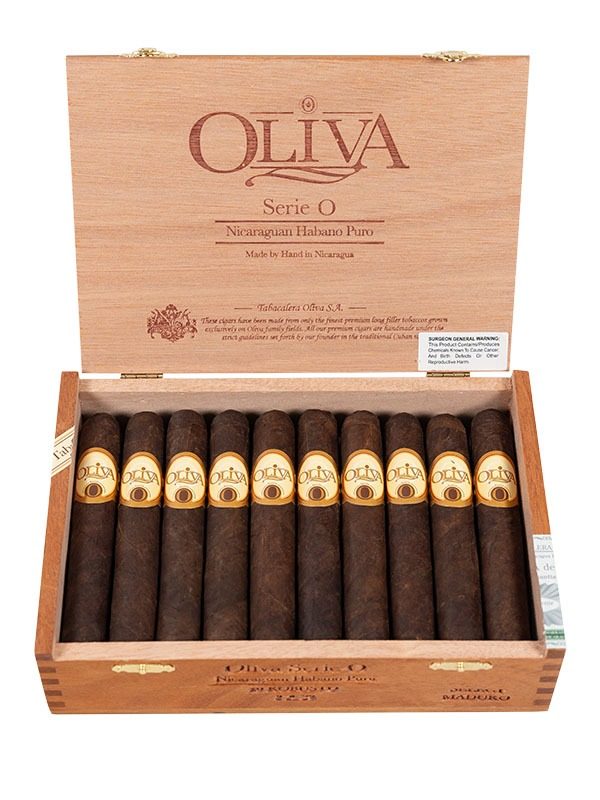 Closest in spirit is the Oliva Serie O Maduro. It wears the same Connecticut Broadleaf maduro wrapper the No. 9 leans on, over Nicaraguan binder and filler, and it carries that dark, faintly bitter cocoa-and-earth core without the per-stick price climbing into the teens. It's a half-step lighter in body and it skips the No. 9's pepper attack almost entirely. But as an everyday cigar at a fraction of the box price, it's the smartest stand-in on the shelf, and the one I hand people who liked the No. 9 and flinched at the bill.
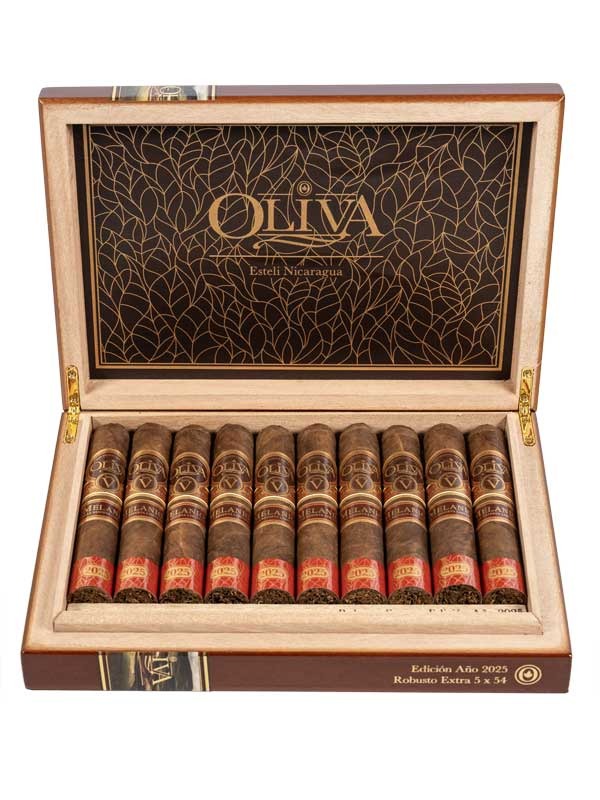
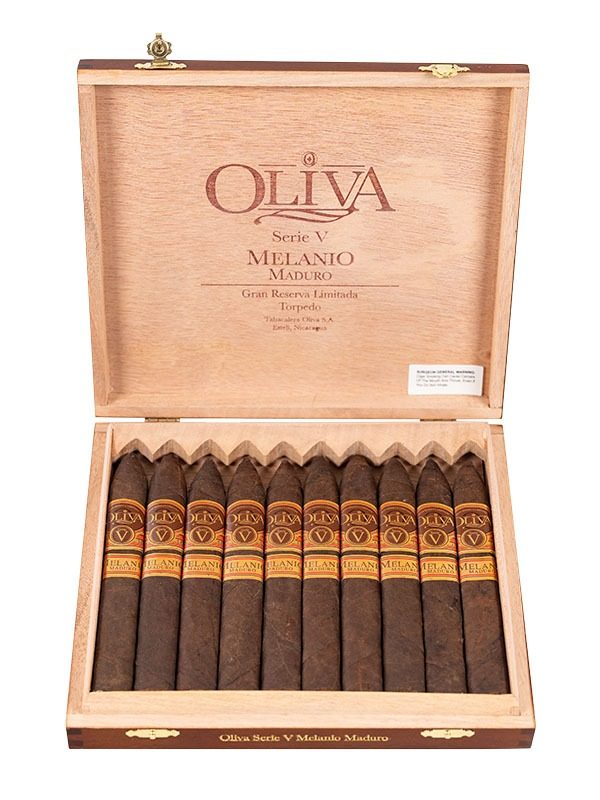 If what you're after is the No. 9's intensity rather than its exact flavor, reach for the Oliva Serie V Melanio Maduro. This one trades broadleaf for a San Andrés Mexican maduro wrapper, per Oliva's own page, and it smokes darker, sweeter and more baking-spice-forward than the Liga - closer to dessert where the No. 9 stays closer to a double espresso. I worked through a full box of the Melanio Maduro for my six-sticks-from-one-box review of the Melanio, and the short version is that it was the most consistent maduro in its price band I'd smoked all year. Consistency, after stick three, isn't a small virtue.
| Cigar | Wrapper | Body | Where it fits |
|---|---|---|---|
| Liga Privada No. 9 Robusto | Connecticut Broadleaf | Full | The benchmark: earth, unsweetened espresso, pepper |
| Oliva Serie O Maduro Robusto | Connecticut Broadleaf | Medium to full | Same wrapper, everyday price, gentler attack |
| Oliva Serie V Melanio Maduro | San Andrés, Mexico | Full | Darker and sweeter; the steadiest of the three |
One more, if your palate runs to power over sweetness: the Alec Bradley Prensado, built around a Honduran corojo wrapper from the 2006 crop. It isn't a maduro and it won't hand you the broadleaf cocoa, but it brings the same full-bodied weight and a leather-and-pepper spine that No. 9 smokers tend to get along with. I'd rank it third of the three I've named here. Still, on a cold night when you want a cigar that pushes back, it belongs on the list.
So what's the verdict - buy it, age it, or skip it?
Buy it. With the construction asterisk fully on the table, the Liga Privada No. 9 is a cigar I'll keep a box of, and the four good sticks were good enough that I'd hand one to anyone asking what a serious full-bodied maduro is supposed to taste like. It does the thing it claims to do. The earth is real, the espresso is real, the movement through the thirds is real, and the broadleaf wrapper carries a flavor I genuinely can't find in another widely available cigar at this price.
My number is a 91, and I want to be straight about what that means. The 90+ ratings inflation in the trade press has worn the whole scoring system down to near-uselessness (half the time a 92 in a glossy magazine is what an 86 used to be) so a 91 from me is a deliberately cooler figure than it looks sitting next to those. It's a 91 because four cigars earned themselves a 93 and one landed somewhere south of 80, and a review that quietly buries the bad stick to protect a tidy average isn't a review, it's an advertisement. When a rating ends in a 0 or 5, it's a sign the reviewer wasn't paying attention; mine end in 1, 3, 7, 9. This one ends in 1, and it ends there on purpose.
Should you age it? You can, and a year in the humidor will round the pepper down and let the espresso settle, but the No. 9 smokes well young and I wouldn't hold a whole box hostage waiting on it. Smoke them as they come to you. And keep your humidor honest, because broadleaf this oily goes dull if you let the RH drift, so the No. 9 rewards a steady 62% more than most cigars I track in my log. Buy the box. Smoke it inside the year. Expect one, somewhere in the twenty-four, that won't hold up its end of the bargain, and let the other twenty-three remind you why this line has the reputation it does.
Disclosure: Latest PR is an editorial publication, and the brands we cover don't pay us to cover them. When we link to a specific product, we link to the retailer that currently carries it at the price our writers think it's worth; for many of the cigars we cover, that's Cigar Outlet. The five Liga Privada No. 9s in this review came from a box I bought with my own money.
Sources & Notes
- Drew Estate, "Liga Privada No. 9" product page - wrapper (Connecticut River Valley Broadleaf No. 1 Dark), Brazilian Mata Fina binder, Nicaragua and Honduras filler, the full vitola list including the 5 x 54, the stalk-cut and stalk-cured detail, and the "Broadleaf Bully" and "dense earth and espresso" descriptors. https://drewestate.com/products/liga-privada/liga-privada-no-9/
- Drew Estate, "Liga Privada" line page - the 2007 release date, the private-blend origin, and production inside a dedicated room at La Gran Fabrica Drew Estate in Estelí, Nicaragua. https://drewestate.com/products/liga-privada/
- Drew Estate, "Liga Privada Único Serie" page - the Dirty Rat (5 x 44, T52 Habano wrapper) referenced in my 2021 note. https://drewestate.com/products/liga-privada/liga-privada-unico/
- Oliva, "Serie V Melanio Maduro" page - confirmation of the San Andrés (Mexico) maduro wrapper over Nicaraguan binder and Jalapa-region filler. https://olivacigar.com/cigars/serie-v-melanio-maduro/
- Personal humidor log, Felix Aubertin - five Liga Privada No. 9s from one box of twenty-four, smoked March to May 2026 at Cigare Royal in Montréal and at home; RH, pairing and conditions recorded per stick.