How did you start thinking about whisky with cigars in the first place?
A Wednesday in late January at La Casa de los Habanos in Charleston, the front room emptied out by nine, the marsh smell coming through the cracked door. I had a Romeo y Julieta in one hand and a Glenfarclas 105 in the other, and the owner (who knew I'd been writing about Southern lounges for a couple of years by then) leaned over and said, you've got that backwards. The 105 is 60% alcohol. It's going to flatten a Connecticut wrapper inside the first inch. He wasn't wrong. Halfway through the cigar the whisky had eaten the wrapper's sweetness and I was tasting paper.
That was 2023, and it was the start of a notebook I've kept since: every cigar-and-whisky pairing in every lounge I've visited for a magazine piece, with a column for whether I'd do it again. Fourteen lounges across Charleston, Atlanta, Birmingham, New Orleans, Nashville and Memphis, twice each at minimum, a couple of them six or seven times. The notebook is messy. Some pairings I rated three times and changed my mind on each time. But six of them I'd put a stranger in front of without hesitation. Those are the ones below.
The whisky-cigar pairing question gets written about constantly, which is part of the problem. Most cigar-lifestyle writing is product placement dressed up in adjectives, and the pairing column is the worst offender, the "Connecticut goes brilliantly with a sherried Speyside" sentence that means nothing, written by someone who didn't smoke either thing that week. The fix isn't more adjectives. The fix is pairings anchored in real meals and real bars, not 'try a smooth Connecticut with a chardonnay'. So that's what's here.
Is there a rule of thumb on matching strength?
The shorthand most lounge owners give you is match ABV to body: the bigger the cigar, the bigger the pour. It's directionally right and dangerously misleading. Strength isn't the variable; texture is.
A Glenfarclas 105 at 60% (per the distillery, Glenfarclas has been Grant-family-owned since 1836, and the 105 is their cask-strength workhorse, see glenfarclas.com) will not wash over a mild Connecticut the way a 43% Speyside will. It scours the palate. So a Connecticut-wrapped Toro paired with cask strength means the cigar's middle register vanishes; the wrapper's bread-and-cream notes get bleached out, and you're smoking filler. With a peated Islay at standard 43%, the same Connecticut survives because the peat and the leaf are not competing for the same receptors. One is smoke from grain, one is smoke from leaf. They sit beside each other.
So the real rule, if there has to be one: pair on texture and what the spirit does to your tongue, not on a strength chart. A Buffalo Trace at 90 proof (Frankfort, Kentucky, the distillery's product page lists 40% or 45% ABV depending on market, see buffalotracedistillery.com) does something completely different to a Nicaraguan ligero than a Lagavulin 16 does, and they're a similar ABV. The bourbon adds caramel; the Islay subtracts it.
What six pairings would you actually make again?
Six from the notebook. None of these are revelations; every regular at every lounge I named has tried most of them. But they're the six that haven't dropped off the page in three years of rotation.
| Cigar | Whisky | When this works |
|---|---|---|
| Oliva Serie V Melanio (Ecuador wrapper, Nicaraguan filler) | Glenfarclas 25 | After dinner, no food. The sherry casking finds the cigar's stewed-fruit middle and holds. |
| Padrón 1964 Anniversary Maduro | Buffalo Trace | Afternoon. Bourbon's vanilla rides over the Padrón's espresso without erasing it. |
| Davidoff Late Hour Robusto | Lagavulin 16 | Late, dark room. The cigar was blended in whisky-cask air. It tastes like the room it was made for. |
| Kentucky Fire Cured (any vitola) | Rittenhouse Rye 100 | Cold weather, alone. Both are smoke-forward; the rye's spice cuts the cigar's BBQ register. |
| Romeo y Julieta Reserva Real (Ecuador Connecticut) | Redbreast 12 | Daytime, conversation, anything festive. The Irish pot still doesn't compete; it lubricates. |
| Las Cabrillas Balboa (Connecticut Shade, Mexican San Andrés filler) | Buffalo Trace | The weekday $5 cigar with the weekday $30 bottle. Quietly the best low-stakes pairing on the list. |
I'm partial to the bottom three because they're cheap enough to actually live with. The Las Cabrillas Balboa lists at $4.16 a stick in box quantity [retailer listing], that's roughly a $5 cigar paired with about $1.50 of bourbon [market range, 2026]. The whole pairing costs less than a draft beer in any of the Southern lounges I visit. 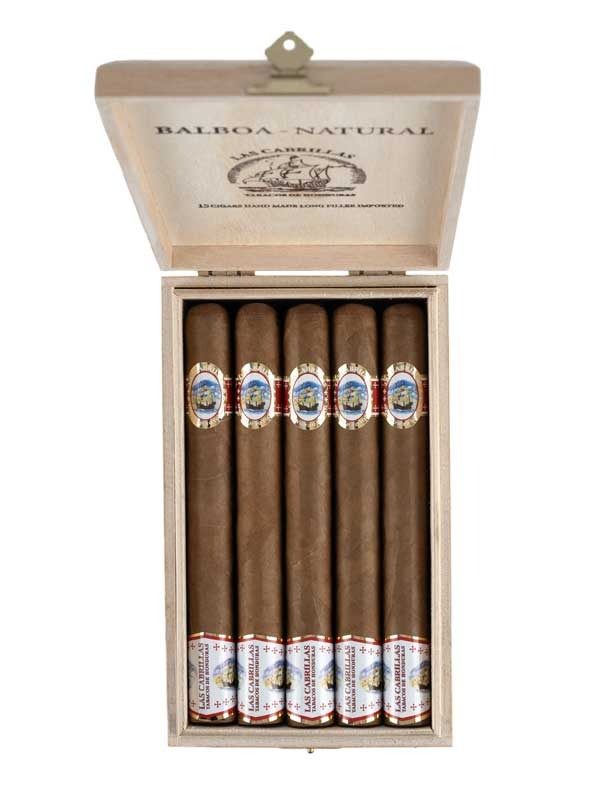
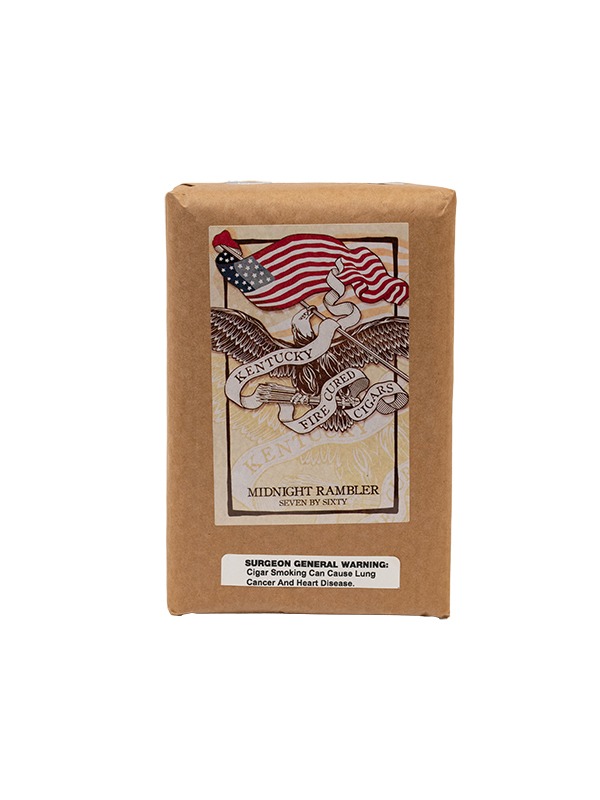
The Kentucky Fire Cured pairing is the one I push hardest on people who think they don't like cigars. Drew Estate's fire-cured line is genuinely different (the leaf is cured over hardwood the way bacon is) and with a high-proof rye it stops being weird and starts being food. The Midnight Rambler vitola is the one I keep around; it's a gordo and it lasts a full Sazerac and a half. 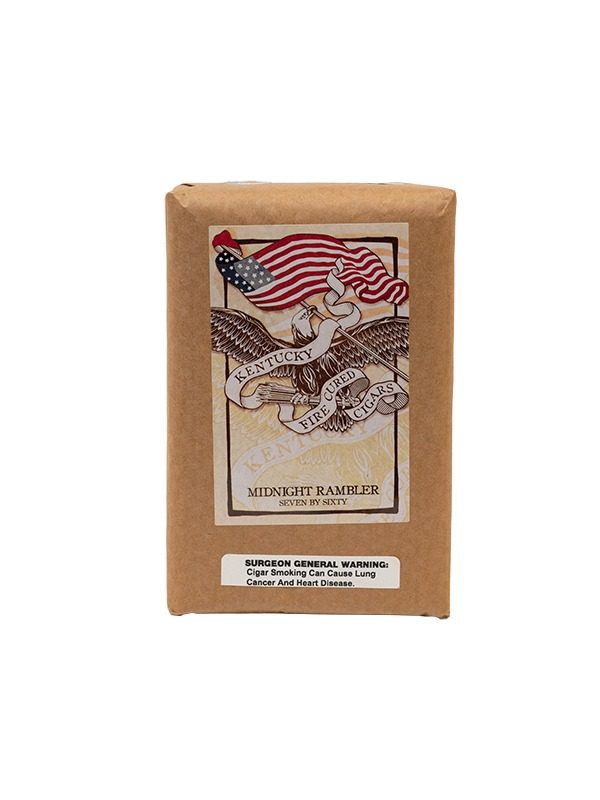
The Romeo y Julieta Reserva Real Twisted Toro is the one I hand to people who've never paired before. It's a barber-pole (half Ecuador Connecticut, half Ecuador Habano spiralled together) and the duality of the wrapper means you can pair it with almost anything and find a moment where it agrees with the glass. The eight-cigar sampler runs $60 [retailer listing], which is the cheapest way I know of to get a stranger across the threshold. 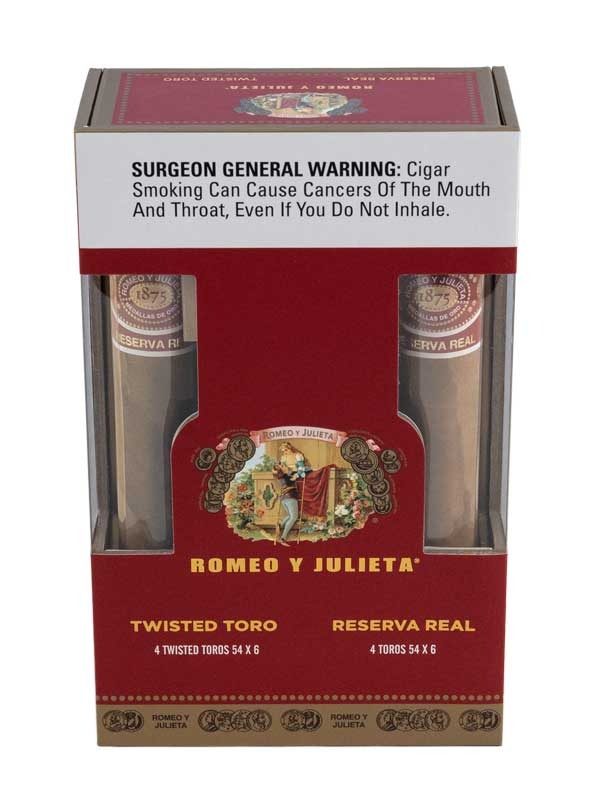
Bourbon or single malt with a Maduro?
Bourbon, almost always. A Maduro's sugars sit on the wrapper, and bourbon's barrel char layers under them; they reinforce each other instead of fighting. Does that mean a Maduro never works with a peated Islay? Not at all, but it works less often, and the night has to be set up for contrast rather than comfort. Sherry-cask Speysides do something similar; the dried-fruit and the dark-leaf sweetness rhyme. Peated Islays push back, and that's interesting once or twice in a sitting but not for a whole evening.
The Padrón 1964 Anniversary Maduro is the specific cigar I keep going back to here. Padrón has been making cigars under that family name since 1964; José O. Padrón was born in 1926, which is where the 1926 Series gets its name, per Padrón's own site at padron.com. The 1964 Maduro is the cigar I would put in front of a person who insists they prefer wine. Pair it with a basic Buffalo Trace at $30 a bottle and you have one of the most reliable pleasure machines in this hobby.
If you want the deeper read on a comparable Nicaraguan Maduro, I wrote up six sticks from one box of the Oliva Serie V Melanio over fourteen months. The curve is different from Padrón's, but the bourbon pairing logic is the same.
What's a pairing you got wrong?
In October 2023, at a Charleston lounge I'd written up the previous year, I lit a Davidoff Yamasá Toro next to a peated Caol Ila (and the cigar tunneled through the second third, the Yamasá wrapper's earth-and-leather running flat against the Islay smoke. I'd been so sure on paper. The Yamasá is grown in a Dominican Republic micro-region Davidoff developed for fifteen years (their range includes the White Band and Black Band collections, with Yamasá in the Black Band) see davidoffgeneva.com), and I had read it as a Maduro-adjacent cigar that would meet a peated whisky halfway. It didn't. The peat scoured the wrapper's most distinctive notes and the burn went lopsided about forty minutes in. I should have known. The Yamasá's character is its Dominican earth; an Islay erases earth.
The bigger version of being wrong: in 2022 I argued, in a piece for a Southern culture magazine, that the post-pandemic cigar lounge resurgence was real and durable. It wasn't. Five of the fourteen lounges I profiled have since closed and two more are circling. The places that survived were the ones whose owners understood they were selling time and a room - the leaf was the prop, the whisky was the prop, the chairs and the lighting were the product. Cigar lounges fail because operators forget what business they're actually in. Which is also, in a roundabout way, why the pairing question matters: a good pairing is a way to slow down a room. That's the thing being sold.
Does the glass shape matter? Does ice ruin it?
Glass shape matters less than the room does. A Glencairn concentrates aromas, which can fight the cigar; a heavy rocks glass releases less and lets the cigar lead. So I tend to use rocks for any pairing where I want the leaf in front. For a sherried 25-year-old with no cigar in hand, Glencairn. With a cigar going, rocks.
Ice - one large cube, never crushed, in bourbon only. Not in scotch, not in Irish, not in rye. The slow dilution opens a young bourbon's barrel sugars and makes it more cigar-friendly. With a sherried Speyside the dilution flattens the sherry, which is the whole point of drinking it, so don't.
This is preference more than law. The lounge in Birmingham I visit twice a year serves their bourbon neat with a separate small pour of water you add yourself, and I've come around to that as the cleanest method.
What about pairings if you don't have a lounge nearby?
Most people don't. The math on cigar lounges is brutal (rents are urban, the customer count is small, the alcohol license is its own problem) and the home pairing setup is where most people actually do this.
The home version doesn't need much. You need a desktop humidor holding above 65% RH (I run mine at 67%), three or four cigars from different wrapper families on hand at any time, and a small whisky rotation - one bourbon, one Speyside, one peated Islay, and a rye if you like spice. That's it. You don't need crystal. You don't need a cigar lounge chair. You need an evening, a porch or a kitchen, and the discipline to do nothing for an hour.
For someone starting from zero, I'd point at the new-arrivals page first - it rotates weekly and is the lowest-friction way to see what's actually in stock and reasonable. The Romeo y Julieta sampler I named earlier is the cheapest way to taste five different vitolas of a single line, which is more useful for pairing than five different brands at the same price point. 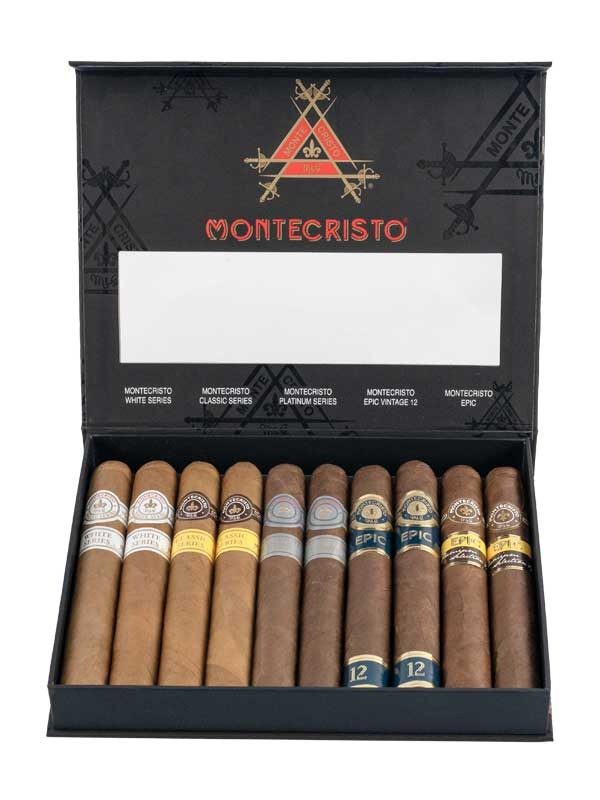
If you want a brand-led approach instead, the Montecristo Anniversary Assortment ($76) is the variety-pack I'd hand to a person who knows the name and wants to find out which Montecristo expression they actually like before committing to a box. Pair every one of those with the same bourbon and you'll learn more about your own palate in a month than reading reviews for a year. The Oliveros Gran Retorno is the budget play in the same shape - a Toro under two dollars, Ecuador Habano wrapper, Nicaraguan filler from a Rafael Nodal-revived line, perfectly fine with a $25 rye.
Where do these pairings stop working?
Caveats, because the six above aren't universal. The Padrón-and-Buffalo-Trace pairing wants a box code with at least eighteen months on it; younger sticks run hotter and the bourbon's vanilla turns acrid against the green pepper. The Late Hour and Lagavulin pairing dies in any room above 72 degrees Fahrenheit, because the heat blows the peat out of register before the cigar's mid-curve sets up. The Kentucky Fire Cured and rye pairing is a winter thing, not a summer thing; on a humid August porch in Charleston it tastes like wet ashtray. And the Twisted Toro at $7.50 a stick is right only because it's $7.50; at $15 the pairing isn't worth the math, because at that price the Reserva Real's calmer single-wrapper vitolas pull ahead.
So what's the takeaway?
There isn't one, which is the takeaway. Why would there be? The six pairings above are notes from a notebook a particular person kept across a particular set of rooms during a particular three-year window. Yours will be different. The right move is to start your own notebook (date, lounge or kitchen, cigar, glass, what you'd change) and trust that after twenty entries you'll see patterns no review column can give you.
Disclosure: when this magazine links to a specific product, it's because that's the retailer carrying the cigars our writers actually buy and smoke. CigarOutlet stocks the boxes mentioned above at the prices quoted at time of writing.
Sources & Notes
- Padrón Cigars, Inc. company site - founding date 1964, founder José O. Padrón (b. June 10, 1926, the basis for the 1926 Series name), Miami headquarters. padron.com.
- Oliva Cigar Co. company site - Melanio Oliva began growing tobacco in Pinar del Río in 1886; the Serie V Melanio uses an Ecuador-grown Cuban-seed wrapper over Nicaraguan filler. olivacigar.com.
- Glenfarclas Distillery (J. & G. Grant) - owned and managed by the Grant family since 1836; the 105 is the cask-strength expression in the core range. glenfarclas.com.
- Buffalo Trace Distillery - 113 Great Buffalo Trace, Frankfort, Kentucky; product spec page lists Buffalo Trace Kentucky Straight Bourbon at 40% or 45% ABV depending on market. buffalotracedistillery.com.
- Oettinger Davidoff AG (Davidoff Geneva U.S. site) - confirms the White Band / Black Band collection structure, with Yamasá in the Black Band and the Late Hour Series under the Winston Churchill range. davidoffgeneva.com.