On July 20, 2026, the Premium Cigar Association put its name on a cigar for the first time in its history. It's called Yalla Habeebi, it's built on La Palina's Goldie, and if you want to smoke one this year you'll have to fly to Dubai to do it. I won't be reviewing it. I can't. It doesn't ship until November, it stays inside the Gulf when it does, and by a rule I've held for years I don't publish a number on a cigar I haven't smoked at least three of from the same box.
So this isn't a review, because there's nothing yet to review. It's the other thing I do, which is take a release apart before the marketing sets and tell you which pieces are load-bearing. Here's what you actually get with the PCA's first international cigar, how a trade group headquartered near Washington ended up with a house smoke sold seven thousand miles from most of its members, and what sits under the band that's worth caring about.
What the PCA actually confirmed
Start with the facts, because there aren't many. Per the PCA's July 20 announcement, Yalla Habeebi is the first PCA-branded international cigar, made with the Middle East distributor The Leaf Master and La Palina Cigars. It debuts at the opening-night event of the second World Cigar Show in Dubai, which runs November 10 to 13, 2026, and it'll sell only across the Gulf Cooperation Council countries. There's one planned exception, a single one-time appearance at the PCA's own trade show in Las Vegas in March 2027. And a cut of the money goes back to the association: the release states that "a portion of proceeds from every cigar sold will support PCA's ongoing advocacy efforts."
Now the longer and more telling list, which is everything the announcement left out (no vitola, no ring gauge, no length, no box or bundle count, no price, no production number). For a debut cigar from the largest trade body in the American premium market, that isn't an oversight. It's a decision, and it's the most interesting thing in the release. Does a band tell you how a cigar smokes? It doesn't, and the people selling this one know that better than anyone.
How the three partners built it
A co-branded cigar like this doesn't happen because three parties admire each other. It happens because each one holds something the other two need. Walk it in order and the logic is plain.
- The Leaf Master, the distributor staging the Dubai show, needed a hero cigar to hang an opening night on. A regional show wants a stick you can't get anywhere else, something that says the room matters.
- The PCA wanted a flag to plant outside the United States. It runs the big Las Vegas convention every year, but its name had never been on an actual product. An international co-brand is the cheapest way to look global, and its chief executive, Joshua Habursky, framed the launch as a move toward "expanding PCA's global presence."
- La Palina brought the one thing money can't manufacture, which is a blend with a name and a story already attached. The Goldie is its small-batch apex line, rolled in Miami, and people who care about cigars already know it.
- The three of them wrap all of that in fresh artwork and a new name. Yalla Habeebi is an Arabic phrase that lands somewhere between "let's go, my friend" and "come on, buddy," and Clay Roberts, La Palina's president and CEO, said the cigar "celebrates not only a remarkable cigar, but the relationships that continue to unite premium cigar enthusiasts around the world." The blend inside is the Goldie. The costume is new.
- Finally, a slice of every sale routes back to the PCA's advocacy fund, which is where a cigar sold in Dubai quietly becomes a cigar working in Washington. That mechanism deserves its own section, and it gets one below.
But this is how collaborations like this usually go wrong, and it's worth saying out loud before the launch copy does. A co-branded, limited, show-only cigar is the easiest object in this business to fake scarcity around. The blend gets stretched to fill an order it was never blended for, or the "limited" run turns out limited the way a diner's daily special is limited, which is to say until they sell out of the large batch they quietly made. I've watched show-exclusive cigars turn up with a beautiful band and a hollow middle, blended down to hit a volume the marketing had already promised. I'm not claiming that's what's happening here. I'm pointing out that the release gives you no way to check, because it withheld every number you'd use to.
What sits under the band
Here's the ground I can actually stand on, because the Goldie is a real cigar with a real past, and I've smoked it. La Palina goes back to 1896, when Samuel Paley started a cigar company in Chicago. His great-grandson, William Paley, revived the brand in 2010 as a boutique operation, by the company's own account, and named its apex line for Sam's wife, Goldie Drell Paley. That's the Goldie.
What makes the Goldie worth building a debut on isn't a single wrapper leaf. It's the address. La Palina says the Goldies are rolled at El Titan de Bronze, the small factory in Miami's Little Havana that I took apart in print after a morning I spent watching its rolling tables work. The torcedores there are among the most exacting in the country (everything in that shop is rolled by hand), and the output is counted in the low hundreds of boxes, not the tens of thousands. That's the cachet the PCA is renting for Dubai. A show cigar rolled at El Titan reads as serious in a way a show cigar rolled at a volume plant never will. That kind of address doesn't get lent to a project the factory can't stand behind, which is the one quiet reassurance in an announcement that reassures you about very little else. Still, cachet isn't flavor, and a factory's reputation isn't a tasting note.
Does knowing it's built on the Goldie tell you how Yalla Habeebi will smoke? Not really. A blend behaves differently in a different size, and we don't even have the size. What I can tell you is that the Goldie sits in the middle-bodied range where El Titan's work tends to live, built around balance and clean construction rather than sheer power. Whether the Dubai cigar tastes like the Goldie I remember is a question no honest person can answer yet, because the boxes don't exist.
I'll be plain about the limits of my own authority here. I've had the Goldie a handful of times over the years, always in ones and twos, never a full box, which means by my own standard I've never earned a number on it either. And I hold that standard because ignoring it once cost me. In 2021 I smoked a Liga Privada Dirty Rat at a Drew Estate event, gave it a 93 on the spot, and then bought a box on the strength of that single cigar; over the next few months two sticks came harsh and bitter and one flatly wouldn't draw, and the box averaged an 87. One cigar is not a review. It's an anecdote wearing a rating, and the entire job is telling those two apart. The 90+ ratings inflation in the trade press has made the entire scoring system nearly useless, and this is exactly how it happens, one show-floor smoke at a time.
Why a cigar sold in Dubai funds American lawyers
Go back to that one line about proceeds and advocacy, because it's the part of this release that actually reaches your humidor, wherever in the world you keep it. The PCA and its sister organization, Cigar Rights of America, spend their years in courtrooms and committee rooms fighting the federal regulation of premium cigars. CRA describes itself as "the first and only grassroots, consumer-based public advocacy group fighting to protect the individual's right to enjoy premium cigars," and it says it speaks for more than five million enthusiasts. The short version, for anyone who tuned out the regulatory noise, is that a court pulled premium cigars out from under the federal tobacco-deeming rules, and the industry has spent every year since defending that line.
That fight isn't abstract and it isn't finished. Per Cigar Rights of America, the current work centers on protecting a federal court ruling that exempted premium cigars from FDA oversight, and on pushing Congress toward what the group calls the CIGAR Act. The PCA's own advocacy page adds more fronts: a proposed FDA tobacco-product registration rule floated in June 2026, a premium-cigar tax cap that Illinois enacted the same month, and a federal challenge the two groups filed against California's tracking-list rules back in October 2025. That's the machine a portion of every Yalla Habeebi buys a little more fuel for.
And this is the quietly strange part of the PCA's first international cigar. The rolling is Miami, per La Palina. The selling is the Gulf, per the PCA. And the money loops back to advocacy work in the United States that most of the buyers will never personally need. A Gulf enthusiast lighting one on a Dubai rooftop in November is, without necessarily knowing it, chipping in on an American regulatory fight. It's a novel piece of plumbing. Nobody outside the deal can say how much money it actually moves, because the production count that would answer the question isn't public.
What I'd chase instead this fall
You can't buy Yalla Habeebi, so here's the useful version of the money you were about to spend chasing it. If what pulls you toward this release is the idea of a limited, allocated cigar with a real maker behind it, that shelf exists and it's stocked right now. The limited and allocated releases worth your attention aren't show-floor exclusives you'll never touch. They're boxes you can put in a cart today.
The one I keep returning to is the Oliva Serie V 135th Anniversary Limitada, a Nicaraguan puro under an Ecuadorian Habano wrapper, a 5 3/4 by 54 perfecto that Oliva capped at 15,000 cigars. It's twelve to a box, around $88 at current retail, a little over $7 a stick for a real limited edition with a printed run you can actually cite.
Set that beside a show cigar with no published price, and the argument I keep making comes into focus. Across my own humidor log, the pattern is hard to miss: premium-cigar price-to-quality above $20 is broken, and there are $11 boutique sticks outperforming $35 brand-name ones, and almost nobody in the trade press will say so at full volume.
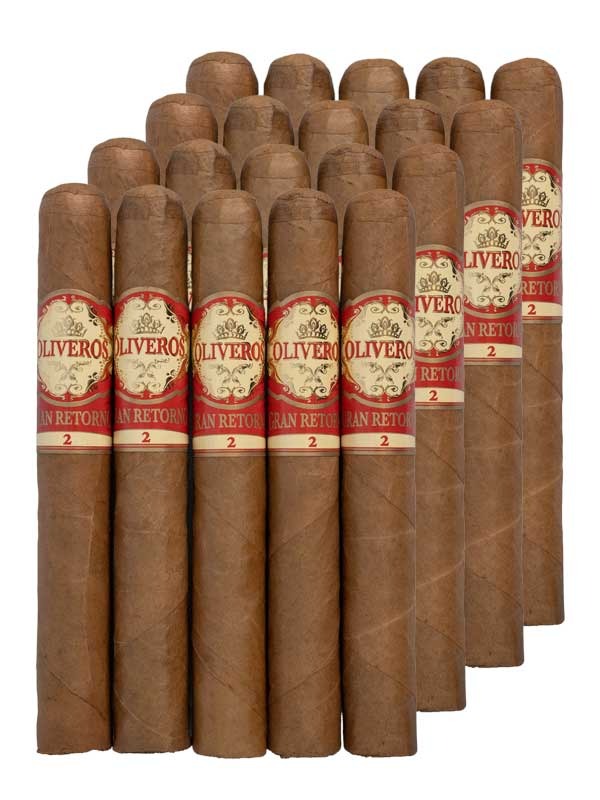
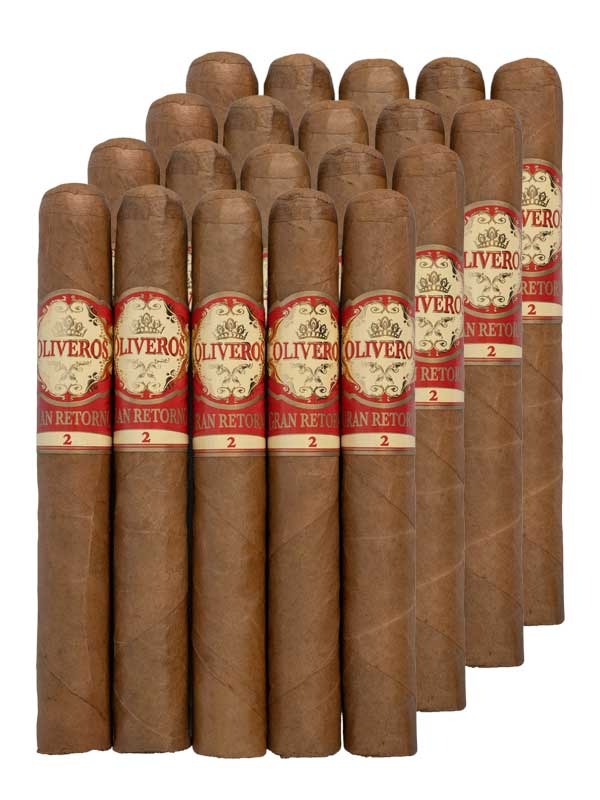
Disclosure, since money changes how you read a recommendation. When we link to a specific product, we link to a retailer our writers think charges a fair price for it. That principle cuts toward the cheap end as hard as the allocated end. If you want the small-batch feeling without the allocation chase, the Oliveros Gran Retorno is the honest everyday answer, and I've argued the cheap-and-honest case at length before, with federal tax records behind it, in a piece on why the best everyday cigar is almost never the priciest one. If you'd rather just wander, the full catalog and the makers worth your time are both a click away. (The storefront will take you to either.)
Buy it, age it, skip it. I owe you one of those three at the end of everything I write, and I can't hand you one here, because there's nothing yet to buy, to age, or to skip. When there is, in a Las Vegas convention hall in March 2027, I already know the first thing I'll reach for, and it isn't the wrapper or the draw. It's the box itself. I want to turn it over and find the number the July announcement left off, the one that says whether this was a cigar or a fundraiser in a cigar's clothing. Yalla Habeebi, my friend. Show me the count.
Sources & Notes
- The Premium Cigar Association's July 20, 2026 announcement is the source for the launch, the partners, the Dubai debut dates, the Gulf exclusivity, the one-time 2027 Las Vegas appearance, the advocacy-proceeds line, and the Habursky and Roberts quotes. It states no vitola, count, price, or production number.
- La Palina's own company history is the source for the Paley family timeline (Samuel Paley in 1896, William Paley's 2010 revival), the Goldie Drell Paley namesake, and the Goldie being rolled at El Titan de Bronze in Miami.
- Cigar Rights of America is the source for the FDA premium-cigar exemption fight, the CIGAR Act push, the figure of more than five million enthusiasts, and the mission statement quoted above.
- The PCA's advocacy page is the source for the June 2026 FDA tobacco-product registration rule, the Illinois premium-cigar tax cap, and the October 2025 challenge to California's tracking-list rules.
- The Goldie tasting impression and the 2021 Liga Privada Dirty Rat example are from my own notes.